
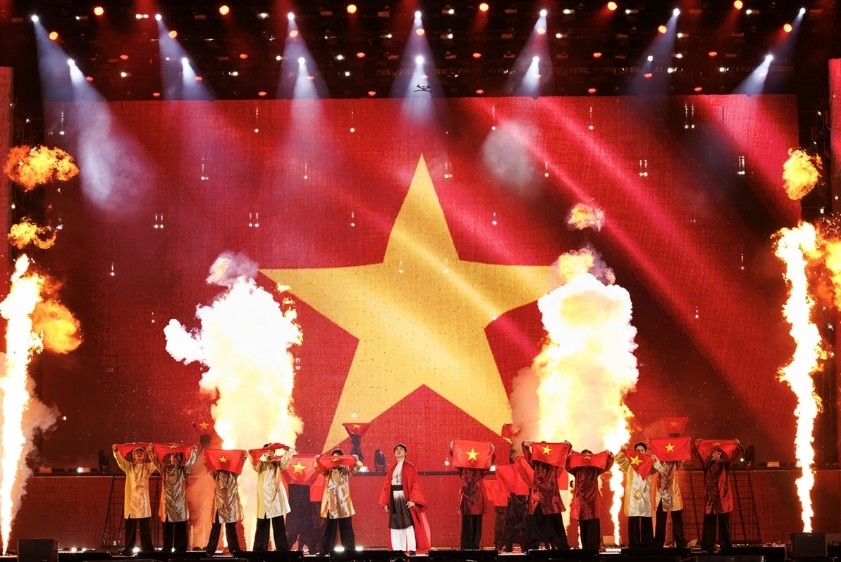

VOV.VN - As digital transformation, digital technologies and artificial intelligence accelerate a global shift from resource-based growth toward knowledge and creativity-driven economies, cultural industries are increasingly seen as a sector capable of generating high value added, with broad spillover effects and close links to social life.
According to the Ministry of Culture, Sports and Tourism (MCST), Vietnam’s cultural industries are expected to continue expanding strongly in 2025 and to become a new engine of economic growth. The ministry has set a target for cultural industries to contribute around 6.5-7.5% to GDP, with key pillars including film, performing arts, video games, journalism, broadcasting, publishing and cultural tourism.
A notable shift in development thinking is the recognition of culture not only as a spiritual foundation, but also as an internal driver of growth. Cultural industries are viewed as a mechanism for transforming cultural values into economic value through creativity, technology, markets and a supportive policy ecosystem.
In 2025, the MCST is focusing on advising the Government on the issuance of a Strategy for the Development of Vietnam’s Cultural Industries for 2025-2035, with a vision to 2045, identifying breakthroughs in institutions, policies, resources and governance to support sustainable growth in the sector.
Film has emerged as a clear example of the sector’s momentum. In 2025, several domestic productions recorded box-office revenues exceeding VND 100 billion, including Bo tu bao thu, Detective Kien, The Tunnel and Aerial Duel. One film reached revenue close to VND 800 billion, highlighting the strong commercial potential of Vietnam’s domestic film market.
This growth has led to greater investment in screenwriting, technology, visual effects, human resources, marketing and distribution, gradually forming a complete industrial value chain. At the same time, cinema has emerged as an effective tool for promoting Vietnam’s national image, supporting tourism and strengthening soft power.
Alongside cinema, the performing arts continue to serve as a key pillar of the cultural industries. A growing number of professional festivals and programmes, from cai luong (southern reformed theatre), cheo (traditional folk opera), tuong (classical opera) and spoken drama to regional and international music events, are being staged on a larger scale, creating space for talent to emerge while ensuring continuity for traditional cultural values.
When organised professionally, cultural and artistic events can become marketable products, generating revenue, creating jobs, stimulating consumption and supporting related service industries. This reflects the growing importance of the experience economy, in which audiences and visitors do more than watch they participate, engage and share experiences through digital platforms.
The MCST also identifies video games, journalism, broadcasting and publishing as important components of the cultural industries, closely linked to the digital content economy and directly shaped by digital transformation. A notable development in 2025 is the transfer of responsibility for journalism, media and publishing to the ministry from March. Since taking on this role, the ministry has focused on advising amendments to the Press Law, aiming to build a professional, humane and modern press system and to create a sound environment for the digital content market, including stronger copyright protection.
Cultural tourism is regarded as a vital component of the cultural industries, showing the fact that tourism today sells not only services, but also identity, stories and experiences. In 2025, Vietnam’s tourism sector recorded strong growth, with around 21.5 million international arrivals, 135 million domestic trips and total revenue of approximately VND 1 quadrillion. Integrating cultural elements into tourism products in a professional and in-depth manner is seen as key to raising value added and strengthening destination competitiveness.
According to the MCST, the goal for cultural industries to contribute 6.5-7.5% of GDP is ambitious but achievable if supported by a robust policy ecosystem. In the coming period, the ministry plans to continue refining institutions, advancing digital transformation, strengthening copyright protection, developing national cultural data infrastructure and promoting focused, priority-based development of cultural industries.
Beyond being a new economic sector, cultural industries are expected to create jobs, improve quality of life, stimulate social creativity and enhance national soft power. As culture develops into a fully fledged industry, Vietnam would gain an additional source of sustainable growth in line with global trends in the creative economy.

VOV.VN - A seminar in northern Ninh Binh province on October 30 highlighted the need for strong investment in modern cultural infrastructure to bring the country’s cultural industries into a new era.
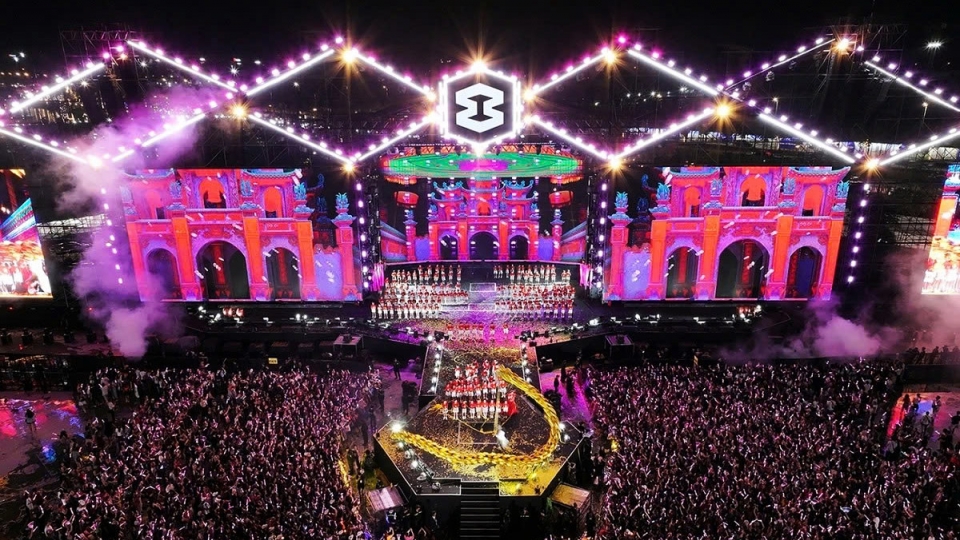
VOV.VN - Prime Minister Pham Minh Chinh has signed a decision approving the Strategy for the Development of Vietnam’s Cultural Industries to 2030, with a Vision to 2045.

VOV.VN - The central city of Da Nang plans to establish itself as a national key center for cultural industries by 2030, with the sector contributing over 13% of the city’s GRDP.






.JPG&w=640&q=100)






Bình luận
Bình luận của bạn sẽ được xét duyệt trước khi đăng