Private economy to become core force in new growth model
VOV.VN - Resolution 19 defines innovating the development model based on science-technology, innovation, and modern governance. Within this framework, the private economy is expected to serve as a pioneering productive force and a growth pillar that masters technology, participates in high-value chains, and builds national strategic infrastructure.
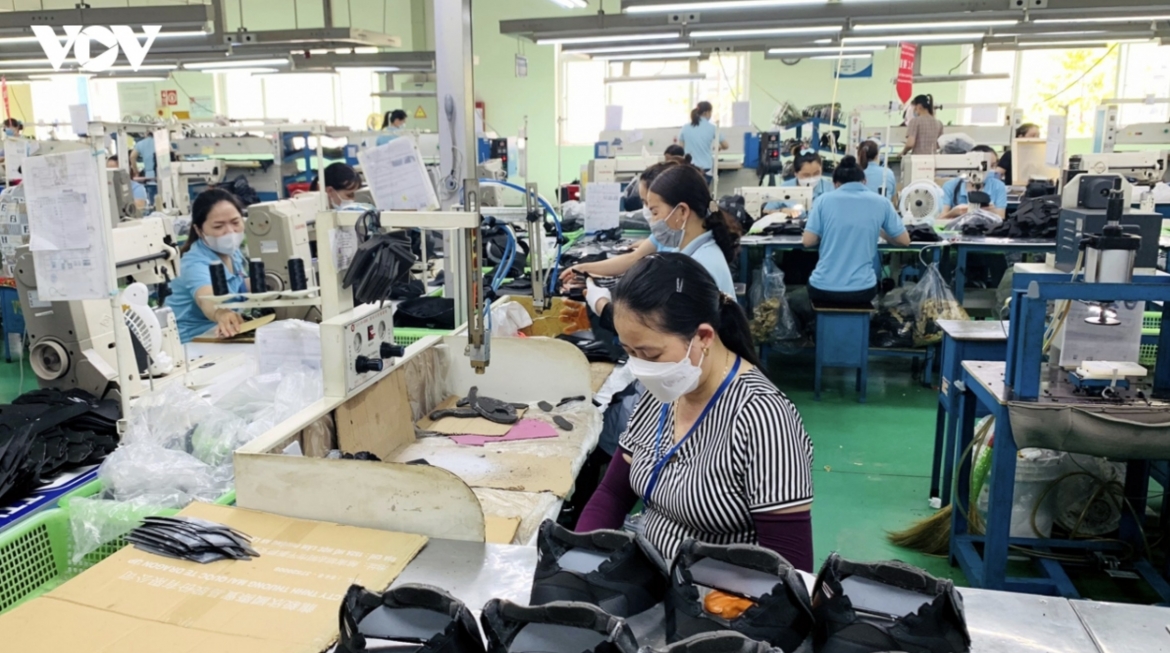
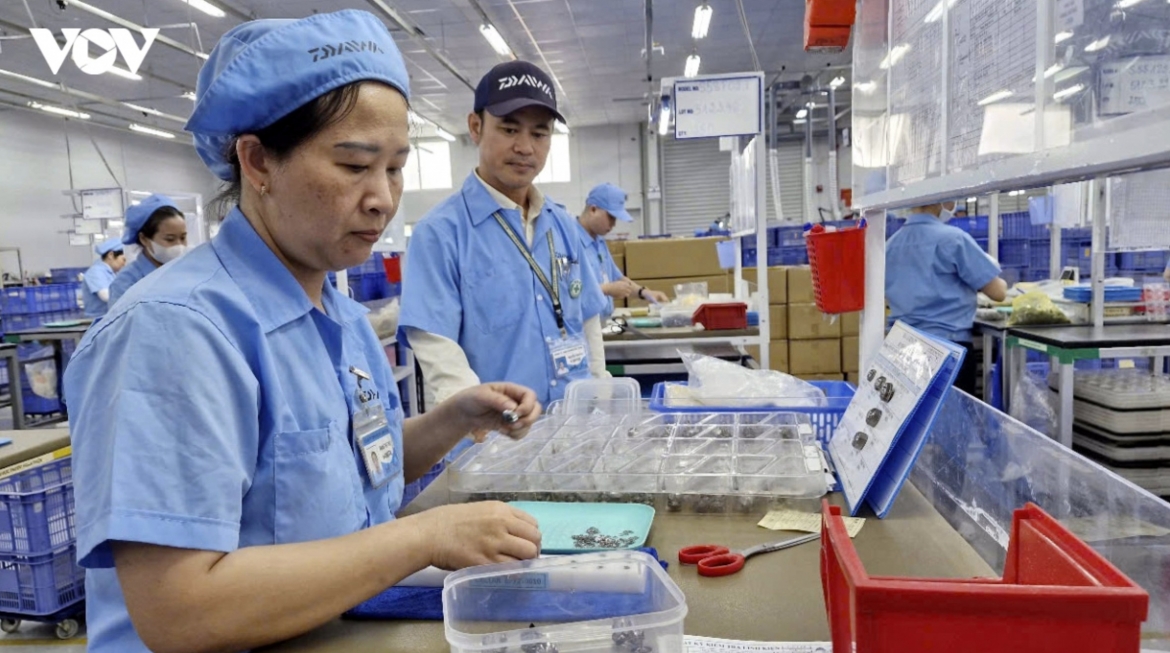
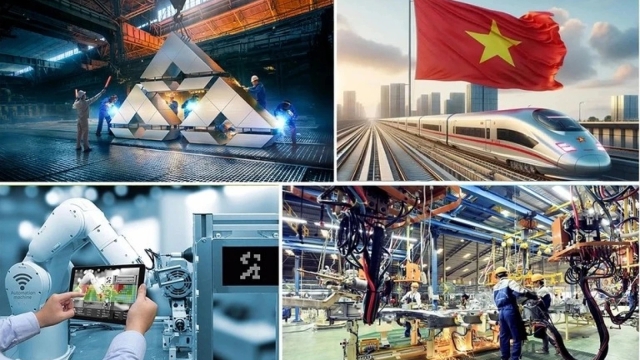
Private enterprises: From "important driver" to growth-leading pillar. (Illustrative photo)
From "important driver" to core pillar leading growth
Throughout the period of growth reliant on capital, assembly processing, and resource exploitation, Vietnam's private economic sector mainly developed in the segment of small traders and small and medium-sized enterprises (SMEs), or concentrated in non-manufacturing fields such as real estate and simple trade and services. However, as the old development model reached its growth ceiling, Resolution No. 19 opened up a strategic shift: building a self-reliant and autonomous economy through enhancing endogenous capacity and mastering technology. The private sector is no longer in an "auxiliary" position but is now expected to assume a pioneering role in three key growth spaces.
First, pioneering digital transformation and developing core technology. Private enterprises are oriented to become locomotives in researching, applying, and commercializing core technologies such as artificial intelligence (AI), semiconductors, cloud computing, and automation. Shifting from "processing" to "mastering technology" helps generate high added value for the economy, escaping the middle-income trap.
Second, serving as a pillar in building strategic infrastructure and a green economy. The private sector is encouraged to deeply participate in major infrastructure projects, ranging from renewable energy and national data infrastructure to modern logistics. These are high-spillover fields, driving synchronized green transformation and digital transformation nationwide.
Third, forming strong economic corporations that act as "lead cranes". The resolution sets the goal of building private corporations with sufficient international competitiveness and the capacity to lead domestic satellite enterprise ecosystems to participate deeply in global supply chains, solving the problem of economic "independence and autonomy".
Assessing the requirement to transform the private sector into a core productive force at the roundtable on institutional reform and new growth model, Dr. Nguyen Quoc Viet, Deputy Director of the Vietnam Institute for Economic and Policy Research (VEPR), stated: "The State needs to shift from 'ask-give' mechanisms, pre-inspection, and control to enabling, guiding, and post-inspection, thereby expanding development space for enterprises and unlocking the economy's resources."
For the private economy to shoulder its mission in the new growth model, the key issue lies not in granting budgetary incentives, but in institutional breakthroughs and equalizing access to resources. Resolution 19 focuses on untying legal bottlenecks, reducing compliance costs, and substantively protecting property rights and business freedom, particularly creating mechanisms for intellectual property to become strategic capital.
One of the core orientations is equalizing development resources. The resolution eliminates discrimination among economic sectors in accessing land, credit, data, and public investment opportunities. Private enterprises are enabled to participate on an equal footing in key national projects while accessing a transparent business environment.
Parallel to this is the transition to impact-based governance methods. Instead of controlling risks through cumbersome administrative procedures, the State is shifting to target-based management, using development efficiency as the benchmark. This spirit helps enterprises minimize legal risks and shorten the time required to bring innovative products to market.
Finally, developing modern production factor markets, especially capital markets and high-quality human resources. Building a diversified financial infrastructure (corporate bonds, venture capital funds) combined with talent attraction policies will create a solid launchpad for large-scale projects of the private sector.
Speaking at the workshop "Double-Digit Growth - Momentum from Enterprises" recently co-organized by the Vietnam Chamber of Commerce and Industry (VCCI), Assoc. Prof. Dr. Ho Sy Hung, President of VCCI, evaluated the potential and core role of the private economic sector in the new development model: "This breakthrough trend in the private economy can be considered a core foundation and a launchpad toward establishing a new economic growth model and achieving the double-digit growth target."
Under Resolution 19, the private economy in the new growth model no longer stops at contributing to the state budget or generating employment, but has become a pioneering productive force shaping Vietnam's independent, autonomous, and modern standing on the global economic map.
VOV.VN - One year after Resolution 68 on private economic sector development began to be implemented, its progress can be summed up as “a steady start and a major breakthrough”. Its revolutionary nature lies in redefining the private sector from a “supporting component” to an “important driving force”.
VOV.VN - The informal sector has long played a vital role in Vietnam’s economy, but it remains a “gray zone”, difficult to regulate and lacking policy support. Experts believe that with the right measures to promote formalization, it could become a strong driver, enabling the private economy to emerge as a true pillar of national development.
VOV.VN - One year after Resolution 68 on private economic sector development began to be implemented, its progress can be summed up as “a steady start and a major breakthrough”. Its revolutionary nature lies in redefining the private sector from a “supporting component” to an “important driving force”.
VOV.VN - The informal sector has long played a vital role in Vietnam’s economy, but it remains a “gray zone”, difficult to regulate and lacking policy support. Experts believe that with the right measures to promote formalization, it could become a strong driver, enabling the private economy to emerge as a true pillar of national development.









.JPG&w=640&q=100)











Bình luận
Bình luận của bạn sẽ được xét duyệt trước khi đăng