Resolution creates unprecedented opportunities for supporting industries
VOV.VN - For the first time, Vietnam's supporting industries have been positioned as a central pillar in the country's strategy to attract high-quality foreign direct investment (FDI).
Rather than focusing solely on increasing FDI inflows, the Politburo’s Resolution No. 10 on foreign-invested sector development shifts attention toward strengthening linkages between foreign-invested enterprises and domestic businesses, enabling Vietnamese firms to engage more deeply in global value chains while enhancing their technological capabilities and competitiveness.
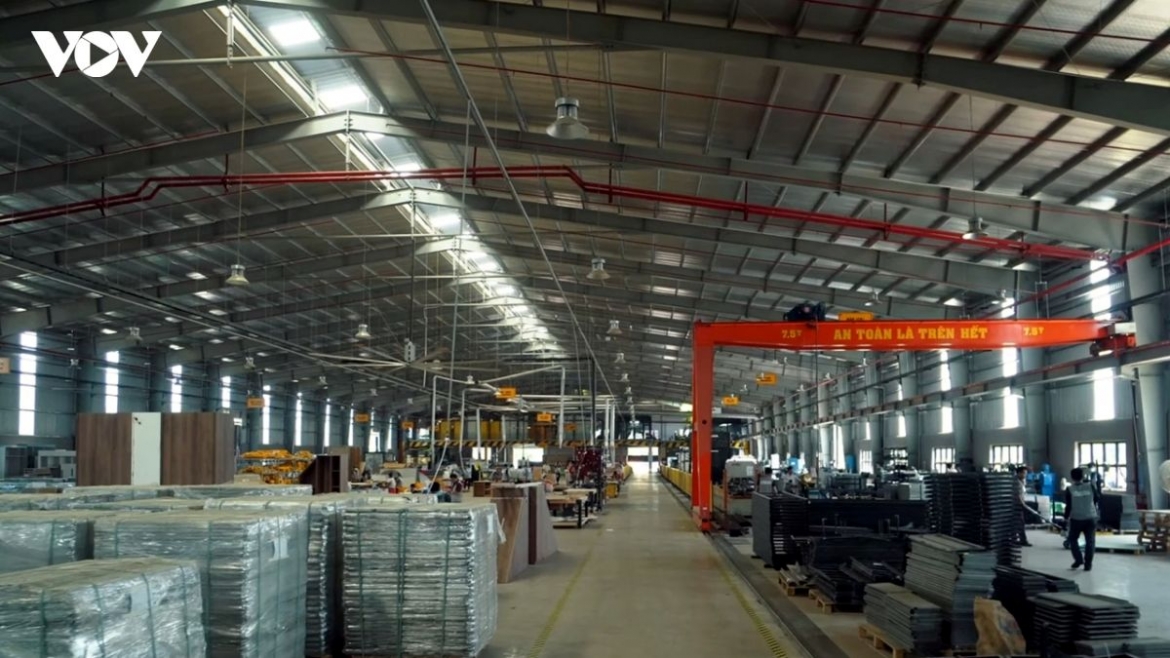
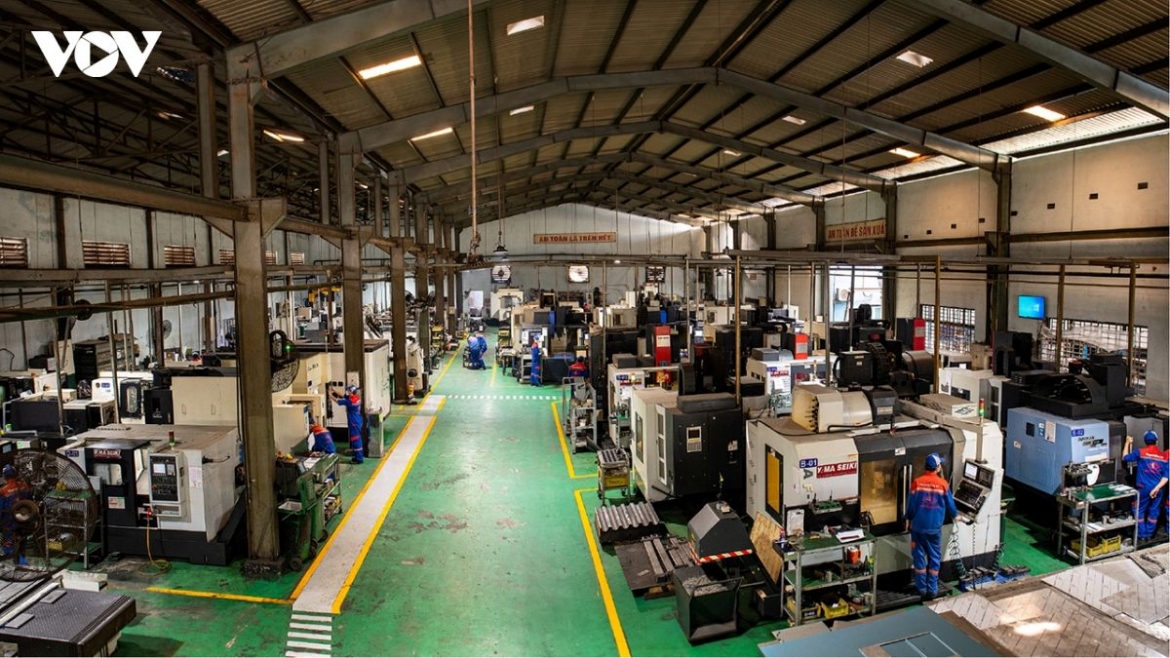
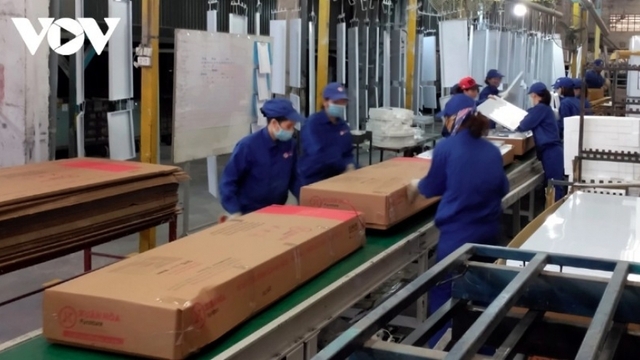
Most Vietnamese supporting industry firms are still engaged in low value-added production stages or provide basic products and services to FDI enterprises.
This strategic direction is further detailed in the Supporting Industry Development Programme for 2026-2035, which emphasises technological innovation, digital transformation, automation and sustainable manufacturing. The programme also identifies participation in global supply chains and higher localization rates as key indicators for evaluating policy effectiveness.
Nguyen Van, vice chairman of the Hanoi Supporting Industries Business Association (HANSIBA), described the Resolution as a landmark policy that reflects Vietnam's transition from attracting FDI based primarily on quantity to prioritising investment quality, technology transfer and broader economic spillover effects.
According to him, one of the Resolution’s most significant features is that it clearly defines the role of domestic enterprises within Vietnam's industrial development strategy.
By 2030, Vietnam aims to have around 10,000 domestic enterprises participating in FDI supply chains, including between 500 and 1,000 first-tier suppliers, while increasing localisation rates to between 45% and 50%.
These targets, he said, indicate that Vietnamese enterprises are no longer viewed merely as beneficiaries of foreign investment but as essential partners in the country's long-term industrial development.
For supporting industry enterprises, the Resolution offers unprecedented growth opportunities.
For many years, most Vietnamese firms have been involved mainly in low-value manufacturing or basic supporting services for FDI companies. Effective implementation of the Resolution could enable domestic manufacturers to upgrade production capabilities, adopt advanced technologies and move into higher-value segments of global production networks.
Nguyen Van noted that this transformation would not only expand production capacity but also improve the long-term quality of economic growth.
More importantly, as increasing numbers of Vietnamese enterprises become first-tier suppliers for multinational corporations, technology transfer, management expertise and international production standards are expected to spread more widely throughout the supporting industry sector and the broader economy.
Stronger support needed for domestic enterprises
Although Resolution 10 sets ambitious targets for localisation and supply chain participation, translating policy objectives into tangible outcomes is a significant challenge.
Vietnamese enterprises will need not only to expand production but also to fundamentally improve technology, management systems and their ability to meet increasingly demanding international standards.
As multinational corporations continue raising supplier requirements, competitive advantages are no longer determined primarily by labour costs or pricing.
Instead, technological innovation, digital transformation, quality management, traceability, environmental compliance, sustainable manufacturing and reliable delivery performance have become decisive factors for deeper participation in global supply chains.
Pham Nhu Y, CEO of Vtech Corporation, argued that supporting industry enterprises must transform both production methods and management practices to meet the expectations of international customers.
Multinational companies now assess not only product quality but also the entire production process, including raw material management, quality control, traceability and environmental sustainability, she explained.
To satisfy these requirements, she suggested that enterprises should accelerate digital transformation, establish comprehensive traceability systems and cooperate with internationally recognised suppliers of advanced materials and technologies.
These capabilities have become essential prerequisites for improving competitiveness as global supply chains increasingly emphasize transparency, quality assurance and sustainable development.
However, business efforts alone will not be sufficient without coordinated policy support.
Vuong Dinh Thanh, deputy director of the Hanoi Industry and Trade Promotion Centre (IDC Hanoi), stressed the importance of establishing regular communication mechanisms between government agencies and enterprises to ensure that support policies are effectively implemented.
He said future priorities should extend beyond trade promotion to include technology upgrading, product development, management improvement and compliance with increasingly demanding international standards.
HANSIBA Vice Chairman Nguyen Van echoed this view, emphasising that supporting industry enterprises need not only new business opportunities arising from high-quality FDI but also stronger policy support to enhance competitiveness.
According to him, while the Government has introduced numerous programmes to support supporting industries, businesses continue to seek more effective mechanisms to strengthen cooperation between domestic enterprises and multinational corporations.
Among the proposed measures are the development of a national database of supporting industry enterprises, digital supply-demand matching platforms, specialised industrial clusters and comprehensive manufacturing ecosystems.
Businesses also hope for expanded support in financing, workforce development, management consulting, international certification and technology transfer.
These initiatives would help narrow the capability gap between Vietnamese enterprises and global suppliers, enabling domestic firms to integrate more deeply into international value chains.
From participating in supply chains to mastering value creation
Vietnamese supporting industry companies need an enabling environment to compete and partner on equal footing with FDI enterprises
Vietnam's supporting industries have made notable progress in recent years, yet most domestic enterprises are concentrated in low-value-added manufacturing activities.
Although Vietnam has become an important destination for global manufacturers, key technologies and higher-value production stages are still largely controlled by foreign-invested companies.
Resolution 10 and the Supporting Industry Development Programme for 2026-2035 signal a significant shift in development strategy.
Rather than measuring success solely by the number of FDI projects or investment capital, Vietnam now seeks to strengthen domestic enterprises through closer integration with foreign-invested manufacturers.
Ultimately, the success of the Resolution will be measured by the number of Vietnamese enterprises capable of becoming first-tier suppliers for multinational corporations, higher localization rates, stronger technological capabilities and deeper participation in global value chains.
Achieving these goals will require both determined efforts by enterprises and more comprehensive policy implementation.
Building a national database of supporting industry enterprises, improving supply chain connectivity, expanding industrial clusters, promoting digital transformation, investing in workforce development and improving access to finance will provide the foundation for stronger international competitiveness.
Resolution 10 therefore represents far more than an investment attraction policy. If effectively implemented, it could transform Vietnamese enterprises from component suppliers into strategic partners capable of mastering advanced technologies and creating greater added value.
Over the longer term, a robust supporting industry ecosystem would enable Vietnam not only to be an attractive destination for high-quality FDI but also to cultivate a dynamic domestic business sector capable of driving innovation, technology diffusion and economic resilience.
That vision lies at the heart of Resolution 10 that is leveraging foreign investment to strengthen Vietnamese enterprises, enhance economic self-reliance and build a more sustainable, innovation-driven economy.
VOV.VN - With foreign direct investment (FDI) disbursement hitting a record US$27.62 billion, Vietnam has an opportunity to emerge as a new global manufacturing hub.
VOV.VN - Vietnam has approved a new national programme on supporting industries development for the 2026–2035 period, aiming to strengthen domestic manufacturing capacity, enhance technological self-reliance, and deepen the country’s engagement in global supply chains.
VOV.VN - Vietnam still has significant potential for the development of supporting industries, which also highlights the urgent need to enhance production capacity and foster stronger linkages between domestic enterprises and foreign direct investment (FDI) businesses, heard a workshop in Hanoi on August 5.
The Supporting Industry Exhibition and Supply Chain Linkage Forum 2025 opened on December 4 at the WTC EXPO in HCM City, gathering more than 200 enterprises, 60 industrial parks, and over 3,000 visitors from Vietnam and abroad.









.JPG&w=640&q=100)








Bình luận
Bình luận của bạn sẽ được xét duyệt trước khi đăng