
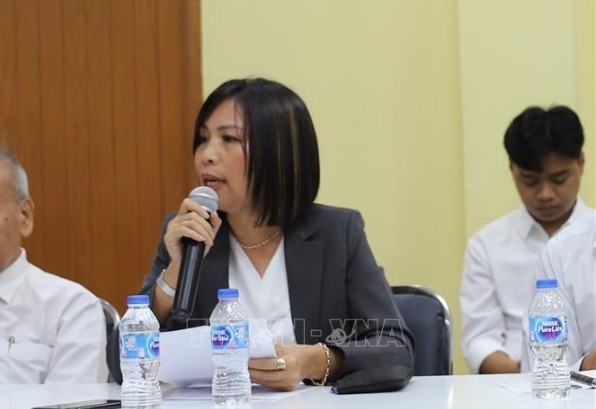

VOV.VN - Vietnam and Thailand share marked structural similarities in agricultural conditions and core strengths, alongside distinct complementary advantages in high-tech farming. These intersecting capacities provide ample scope for both nations to deepen cooperation, pool expertise, and jointly promote modern agriculture.
That assessment was made by Vietnamese experts based at the Asian Institute of Technology (AIT) in Thailand, while highlighting the strategic trajectory of bilateral agricultural ties.
Speaking with journalists in Bangkok, Dr. Dong Thanh Ha, a faculty member at AIT’s Department of Food, Agriculture and Bioresources, noted that Vietnam holds clear strengths in staple production, including rice, coffee, tropical fruits, and aquaculture, coupled with large-scale output capabilities. Meanwhile, Thailand brings advanced expertise in production technology, seed development, deep processing, logistics, and value-chain integration. Aligning these complementary advantages can unlock new economic value and elevate the competitive edge of both agricultural sectors.
Bilateral cooperation is primed for expansion across several critical vectors, including smart agriculture and digital transformation, biotechnology and seed breeding, post-harvest processing, animal health and disease management, and targeted solutions to reduce antibiotic use and build climate resilience.
Notably, vaccine research and alternatives to antibiotics in livestock and aquaculture represent high-potential areas for joint R&D and commercial application.
Assoc. Prof. Dr. Dong Thanh Ha stressed that bilateral engagement must move beyond mere experience-sharing toward a model of "co-research, co-development, and co-commercialization." This shift will enable both countries to leverage mutual strengths and engineer competitive products and technologies tailored for regional and international markets.
Bilateral cooperation is primed for expansion across several critical vectors, including smart agriculture and digital transformation, biotechnology and seed breeding, post-harvest processing, animal health and disease management, and targeted solutions to reduce antibiotic use and build climate resilience. Notably, vaccine research and alternatives to antibiotics in livestock and aquaculture represent high-potential areas for joint R&D and commercial application.
Assoc. Prof. Dr. Dong Thanh Ha stressed that bilateral engagement must move beyond mere experience-sharing toward a model of "co-research, co-development, and co-commercialization." This shift will enable both countries to leverage mutual strengths and engineer competitive products and technologies tailored for regional and international markets.
Echoing that perspective, Assoc. Prof. Dr. Nguyen Thi Phuoc Lai, Dean of AIT’s Department of Public Policy and Sustainable Development, observed that agricultural modernization imperatives and shared climate vulnerabilities create a strong foundation for partnership. However, she pointed out structural divergences in production models: Thailand relies on relatively abundant agricultural land and widespread contract farming arrangements tied to major agribusinesses, whereas Vietnam's agricultural sector is anchored by smallholder farmers and small- and medium-sized enterprises (SMEs). These structural realities must be factored into technology design and deployment.
Phuoc Lai emphasized that technology transfer should be paired with joint research, field testing, and adaptation to local conditions, alongside policy benchmarking to learn from Thailand’s experience in driving digital adoption. Artificial intelligence (AI), the Internet of Things (IoT), agricultural drones, precision farming, land and water management, and agricultural data forecasting offer fertile ground for cooperation. Crucially, technological upgrades must be paired with enabling policy frameworks, such as accessible financing, digital literacy training, agricultural extension services, data-sharing mechanisms, and public-private partnerships (PPPs).
A key structural advantage for Thailand lies in its robust, long-term, and accessible agricultural database covering climate, weather, and production metrics, which underpins precision farming and AI analytics. This data ecosystem presents a strong avenue for bilateral cooperation, encompassing not only shared datasets but also joint analytical methodologies tailored to farming communities.
Institutional linkages between universities, research institutes, and enterprises offer another synergy, with AIT positioned to act as a bridge for technology transfer, research, and policy support. Potential initiatives include joint research and field trials of climate-smart rice production models in the Mekong Delta, backed by local research partners.
Removing potential bottlenecks in the transition to high-tech agriculture, Assoc. Prof. Dr. Nguyen Thi Phuoc Lai pointed to financial constraints, limited digital literacy among smallholders, and data quality gaps. Initial capital outlays for high-tech machinery, sensors, and software frequently exceed the financial capacity of smallholder farming households, while digital capability gaps can hinder data-driven decision-making.
To overcome these hurdles, technological transition must be supported by targeted financial mechanisms, digital training programs, and upgraded extension services.
The ultimate goal of high-tech agriculture goes beyond raising productivity to safeguarding farmers' incomes, building resilience against economic shocks, and optimizing resource efficiency for long-term sustainability.
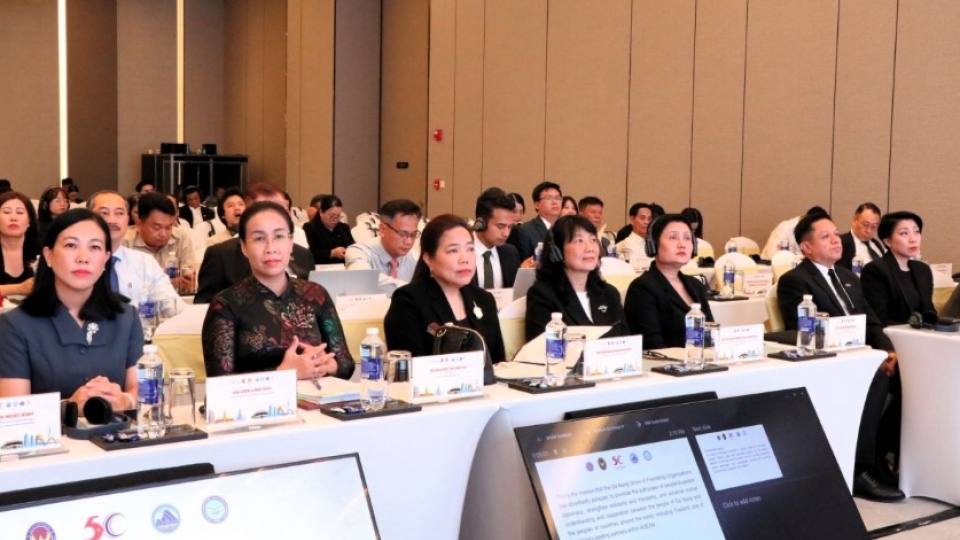
VOV.VN - An international workshop titled "Da Nang - A Bridge for Tourism, Trade, and Investment Cooperation and Development between Vietnam and Thailand" took place in the central city of Da Nang, opening up further opportunities for business connectivity and boosting ties between Da Nang, the Central and Central Highlands regions of Vietnam, and Thailand.
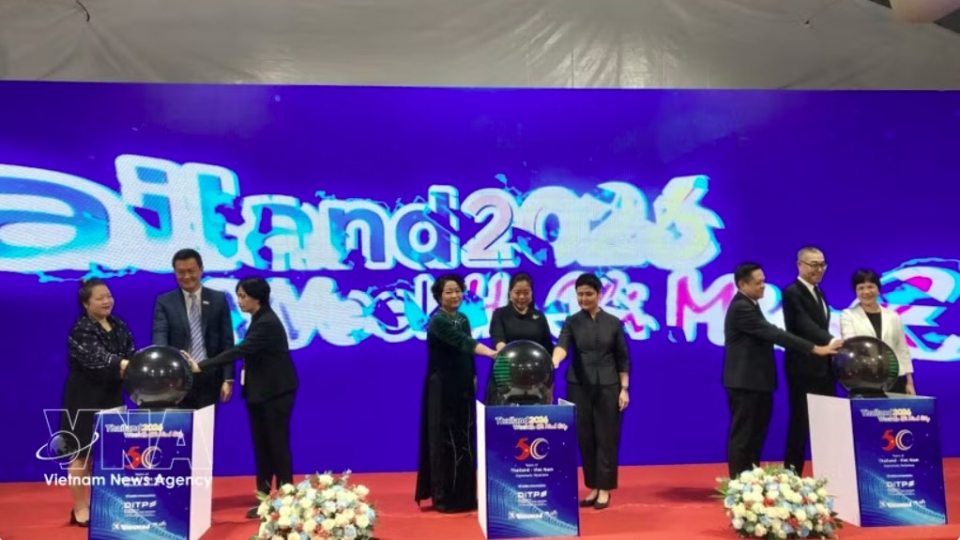
Thailand Week 2026 officially opened at the Saigon Exhibition and Convention Centre (SECC) on July 30, featuring nearly 180 booths hosted by leading Thai exporters and Vietnamese importers of Thai products.
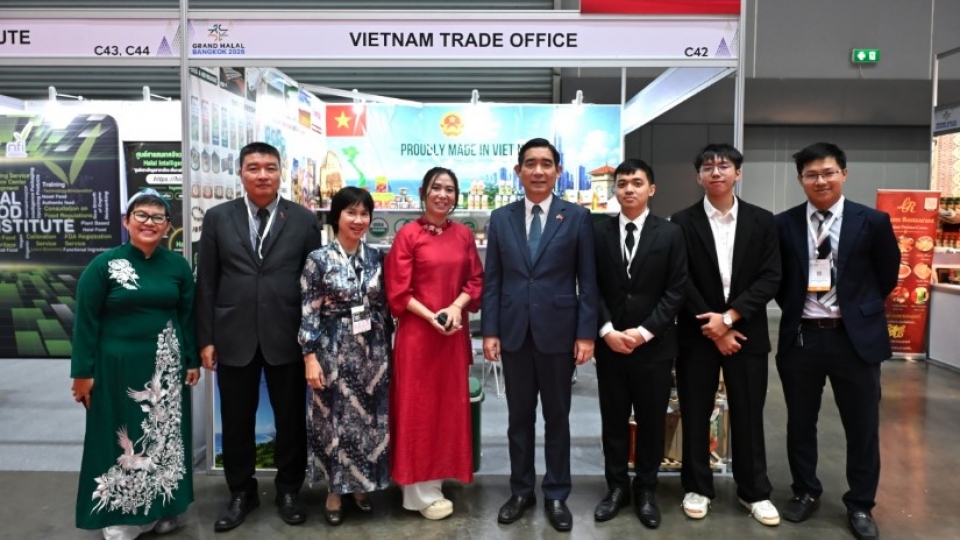
VOV.VN - Vietnamese businesses are showcasing halal-certified agricultural, seafood and processed food products at Thailand's largest international halal trade fair, as the country steps up efforts to expand its presence in the global halal market.

VOV.VN - Vietnamese businesses are showcasing halal-certified agricultural, seafood and processed food products at Thailand's largest international halal trade fair, as the country steps up efforts to expand its presence in the global halal market.

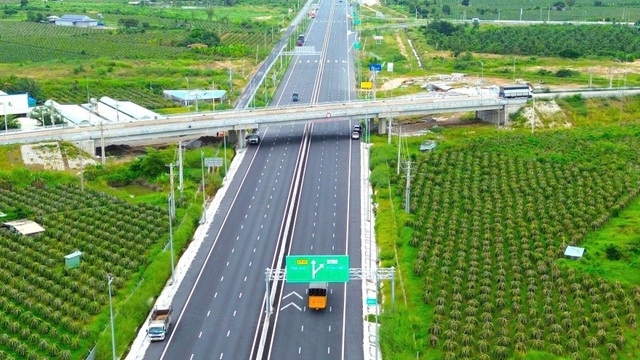
VOV.VN - Vietnam's dragon fruit exports are becoming more diversified, with shipments to Thailand surging nearly 184% in the first half of 2026 as exporters expand beyond their traditional reliance on the Chinese market.











Bình luận
Bình luận của bạn sẽ được xét duyệt trước khi đăng