Sustaining Middle East market for Vietnamese farm produce through FTAs
VOV.VN - Geopolitical conflicts and rising logistics costs slowed agricultural exports to the Middle East in the first half of 2026. However, strong import demand and newly active free trade agreements (FTAs) keep the region a strategic destination for Vietnamese farm produce.
Vietnam works to sustain agricultural exports to the Middle East amid trade headwinds.
The Middle East relies heavily on food imports, creating substantial growth opportunities despite temporary trade disruptions. In the UAE, local production covers just 10 to 15% of domestic food needs.
Sharp declines were recorded in major export categories during the six-month period, including fresh produce at nearly US$35 million (down 41.88%), cashews at over US$25.1 million (down 70.71%), pepper at nearly US$6.2 million (down 50.16%), and seafood at roughly US$16.1 million (down 33.88%). Meanwhile, Israeli imports of Vietnamese agricultural goods also faced market pressures, though seafood maintained positive momentum and accounted for 11 to 13% of Israel’s total seafood imports.
Trade pacts are driving the long-term outlook for the region. The Comprehensive Economic Partnership Agreement with the UAE, which took effect on February 3, 2026, commits to opening 94.9% of tariff lines and eliminates tariffs on 74.2% of lines immediately.
This benefit covers key export groups such as seafood, timber, cashews, and pepper. In addition, the Vietnam-Israel Free Trade Agreement, in force since November 17, 2024, continues to expand market access for core agricultural items.
Exporters hold a dominant position in key commodities, supplying roughly 60% of the Middle East's pepper and 50% of its cinnamon. Aside from direct domestic consumption, the UAE serves as a major regional logistics hub connecting shipments to broader markets across Africa, Central Asia, and South Asia.
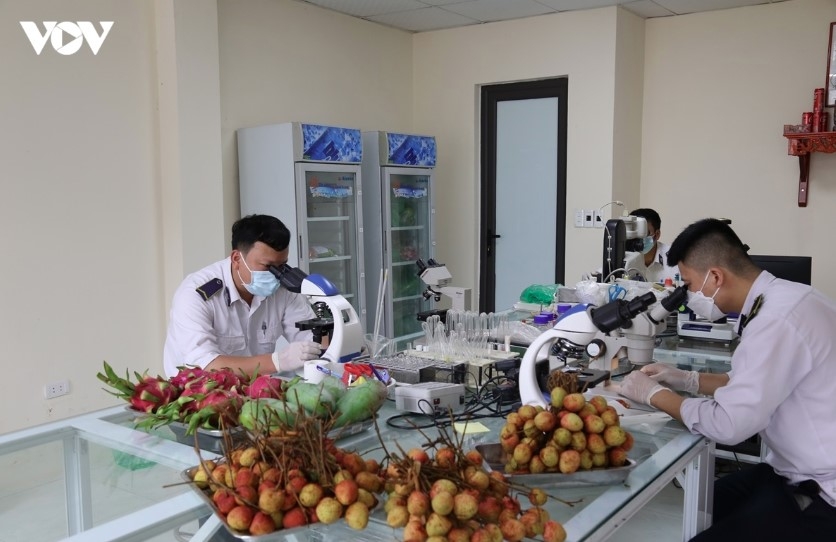
To fully leverage these tariff preferences, trade experts stress that exporters must meet strict Halal and Kosher standards, comply with rules of origin, and invest in deep processing.
Industry leaders and trade officials stress the need to establish a national Halal framework, strengthen bilateral sanitary and phytosanitary dialogues, and optimize transport networks to secure a lasting regional presence.
VOV.VN - Escalating tensions in the Middle East are posing significant challenges to global supply chains, but also serving as a critical test of resilience and adaptability for Vietnam’s agriculture sector, according to Minister of Agriculture and Environment Tran Duc Thang.
As global trade continues to face mounting uncertainty, the Middle East and South Asia are emerging as promising destinations for Vietnamese exports, according to insiders.
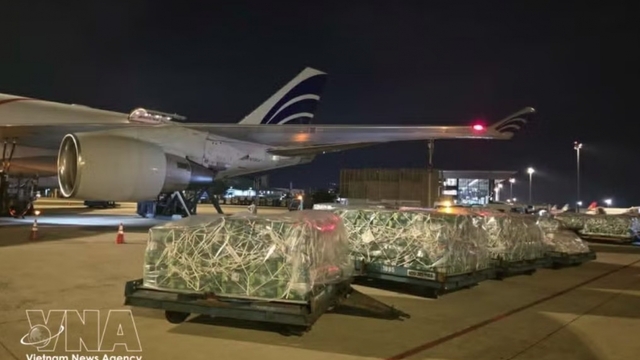
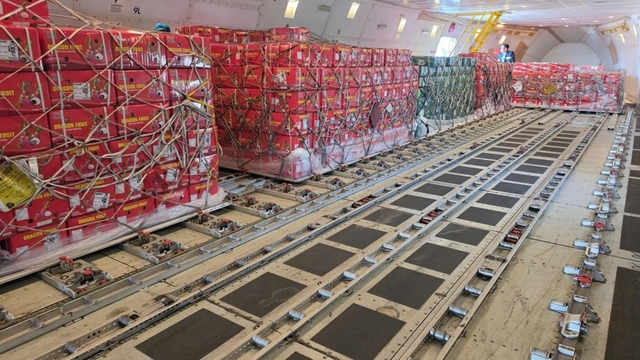
VOV.VN - LuLu Group International, a leading Middle Eastern retail conglomerate, has imported a second shipment of agricultural products from Vietnamese suppliers, demonstrating strong confidence among Middle Eastern importers in Vietnam’s production capacity, quality standards and ability to meet orders.








.JPG&w=640&q=100)








Bình luận
Bình luận của bạn sẽ được xét duyệt trước khi đăng