Vietnam, EU move toward deeper economic cooperation
VOV.VN - Economic ties between Vietnam and Europe are entering a new phase, shifting beyond trade expansion toward investment, innovation, green transition and the development of resilient supply chains, French economic news outlet Objectif Eco said in an article published on July 2.
The article on prospects for economic cooperation between Vietnam and Europe published on July 2 by French economic news outlet Objectif Eco. (Photo: VNA)
According to the article, Vietnam is no longer viewed by European businesses solely as an export market or an alternative manufacturing base in Asia.
With strong economic growth, a market of more than 100 million people, a rapidly expanding middle class and deeper international integration, Vietnam is increasingly seen as both a strategic market and a key manufacturing hub in Southeast Asia.
At the same time, many Vietnamese businesses are looking to Europe as a priority market for expanding operations, investment and participation in global value chains. Objectif Eco said this shift is prompting businesses on both sides to rethink market strategies.
Rather than focusing solely on trade, companies need to build a long-term presence, better understand the business environment, choose suitable partners and meet technical standards as well as growing expectations on sustainability and social responsibility. Data cited in the report shows Vietnam is one of Southeast Asia’s fastest-growing economies.
In the fourth quarter of 2025, Vietnam’s gross domestic product (GDP) grew 8.46% year-on-year. The industrial and construction sector expanded 9.73%, while services rose 8.82%. The figures point to the growing role of industrial production and domestic demand in supporting economic growth.
This outlook presents major opportunities for European companies in sectors where they have strong capabilities, including industrial technology, food processing equipment, water resource management, logistics, healthcare, education, professional services, energy, automation and sustainability-related solutions., the article said.
However, success in Vietnam depends not only on technology or brand reputation. Pricing, after-sales services, technical training, local support and strong partnerships with local firms are also critical.
The Netherlands was highlighted as a notable example in Vietnam-Europe economic relations.
The country remained Vietnam’s largest trading partner within the European Union (EU) for the second consecutive year.
In 2025, bilateral trade reached US$14.3 billion, up 3.8% from a year earlier. Vietnam’s exports to the Netherlands totaled US$13.5 billion, while imports stood at US$825 million.
With its advanced port and logistics system, the Netherlands serves not only as a consumer market but also as a gateway for Vietnamese goods entering Europe.
In investment, as of late October 2025, the Netherlands had 466 valid projects in Vietnam with total registered capital of nearly US$14.93 billion, making it the EU’s largest investor in Vietnam.
This indicates that bilateral ties are no longer limited to trade, expanding into investment cooperation, technology transfer, co-development and deeper participation in international production chains. The report also noted growing diversification in trade between Vietnam and Europe.
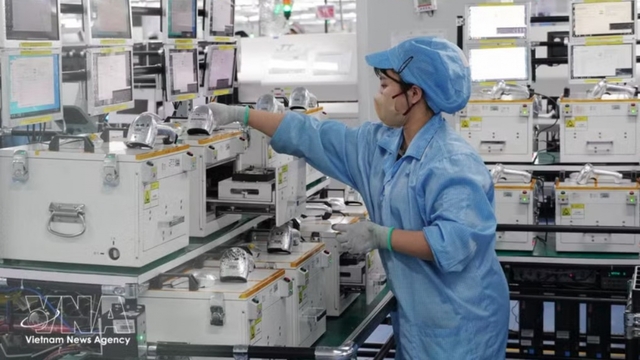
In addition to traditional exports such as textiles, footwear and agricultural products, computers, electronics and components accounted for the largest share of Vietnam’s exports to the Netherlands, reaching about US$3.4 billion in 2025. Machinery, equipment and spare parts exceeded US$2.2 billion.
Meanwhile, agricultural exports including coffee, cashew nuts, fruit and vegetables, seafood and wood products all posted solid growth. This points to a more diversified and higher-value economic relationship between Vietnam and Europe.
Vietnamese companies seeking expansion in Europe need stronger preparation in quality standards, legal documentation, traceability, technical certification and environmental and social responsibility.
Citing remarks by EU Trade Commissioner Maros Sefcovic in 2025, the report said Vietnam’s exports to the EU have risen by around 60% since the EU-Vietnam Free Trade Agreement (EVFTA) took effect in 2020, while EU exports to Vietnam have increased by around 10%.
This highlights the success of Vietnamese businesses while also pointing to the need for a more balanced and sustainable trade relationship.
The report also noted Vietnam and the EU upgraded ties to a Comprehensive Strategic Partnership in early 2026, saying the new framework is expected to create stronger momentum for cooperation in trade, investment, digital transformation, green transition, energy, climate and supply chain resilience.
Amid changes in the global economy, Vietnam-Europe ties are focused not only on expanding trade but also on building secure supply chains, strengthening industrial cooperation and developing long-term partnerships. Objectif Eco said opportunities for cooperation between Vietnam and Europe are broadening.
However, turning potential into concrete results will require businesses on both sides to better understand each other’s markets, choose the right partners and build long-term strategies.
The next phase of Vietnam-Europe economic ties will depend on trade volume, the quality of cooperation, innovation and the ability to create long-term value, Objectif Eco added.
Vietnam’s trade with the European Union (EU) remained resilient in the first five months of 2026, with exports posting robust double-digit growth and the country’s trade surplus with the bloc climbing 11.3% year-on-year to US$18.1 billion, despite slowing economic activity in Europe.
The Vietnamese Ministry of Finance wishes to strengthen cooperation with the European Union (EU) in green finance, digital finance, capital market development, and public finance management, Minister Ngo Van Tuan told Ambassador Julien Guerrier, head of the EU Delegation to Vietnam, on June 15.
Vietnam’s trade with the European Union (EU) remained resilient in the first five months of 2026, with exports posting robust double-digit growth and the country’s trade surplus with the bloc climbing 11.3% year-on-year to US$18.1 billion, despite slowing economic activity in Europe.











.JPG&w=640&q=100)











Bình luận
Bình luận của bạn sẽ được xét duyệt trước khi đăng