Vietnam moves to make SME support more accessible and effective
VOV.VN - Nearly a decade after Vietnam’s Law on Support for Small and Medium-Sized Enterprises (SMEs) took effect, proposed amendments are shifting the focus from expanding support policies to ensuring SMEs can more easily access finance, government assistance and other resources needed for sustainable growth.
Vietnam is revising its SME Support Law to improve access to finance, promote green growth, support business transformation, and help small and medium-sized enterprises benefit more effectively from government assistance
The Ministry of Finance is proposing amendments to the 2017 SME Support Law, aiming to make support mechanisms more practical, accessible and measurable.
According to Dr. Ta Thu Phuong from the Faculty of Business Administration at National Economics University, the 2017 law was significant because it created Vietnam’s first dedicated legal framework for SMEs. However, its biggest limitation was that it primarily outlined support policies without establishing effective mechanisms to ensure businesses could access and benefit from them.
She noted that support measures remain fragmented, procedures are often complex, implementation responsibilities are not always clearly defined, and evaluation mechanisms remain limited.
At the same time, many SMEs face structural disadvantages, including limited management capacity, weak financial records, insufficient collateral and restricted access to information. This mismatch has widened the gap between policy design and actual business outcomes.
Expanding access to finance
One of the most pressing challenges for SMEs is access to capital. Although various credit support programmes have been introduced, many enterprises still struggle to obtain bank loans due to a lack of traditional collateral.
The draft amendments propose expanding the range of assets that can be used as collateral, including intellectual property rights, intangible assets, digital assets and other legally recognised property rights.
According to Dr. Phuong, this represents a significant shift in the approach to SME financing.
Many businesses do not own substantial real estate assets but possess valuable intellectual property, software, data, contracts or future revenue streams. If these assets are legally recognised and supported by transparent valuation and registration mechanisms, access to financing could improve considerably.
Yet, she cautioned that legal recognition alone is not sufficient. Effective implementation would require valuation standards, ownership databases, secured transaction registration systems and clear procedures for asset recovery in the event of default.
Without these supporting frameworks, financial institutions may be reluctant to accept non-traditional collateral, she said.
Encouraging green and sustainable business models
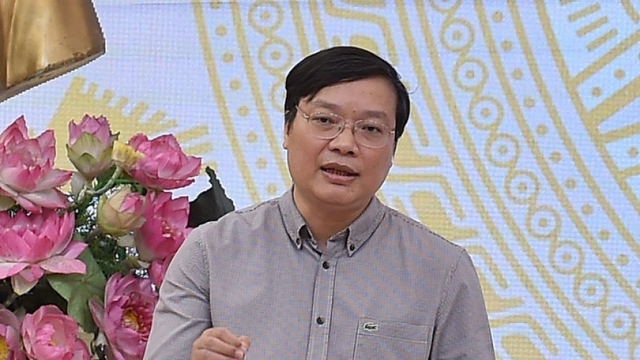
Dr. Ta Thu Phuong from the Faculty of Business Administration at National Economics University
Beyond financing, the proposed amendments seek to encourage sustainable business development. Under the draft law, enterprises investing in green projects, circular economy initiatives or sustainable business models would receive priority access to credit, credit guarantees and interest-rate support.
This is a practical step as it transits from broad-based support toward more targeted incentives designed to promote long-term competitiveness, expert Phuong noted.
The policy could help businesses invest in clean technologies, energy efficiency and emissions reduction while improving governance standards and compliance with increasingly demanding international market requirements.
Nevertheless, she emphasised that implementation will be critical. If definitions of "green projects" or "circular economy businesses" are unclear, or if approval procedures become overly complicated, many SMEs may struggle to benefit from the incentives.
Supporting business formalisation
The draft law also introduces support measures for household businesses seeking to transform into registered enterprises.
Proposed incentives include exemptions from business registration fees, simplified accounting and tax procedures, and support for accounting software during the initial period after registration.
However, Dr. Phuong argued that such measures mainly address the initial stage of business formalisation.
Many household businesses are concerned about long-term compliance costs, including taxation, accounting obligations, social insurance contributions and labour regulations, she pointed out.
She suggested that support programmes should extend beyond registration and accompany newly established enterprises during their first two to three years of operation.
From policy design to practical implementation
According to the expert, future reforms should focus on support mechanisms capable of generating direct impacts on business performance.
Recommended measures include developing data-based lending models that assess enterprises through e-invoices, cash flow, purchase orders and payment histories rather than relying heavily on collateral.
Credit guarantee funds should also be redesigned to share risks more effectively with commercial banks.
In addition, support for accounting, taxation, financial management, digital transformation and corporate governance should be delivered through practical tools that businesses use on a daily basis, rather than through occasional training programmes.
The expert also stressed that government support should not focus solely on inputs such as financing and consulting services. Policies should also facilitate market access by connecting SMEs with larger domestic companies, foreign-invested enterprises, retail networks and trade promotion programmes.
Dr. Phuong emphasised that effective SME support depends not only on policy design but also on implementation mechanisms.
A law can only be effective when it clearly answers four key questions: who implements it, where resources come from, how businesses can access support, and how outcomes are measured, she said.
She suggested establishing a one-stop support mechanism where SMEs can easily obtain information, apply for assistance and monitor implementation progress. Transparent funding arrangements, independent oversight and clear accountability mechanisms should also be introduced.
Ultimately, the expert believed that the major challenge is not a shortage of support policies but the gap between policy intentions and business accessibility.
The success of the revised law, she argued, will depend on its ability to transform government support from a collection of policy commitments into practical public services that are easy to access, easy to use and capable of delivering measurable results for enterprises.
SME Forum 2026, a leadership platform for founders and senior executives of Vietnamese enterprises, will take place on March 20, centering on how businesses can achieve sustainable growth in an increasingly volatile market.
VOV.VN - Nearly 120,000 businesses entered or re-entered the market in the first four months of 2026, reflecting growing momentum in Vietnam’s private sector after one year of implementing the Politburo's Resolution 68 on private sector development.
VOV.VN - The Government of Vietnam on February 24 issued a resolution on an Action Programme to implement the Politburo’s Resolution 79 on the development of the state sector.
VOV.VN - The Party Central Committee’s Secretary held a nationwide conference in Hanoi on February 25 to study and implement two of the Politburo’s major resolutions, underscoring the country’s strategic direction in advancing the state sector and promoting cultural development in a new phase of integration and growth.
VOV.VN - The Politburo has issued a new resolution outlining an ambitious roadmap to strengthen the State-owned sector, aiming to build globally competitive State-owned enterprises (SOEs), modernise strategic infrastructure and unlock key national resources.













.JPG&w=640&q=100)










Bình luận
Bình luận của bạn sẽ được xét duyệt trước khi đăng