Vietnam shifts from attracting FDI to selecting high-quality investment
VOV.VN - Vietnam is reshaping its foreign investment strategy under the Politburo’s Resolution 10, shifting from attracting as much foreign direct investment (FDI) as possible to selectively targeting high-quality projects that can drive technology transfer, innovation and long-term economic competitiveness.
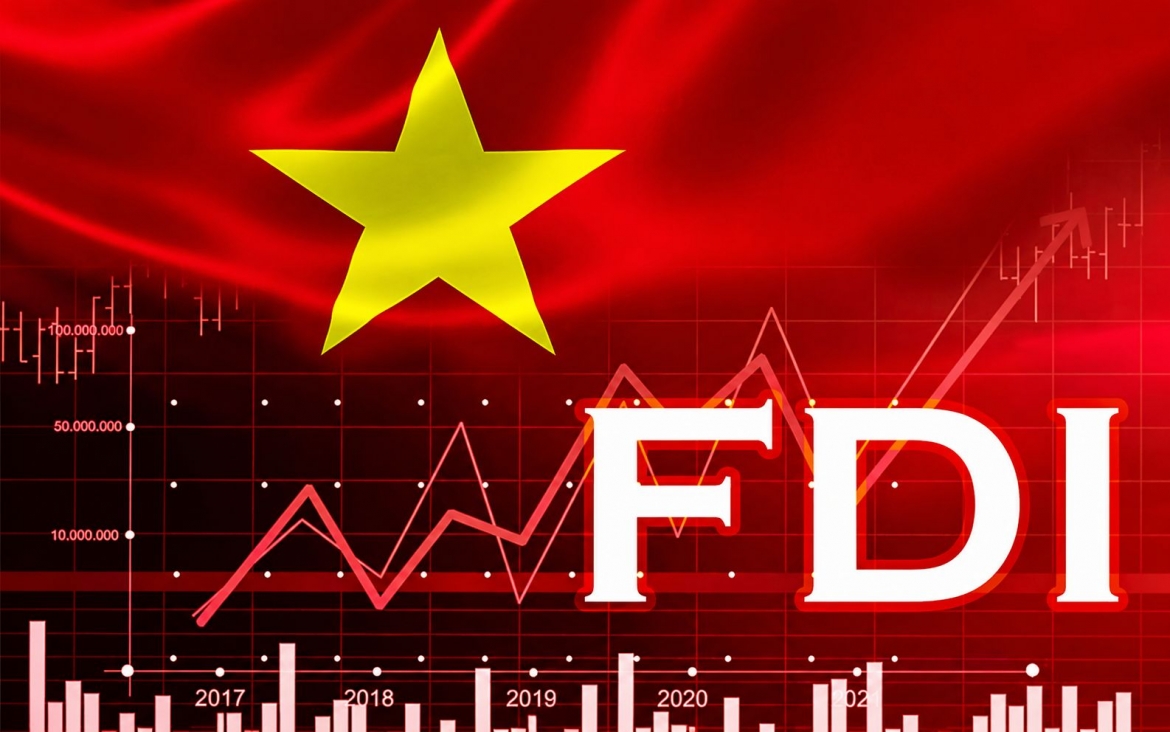
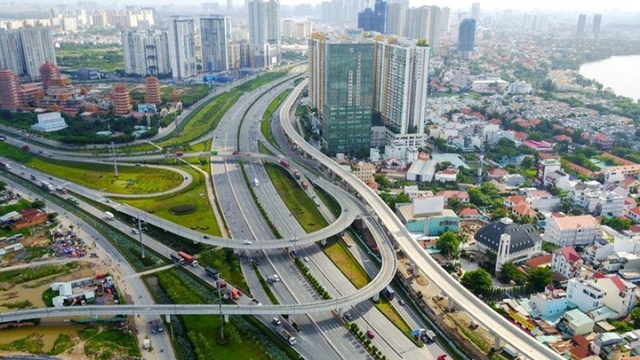
Vietnam is shifting from pursuing investment volume to selecting high-quality projects that bring advanced technology, innovation and greater value creation, marking a fundamental policy shift under Politburo Resolution 10. (Illustrative image)
After nearly four decades of opening its economy to foreign direct investment, Vietnam is entering a new stage of development in which the quality of investment matters more than the quantity.
For years, the FDI sector has been one of the country's key economic engines, accounting for roughly 70% of Vietnam's export turnover, creating millions of jobs, accelerating industrialisation and integrating the country into global manufacturing networks.
However, the success of this development model has also exposed structural limitations.
Many foreign-invested projects continue to rely primarily on Vietnam's low labour costs, while technology transfer has often fallen short of expectations. Local content is limited in many industries, connections between foreign-invested enterprises and domestic firms are still relatively weak, and much of the value added is generated outside Vietnam.
These challenges have prompted policymakers to rethink the country's approach to foreign investment as Vietnam pursues higher-quality growth.
Rather than simply attracting more capital, the focus is increasingly shifting toward projects capable of introducing advanced technologies, strengthening innovation, supporting domestic enterprises and generating higher value-added production.
That strategic transition lies at the heart of Resolution 10 of the Politburo on developing the foreign-invested economic sector.
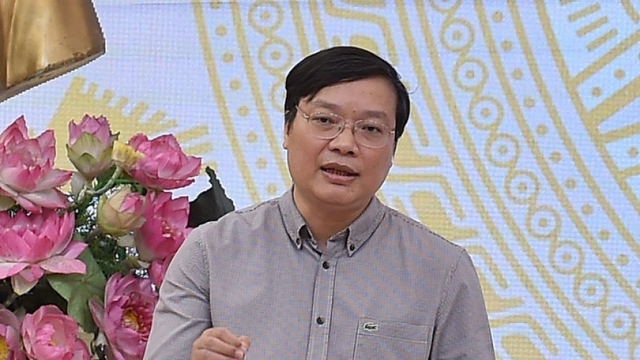
According to Dr. Phan Huu Thang, former director of the Foreign Investment Agency under the former Ministry of Planning and Investment (now the Ministry of Finance), the Resolution represents a fundamental change in development thinking.
“The objective is no longer simply to attract more FDI, but to maximise its quality, efficiency and sustainability by prioritising projects with advanced technologies, strong innovation capacity and greater contributions to Vietnam's long-term modernisation,” he said.
Instead of measuring success by registered capital or the number of investment projects, Vietnam will increasingly evaluate FDI through technology transfer, productivity gains, stronger participation of domestic enterprises in global value chains and broader contributions to national industrial upgrading.
Global supply chain shifts create new opportunities
Vietnam's policy transition comes at a time when the global economy is undergoing profound structural transformation.
Digital transformation, artificial intelligence (AI), semiconductor manufacturing, biotechnology, green technologies and energy transition are reshaping international production networks.
Meanwhile, multinational corporations continue to diversify their supply chains to reduce geopolitical risks, creating new opportunities for economies that offer political stability, skilled labour and favourable investment environments.
Dr. Thang believed Vietnam is well positioned to move further up global value chains if it successfully capitalises on these shifts through a more selective investment strategy.
Resolution 10 reflects this ambition by setting not only quantitative investment targets but also broader structural goals for 2030.
Besides attracting between US$40 billion and US$50 billion in FDI annually, Vietnam aims to achieve an average localisation rate of 45-50% in key manufacturing industries, enable around 10,000 Vietnamese enterprises to participate in foreign-invested supply chains and raise the proportion of trained workers to approximately 80%.
These targets indicate that Vietnam's objective extends well beyond increasing investment volume.
The country seeks to build an integrated industrial ecosystem in which domestic firms evolve from providers of basic services into strategic suppliers within global production networks.
Experts cautioned that adopting a new investment strategy is only the first step.
According to Dr. Nguyen Quoc Viet, head of the Macroeconomic Research Group at the University of Economics and Business under Vietnam National University, Hanoi, Vietnam's FDI performance during the first half of 2026 continues to demonstrate strong international investor confidence.
At the same time, the significant gap between registered and disbursed investment suggests that the economy's capacity to absorb foreign capital remains a critical challenge.
Addressing this issue will require continued investment in transport infrastructure, energy systems, logistics networks, digital infrastructure and a highly skilled workforce capable of supporting technology-intensive industries.
He also argued that future investment incentives should focus more strongly on projects involving high technology, innovation, research and development, and activities capable of generating wider spillover effects for domestic enterprises.
In other words, moving from attracting FDI to selecting FDI means not only identifying the right investors but also ensuring that Vietnam possesses sufficient institutional and industrial capacity to fully absorb the benefits those investments bring.
Success will be measured beyond investment volume
Looking further ahead, Resolution 10 envisions Vietnam becoming one of Asia's leading destinations for investment, innovation, research and development, and high-tech manufacturing by 2045.
To achieve this objective, Dr. Thang said Vietnam should formulate a comprehensive national strategy for developing the workforce needed to support next-generation FDI between 2026 and 2045.
Priority should be given to training semiconductor engineers, artificial intelligence specialists, data technology experts, green technology professionals and internationally qualified business managers.
Ultimately, he argued, the success of Resolution 10 should not be measured simply by the amount of foreign investment Vietnam attracts.
Instead, its effectiveness should be judged by the country's technological advancement, productivity growth, stronger domestic enterprises and a more prominent position within global value chains.
Three priorities will determine whether those ambitions become reality: developing high-quality human resources, strengthening the competitiveness of Vietnamese enterprises and building a robust innovation ecosystem capable of absorbing, adapting and spreading the technologies introduced through foreign investment.
As Vietnam enters its next stage of development, foreign direct investment is no longer viewed as an end in itself, but as a strategic tool for building an independent, modern and globally competitive economy - the central message underpinning Resolution 10.
VOV.VN - Vietnam attracted US$34.65 billion in registered foreign direct investment (FDI) in the first half of 2026, a 61% increase from a year earlier, highlighting the country's continued appeal as a destination for international investors.
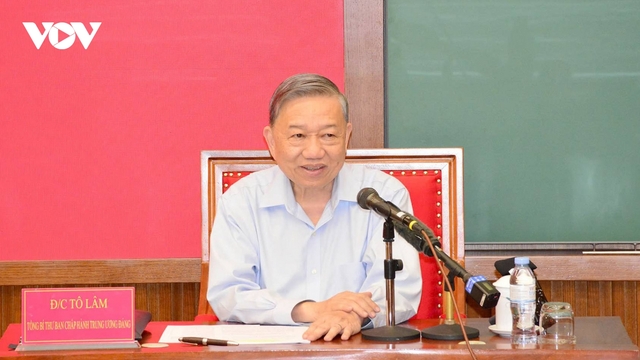
VOV.VN - On behalf of the Politburo, General Secretary and State President To Lam signed Resolution No. 10 dated June 8, 2026 on the development of the foreign-invested sector.
VOV.VN - Nearly 2.1 million delegates joined a nationwide conference on June 30 to study and implement Politburo Resolution No.10 on developing the foreign-invested sector, underscoring the country’s renewed strategy to attract higher-quality foreign investment and strengthen its position in global value chains.
It’s time for Vietnam to shift from its long-standing approach of attracting foreign direct investment (FDI) at all costs towards a more selective strategy focused on technology, innovation, green development, value creation and stronger linkages with domestic enterprises, experts have said.








.JPG&w=640&q=100)








Bình luận
Bình luận của bạn sẽ được xét duyệt trước khi đăng