

VOV.VN - Vietnamese exports are increasingly facing technical barriers as the European Union has recently adopted stricter standards, requiring businesses to equip themselves with thorough knowledge of new regulations and proactively enhance their production capacity.
Since the beginning of 2025, Vietnamese exports have been subjected to 14 trade defence investigations initiated by foreign countries. Notably, these cases are not only increasing in number but also becoming more complex, with several countries exploring unprecedented regulatory areas.
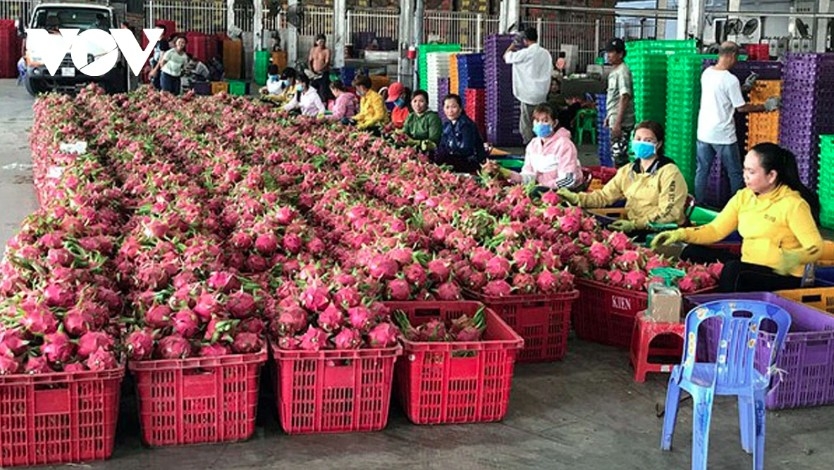
The European Union is a case in point. Dragon fruit exporters previously only needed to prove the absence of pesticide residues in their shipments to obtain export certification. However, as of July 1, the EU now requires that certificates be issued by State authorities, rather than by businesses or third-party verifiers. This change has created a significant barrier for Vietnamese exporters, making it difficult to secure timely documentation for export.
Furthermore, many importing countries now require wet-ink (hand-signed) documents, rejecting electronic signatures. In some cases, importers demand three to four original copies bearing physical signatures and official seals. These bureaucratic hurdles challenge local authorities’ capacity to process paperwork efficiently and uniformly.
Nguyen Thanh Hai, Vietnam’s Trade Counselor in Poland, noted that the Eastern European country’s growing demand for imported agricultural products has been accompanied by stricter quality controls. The Agricultural and Food Quality Inspection (IJHARS) in Poland has duly announced increased enforcement in a bid to prevent substandard goods from entering the market.
In the first half of 2025, IJHARS banned five shipments originating from Vietnam, including black pepper and dried mango. Most recently, on July 25, IJHARS detained a 22-tonne shipment of cinnamon from Vietnam due to moldy odor, contamination by fungi and yeasts, and other organic pollutants. The shipment was immediately blocked and, per regulation, will either be returned to the sender or disposed of appropriately.
In response, the Vietnam Trade Office in Poland has urged Vietnamese exporters of agricultural products and foodstuffs to strictly manage quality control to avoid financial loss, reputational damage, or rejection of goods—especially as Vietnamese products are gradually building a solid reputation in Poland.
Meanwhile, the EU Deforestation Regulation (EUDR), which became effective from June 2023, requires proof that products imported into the EU do not contribute to deforestation after December 31, 2020.
For large and medium-sized companies, compliance becomes mandatory from December 30, 2025, while smaller enterprises are granted an additional six months. Affected commodities include beef, cocoa, coffee, palm oil, rubber, soybeans, and wood, many of which are key export items for Vietnam.
Nguyen Thi Hoang Thuy, Vietnamese Trade Counselor to Sweden and concurrently accredited to Denmark, Finland, Iceland, Norway, and Latvia, warned that despite the EUDR’s intent to ensure environmental protection, its strict traceability requirements may deter EU importers and hinder Vietnamese market access.
The Trade Remedies Authority of Vietnam (TRAV) under the Ministry of Industry and Trade, reported that the EU has recently intensified investigations into circumvention of trade defence measures, expanding the scope to include agriculture, chemicals, and particularly processed and manufactured goods.
It recommended that Vietnamese businesses stay informed about EU trade regulations, enhance production sustainability, ensure raw material traceability, monitor trade warnings, and cooperate with authorities if investigated
Industry associations are encouraged to boost market intelligence, issue timely risk alerts, conduct legal and technical training programs, assist with compliance documentation, and review and upgrade domestic standards to align with EU requirements on product quality, food safety, and sustainability.

Vietnam has initiated 29 trade defence investigations to protect its domestic market and businesses' interests, thus increasing state budget revenue by approximately VND1.5 trillion (US$60.4 million) a year, according to the Ministry of Industry and Trade (MOIT).
In response to mounting trade‑defence pressure on Vietnamese exports ranging across a broadening spectrum of goods and emerging markets, the Ministry of Industry and Trade (MoIT) is ramping up early warning alerts to notify exporters ahead of potential foreign anti-dumping investigations.

The World Trade Organisation (WTO) committees on trade defence held a series of meetings from April 28 to May 1, the Permanent Mission of Vietnam to the United Nations, the WTO, and other international organisations in Geneva, Switzerland, announced on May 6.






.JPG&w=640&q=100)









Bình luận
Bình luận của bạn sẽ được xét duyệt trước khi đăng