
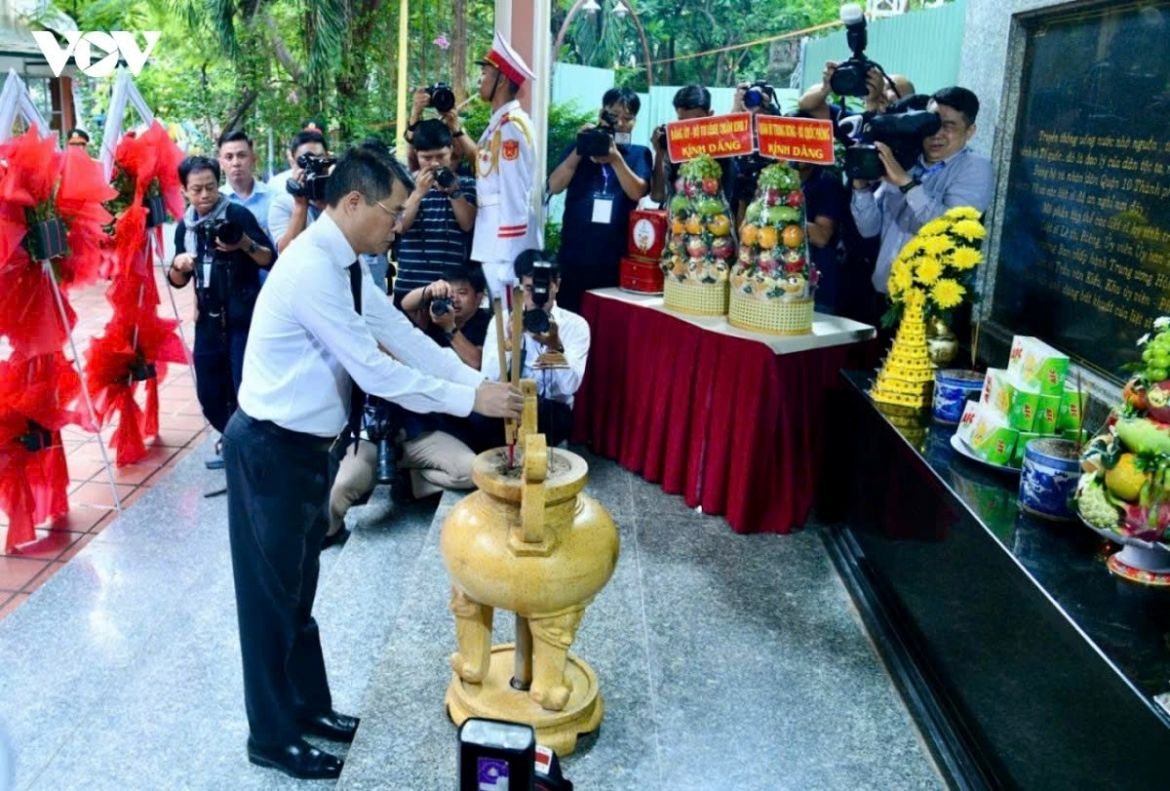

VOV.VN - Nearly 80 years after President Ho Chi Minh launched War Invalids and Martyrs Day (July 27, 1947 – 2026), Vietnam continues his legacy through a 500-day campaign to search for, recover and identify the remains of fallen soldiers, helping more Vietnamese heroes return to their families.
Every July, Vietnam pauses to honour those who gave their youth and lives to the country's independence and freedom as it commemorates War Invalids and Martyrs Day on July 27.
Almost eight decades have passed since President Ho Chi Minh initiated the observance, yet his teachings on caring for war veterans, fallen soldiers and their families remain deeply embedded in Vietnam’s national conscience. Across forests, mountains and former battlefields in Vietnam, Laos and Cambodia, thousands of officers and soldiers continue searching for the remains of those still missing. Every field expedition, excavation and DNA comparison represents another step in fulfilling President Ho Chi Minh’s vision of remembering those who sacrificed for the nation.
In the summer of 1947, when Vietnam's resistance war against French colonial rule was still at its most difficult stage, President Ho Chi Minh proposed setting aside a special day each year to honour wounded soldiers. A national conference later designated July 27 as War Invalids Day, which was officially renamed War Invalids and Martyrs Day in 1955.
Since then, July 27 has become one of Vietnam's most sacred national commemorations. More than establishing a memorial day, President Ho Chi Minh laid the moral foundation for a lasting national principle: the sacrifices of those who served the country must be remembered through meaningful actions.
He once wrote: “The blood of our fallen heroes has made the revolutionary flag shine even brighter. Their heroic sacrifice has paved the way for our nation's blossoming independence and freedom.” Speaking of wounded soldiers, he reminded the nation that “The Fatherland and the people must be grateful to and care for these brave heroes.”
His words were always accompanied by action. On the first War Invalids Day in 1947, President Ho Chi Minh donated his silk shirt, one month's salary and the cost of one day's meals to wounded soldiers. When presented with an air conditioner years later, he immediately sent it to a hospital caring for war veterans. Every July 27, he wrote letters, visited wounded soldiers and paid tribute to fallen heroes.
In his historic Testament, after speaking about the country's future victory, President Ho Chi Minh devoted his first thoughts to what he called the work concerning people. He instructed that wounded veterans should be helped to rebuild their lives, while the parents, spouses and children of fallen soldiers should receive proper care. He also called for memorials to preserve the memory of those who sacrificed so future generations would learn the meaning of patriotism.
Those teachings have been carried forward through Vietnam's increasingly comprehensive policies for people who rendered service to the nation.
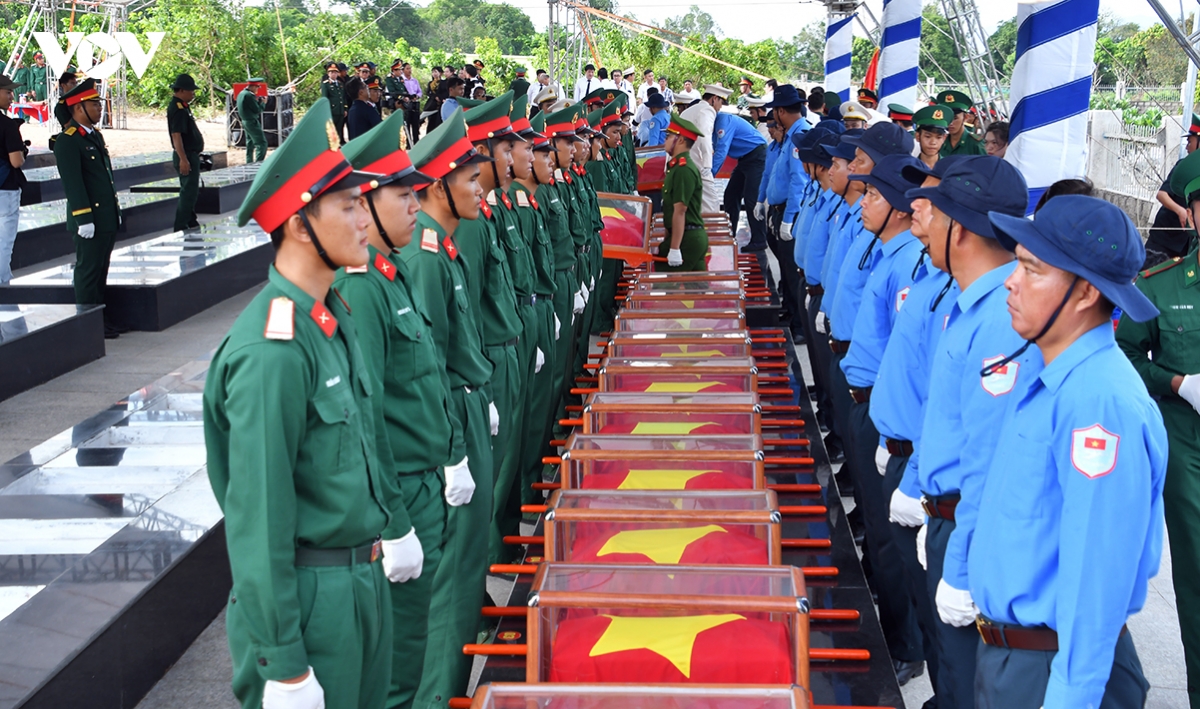
Yet decades after the wars ended, hundreds of thousands of fallen soldiers remain missing or unidentified. For countless families, the wait has lasted for generations. Many mothers, wives and children spent their entire lives hoping to welcome their loved ones home.
It is from this aspiration that Vietnam launched the nationwide 500-day dampaign for the search, recovery and identification of martyrs’ remains, running from March 15, 2026 to July 27, 2027, in preparation for the 80th anniversary of War Invalids and Martyrs Day.
The campaign is not only one of the largest recovery efforts ever undertaken but also a continuation of Ho Chi Minh's teachings through concrete national action.
During the first six months of 2026 alone, search teams recovered the remains of 1,255 fallen soldiers, including 314 in Vietnam, 173 in Laos and 768 in Cambodia. Meanwhile, approximately 53,000 DNA samples were collected from relatives of missing soldiers, leading to the successful identification of 25 martyrs.
Behind these figures lie countless silent missions and the enduring hopes of families who have waited for decades.
To locate a single burial site, military recovery teams such as K53 (Quang Ngai Province), K91 (Dong Thap Province), K92 and K93 (An Giang Province) often spend months trekking through dense forests, crossing rivers and searching remote areas without roads, electricity or mobile phone signals, relying on the smallest traces left by history.
In the Central Highlands, Team K51 recently recovered the remains of two soldiers thanks to the remarkable memory of So Hon, a 96-year-old former wartime liaison officer. Despite his age, he personally guided search teams to the exact locations where his comrades had been buried nearly half a century earlier.
In another remarkable discovery, search teams uncovered several sets of human remains beneath Le Thi Rieng Park in Ho Chi Minh City after analysing a historical photograph taken nearly 60 years ago. Personal belongings recovered at the site, including an old wallet containing identification documents, enabled authorities to identify martyr Huynh Van Quen, a liberation soldier killed during the 1968 Tet Offensive.
For those involved in the recovery effort, such discoveries are profoundly moving reminders that history can still speak through the smallest surviving artifacts.
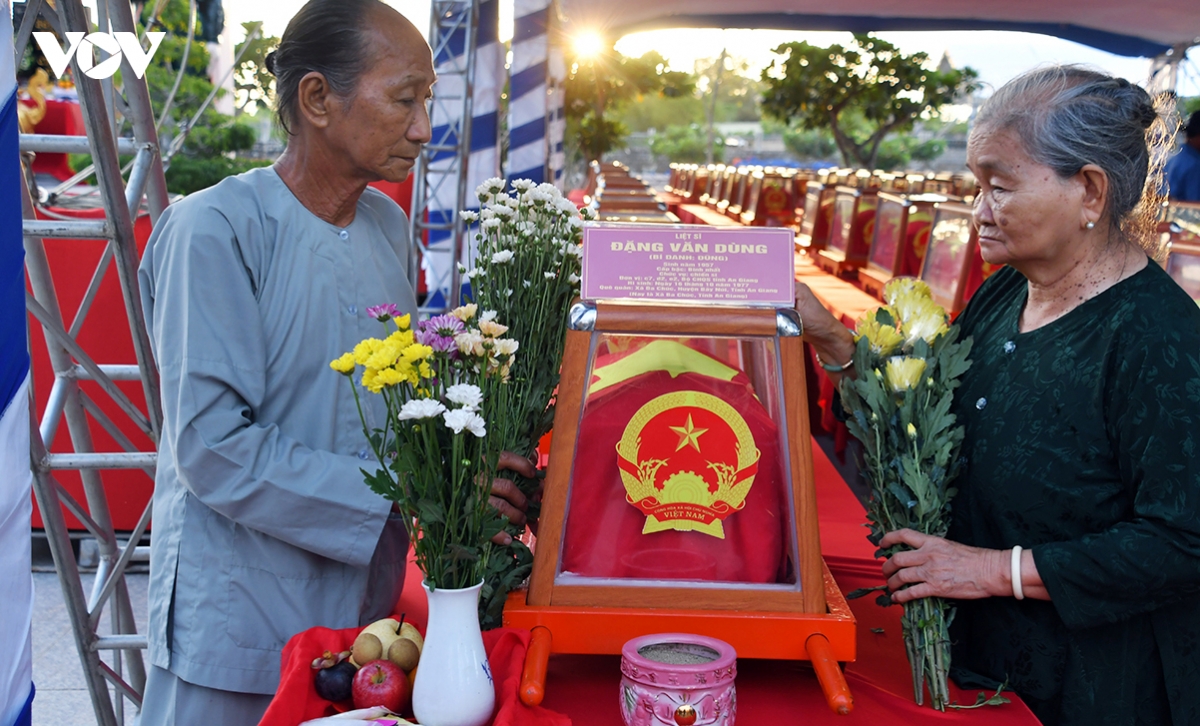
Perhaps no moment is more emotional than when a family finally welcomes home a loved one.
Lieutenant General Hoang Khanh Hung once recalled the story of an elderly mother who had been bedridden for months. Upon hearing that her son's remains had finally been returned, she struggled to the doorway, gently placed her hand on his urn and whispered “At last, my son has come home.”
That simple sentence brought to an end decades of waiting and captured the hopes shared by thousands of Vietnamese families.
The search has also been strengthened by gestures of humanity that transcend the legacy of war.
Former American pilot Richard W. Magner has made eight visits to the USNational Archives, painstakingly examining reconnaissance photographs, military maps, wartime records and memoirs to help Vietnam identify burial sites of fallen soldiers. The information he provided has helped many families recover their loved ones while serving as a powerful symbol of reconciliation, compassion and a shared commitment to healing the wounds of war.
Nearly 80 years ago, President Ho Chi Minh urged the nation never to forget those who sacrificed for its independence and to care for their families with gratitude and responsibility.
Today, every journey into remote forests, every DNA match and every recovered set of remains continues that legacy.
The 500-day campaign is about far more than identifying the fallen. It is about preserving Vietnam's enduring tradition of gratitude, strengthening patriotism among younger generations and reminding society that today's peace and independence were secured through immeasurable sacrifice.
It is also a solemn promise from the present to the past that no fallen soldier will be forgotten, and no sacrifice will ever fade from the nation's memory.
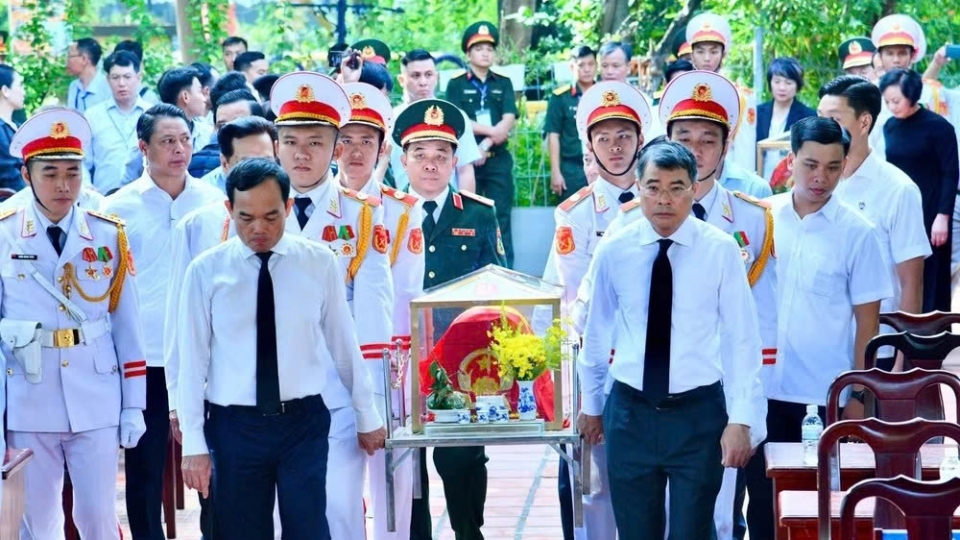
VOV.VN - Prime Minister Le Minh Hung on July 6 called for efforts to recover and identify the remains of fallen soldiers to be carried out with the highest standards of scientific accuracy, professional responsibility and national gratitude, describing the mission as both a political obligation and a profound humanitarian commitment.

VOV.VN - Vietnam's Military Zone 9 on July 2 repatriated the remains of 12 Vietnamese volunteer soldiers and military experts who died in Cambodia during international missions.

VOV.VN - The remains uncovered during the first days of excavation at Ho Chi Minh City's Le Thi Rieng Park have been confirmed as those of Southern Liberation Army soldiers killed during the 1968 Tet Offensive, a senior military officer said on July 6.

VOV.VN - Vietnam has launched a nationwide 500-day campaign to search for, recover and identify the remains of fallen soldiers, reaffirming the country's commitment to honouring those who sacrificed their lives for national independence.




.JPG&w=640&q=100)






Bình luận
Bình luận của bạn sẽ được xét duyệt trước khi đăng