Resolution 27 seeks to reorganise Vietnam’s development space for new growth
VOV.VN - A new Politburo Resolution calls for Vietnam to reorganise its national development space around growth corridors, economic hubs and dynamic cities, with six socio-economic regions given ambitious growth targets through 2030.
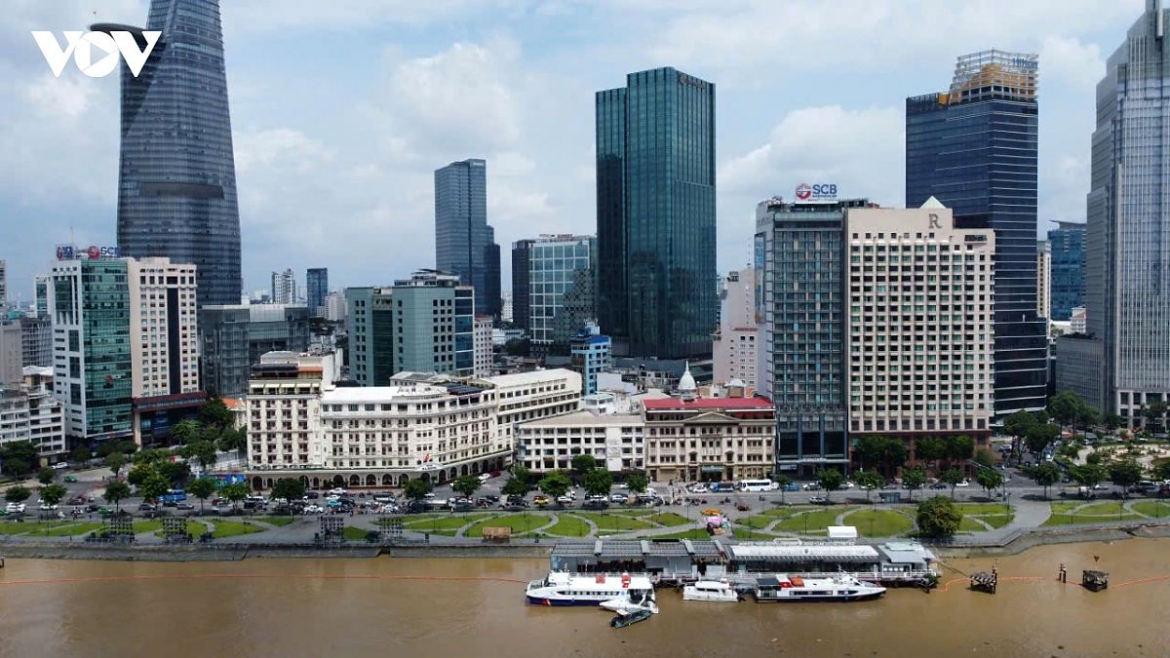
Hanoi and Ho Chi Minh City have been positioned as Vietnam's major growth poles. In the photo is a corner of Ho Chi Minh City.
Resolution 27 was signed by To Lam, General Secretary of the Communist Party of Vietnam Central Committee and State President, on August 28, 2026, after more than three years of implementing Politburo resolutions on the socio-economic development and national defence and security of Vietnam’s six socio-economic regions.
It acknowledges progress in regional development and cooperation, but also identifies persistent bottlenecks, including overlapping and poorly coordinated planning, inadequate infrastructure, slow development of economic corridors and industry clusters, and the limited ability of some major cities and growth hubs to play a leading and spillover role.
The new approach is therefore broader than developing individual localities. Regional development is defined as a way to organise national growth, restructure development space, allocate resources and strengthen national competitiveness.
From administrative boundaries to functional development space
One of the most important shifts under Resolution 27 is the way Vietnam looks at its development space.
The resolution calls for socio-economic space to be organised on a multi-layered and polycentric basis, with stronger connections among land, sea, airspace, underground space, digital space and other emerging development spaces.
Instead of organising development primarily around provincial and city boundaries, planning is to take into account functions, potential, competitive advantages, resources, the environment and links among regions, sectors, sub-regions and localities.
Regional planning is also to be aligned with the national master plan and sectoral plans, with a long-term, cross-sectoral and inter-regional perspective and the ability to adapt to changes in technology, markets, demographics and climate.
Growth hubs are to receive priority resources so they can serve as engines of socio-economic development across their respective regions.
Economic corridors are similarly viewed as key axes connecting economic centres, major cities and ports, while linking Vietnam’s domestic development corridors with regional and international networks.
The resolution prioritises major corridors including the North-South Economic Corridor; Lao Cai-Hanoi-Hai Phong-Quang Ninh; and Moc Bai-Ho Chi Minh City-Bien Hoa-Vung Tau, with additional corridors to be developed over the longer term.
Regional links must come with resources and responsibility
To prevent regional cooperation from remaining largely formal, the resolution identifies stronger mechanisms for coordination, regional governance and resource mobilisation as a breakthrough.
For inter-regional projects, localities are expected to make decisions together, contribute funding together, share responsibility and share benefits, without creating additional layers of administration.
Strategically important inter-sectoral and inter-regional projects are to have unified coordination mechanisms and a clearly designated body responsible for implementation.
Planning is also to serve as a legal foundation for regional cooperation in investment, infrastructure development, data sharing and resource allocation.
The aim is to address problems such as localism, formalistic regional links and duplicated investment.
The framework also creates room for emerging economic models, including the digital, green and circular economies, special economic zones, special technology zones, free trade zones, the international financial centre and national data centres.
Six regions set ambitious growth targets
Resolution 27 sets specific socio-economic goals for Vietnam’s six regions through 2030.
The Red River Delta targets average GRDP growth of 11% a year and per-capita GRDP of US$12,000-12,500, while strengthening its role as a national growth engine with centres for innovation, high technology and the digital economy.
The Southeastern region targets growth of 10-11% and per-capita GRDP of US$14,500, with a focus on becoming the country’s largest growth engine and an international centre for high-tech industry, digital technology and logistics.
The North Central region targets 10.5% annual growth and per-capita GRDP of US$7,000, with priorities including the marine economy, industry, logistics, energy and high technology.
The South-central Coast and Central Highlands targets 10% growth and per-capita GRDP of US$8,000, emphasising the green and circular economies, the marine economy, renewable energy and links among coastal, highland and border areas.
The Northern midlands and mountainous region aims for 9-10% growth and per-capita GRDP of US$6,000, with priorities including industry, energy, border-gate logistics, high-tech agriculture and economic corridors.
The Mekong Delta targets growth of 9-9.5% and per-capita GRDP of US$6,610.
Hanoi, Ho Chi Minh City positioned as major growth poles
A notable direction is the prioritisation of the Hanoi metropolitan area and Ho Chi Minh City metropolitan area as the country’s two largest growth poles.
The resolution calls for an urban system built around growth hubs, economic-urban corridors and dynamic cities capable of leading and generating spillover effects within and across regions.
It also encourages the development of green, smart and compact cities and allows mechanisms to support some localities in becoming centrally governed cities and new growth poles.
By 2045, Vietnam aims to have at least five cities reach international scale, serving as gateways connecting the country with regional and global networks.
Infrastructure is more than connectivity
Resolution 27 gives a prominent role to strategic infrastructure, digital infrastructure, technology infrastructure and infrastructure supporting the green and energy transitions.
A notable point is that infrastructure development is defined as a strategic economic sector, creating a large market for domestic production capacity.
Railways, energy systems, urban infrastructure, seaports and digital infrastructure are expected to support domestic industries including mechanical engineering, metallurgy, new materials, electrical equipment, automation, software, design consultancy and operations management.
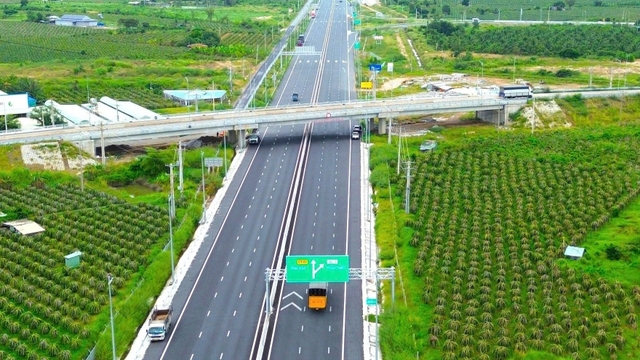
The resolution also envisions a new generation of the North-South axis integrating roads, railways, energy infrastructure, fiber-optic networks and logistics, alongside new urban, industrial and service centres.
East-West corridors are to connect inland areas with ports, border gates and regional logistics networks.
Private investment and public-private partnerships (PPPs) are encouraged to mobilise social resources for inter-regional infrastructure projects.
Technology, data and skills drive regional growth
The resolution calls for a stronger shift toward the data economy, green economy, circular economy and digital economy, with science and technology, innovation and digital transformation serving as major drivers of growth.
Regional workforce development is to focus on key fields including advanced manufacturing, high technology, digital technology, logistics, finance, energy and high-tech agriculture.
A notable new direction is the development of human-resource databases for localities and regions, linked with national databases on employment and vocational education.
The resolution also supports research, innovation and high-tech centres capable of spreading knowledge and technology, as well as R&D centres, high-tech parks, digital technology parks and clusters of national data centres linked to growth regions and major economic hubs.
From dividing regions to building a growth network
The core of Resolution 27 is not simply to set separate targets for six regions, but to connect them into a more integrated national development network.
Each region is to build on its own functions and competitive advantages while connecting with growth hubs, economic corridors, cities, ports and technology and data centres.
Resources are therefore expected to be concentrated more strongly in areas capable of generating spillover effects, rather than being spread thinly across disconnected projects.
By 2045, the regions are expected to operate increasingly through the digital, green, data and circular economies, supported by modern, smart, green and resilient infrastructure. Science and technology, innovation and digital transformation are identified as key drivers of growth and development.
Resolution 27 thus marks a shift from organising development mainly by administrative boundaries toward organising it around functions, connections, growth corridors and competitive advantages.
By linking six regions with growth poles, economic corridors, dynamic cities and new development spaces, the resolution seeks to unlock resources, expand Vietnam’s growth space and build a more connected and competitive national economy.
VOV.VN - Ho Chi Minh City emerged as Vietnam’s top destination for foreign direct investment in the first seven months of 2026, as foreign investors continued to funnel capital into major economic and industrial hubs.
VOV.VN - Prime Minister Pham Minh Chinh has emphasized the necessity for the Red River Delta to achieve double-digit growth in the coming period, in an effort to lead Vietnam into a new era of prosperity and modernization.
VOV.VN - Hanoi has unveiled a long-term development vision aiming to keep its population below 20 million, raise life expectancy to 80 years and rank among the world’s 10 happiest capitals.
VOV.VN - Party General Secretary and State President To Lam on May 20 chaired a working session with relevant agencies to assess resources serving national development in line with the goal of achieving double-digit economic growth and establishing a new growth model.









.JPG&w=640&q=100)









Bình luận
Bình luận của bạn sẽ được xét duyệt trước khi đăng