
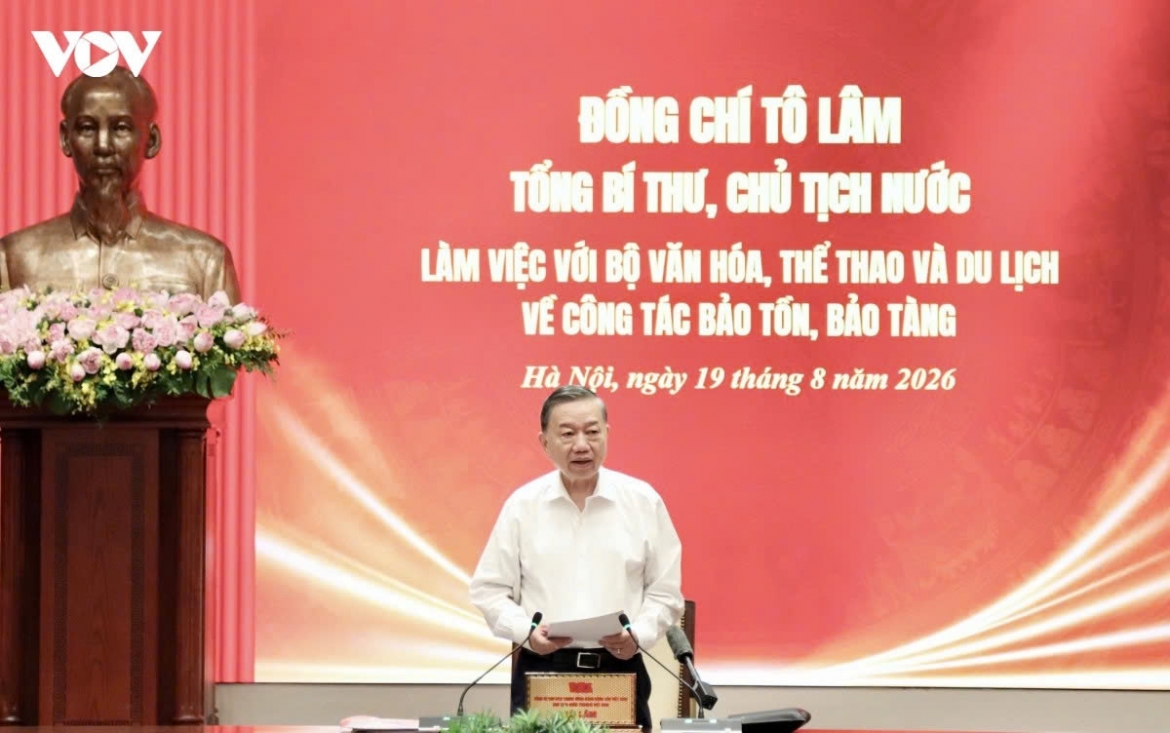

VOV.VN - Alongside preserving the heritage handed down by previous generations, Vietnam must actively identify, safeguard and create values that could become part of the nation’s heritage for centuries and even millennia to come.
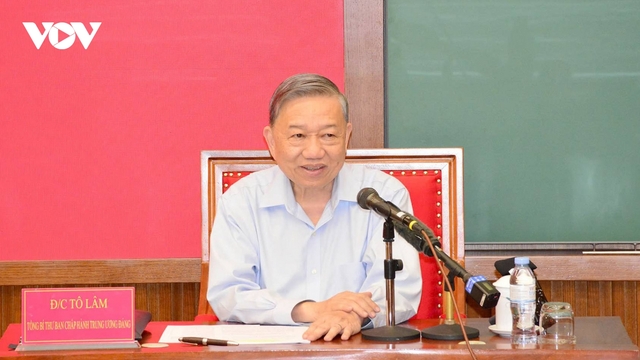
The message was underscored by Party General Secretary and State President To Lam at a meeting with the Ministry of Culture, Sports and Tourism in Hanoi on August 19 to discuss heritage preservation and museum work.
According to the top leader, preservation cannot stop at protecting sites and values that have already been officially recognised as heritage; it must also develop the capacity to identify historical and cultural value while the country is still changing.
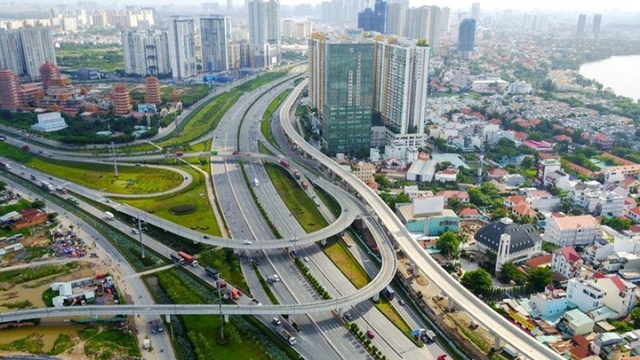
This is particularly important as urbanisation, industrialisation and infrastructure development rapidly transform many localities. Not every old building needs to be preserved, but before one disappears, it is important to determine whether it is merely outdated and replaceable or whether it has become part of history and, once lost, can never truly be recreated.
The Party General Secretary and State President cited Hanoi as an example. Of 185 industrial structures dating from the French colonial period through the period of socialist construction in northern Vietnam, only 95 remain today.
“Before the old disappears, we must know what is merely old, what has become part of history, what can be removed and what, once lost, can never be recreated,” he pointed out.
This, he said, is precisely the capacity that the heritage preservation and museum sector must develop: preservation should not be pitted against development, but development must not come at the cost of irreplaceable historical values.
Vietnam currently has more than 40,000 historical and cultural sites and around 70,000 inventoried intangible cultural heritage elements. Its 177 museums preserve and display more than 4 million documents and artifacts, while 37 Vietnamese heritage elements have been inscribed by UNESCO.
The Ministry of Culture, Sports and Tourism, however, has also identified a number of challenges, including the risk that some forms of intangible cultural heritage may fade as older artisans have no successors; inadequate inventorying and documentation in some localities; and continuing difficulties in balancing preservation with development.
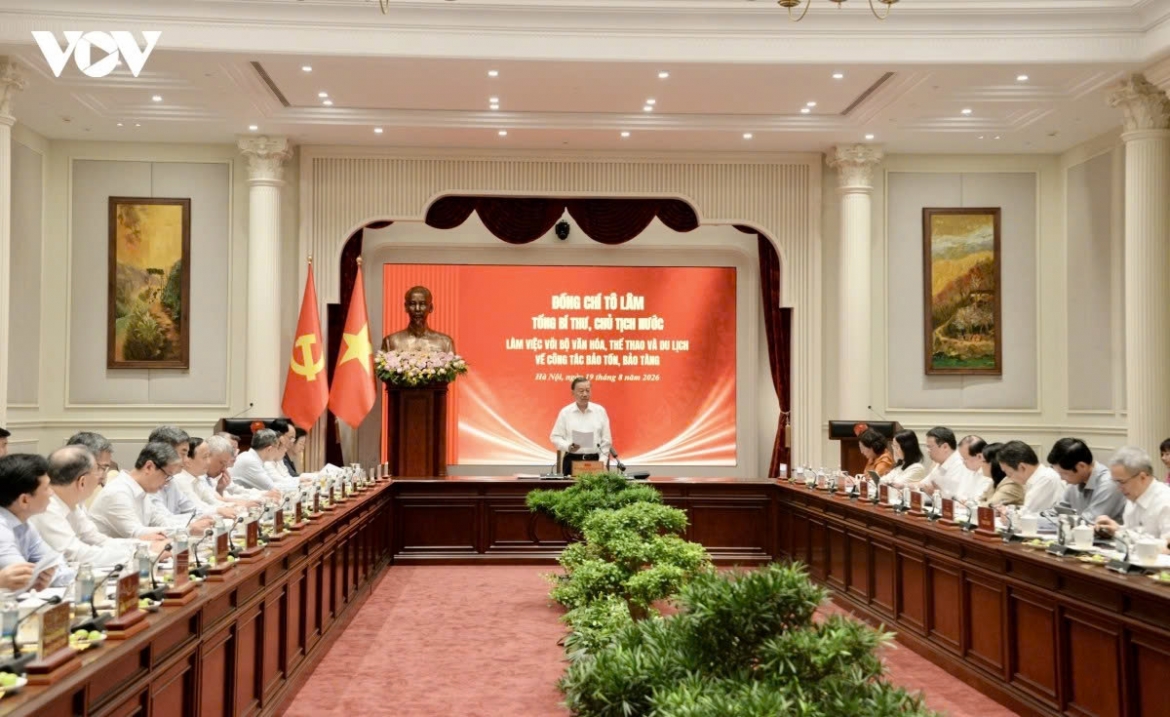
Against this backdrop, the top leader called on the Ministry of Culture, Sports and Tourism to move from passive preservation to actively shaping the memories and heritage of the future.
In 2026, the ministry should work with other ministries and agencies to develop criteria, procedures and coordination mechanisms for assessing heritage potential at the planning and investment stages for selected groups of projects and products with special significance, including those developed by private businesses.
For projects identified as having exceptional heritage potential, “memory dossiers” could be created from the moment construction begins, documenting their design, construction, operation, renovation and major events associated with them.
The approach would preserve not only a physical structure but also the stories, memories and social values that give it meaning.
“The responsibility of our generation is not only to protect what our forefathers left us, but also to think seriously about what we will leave behind for hundreds, thousands and even generations to come,” he stressed.
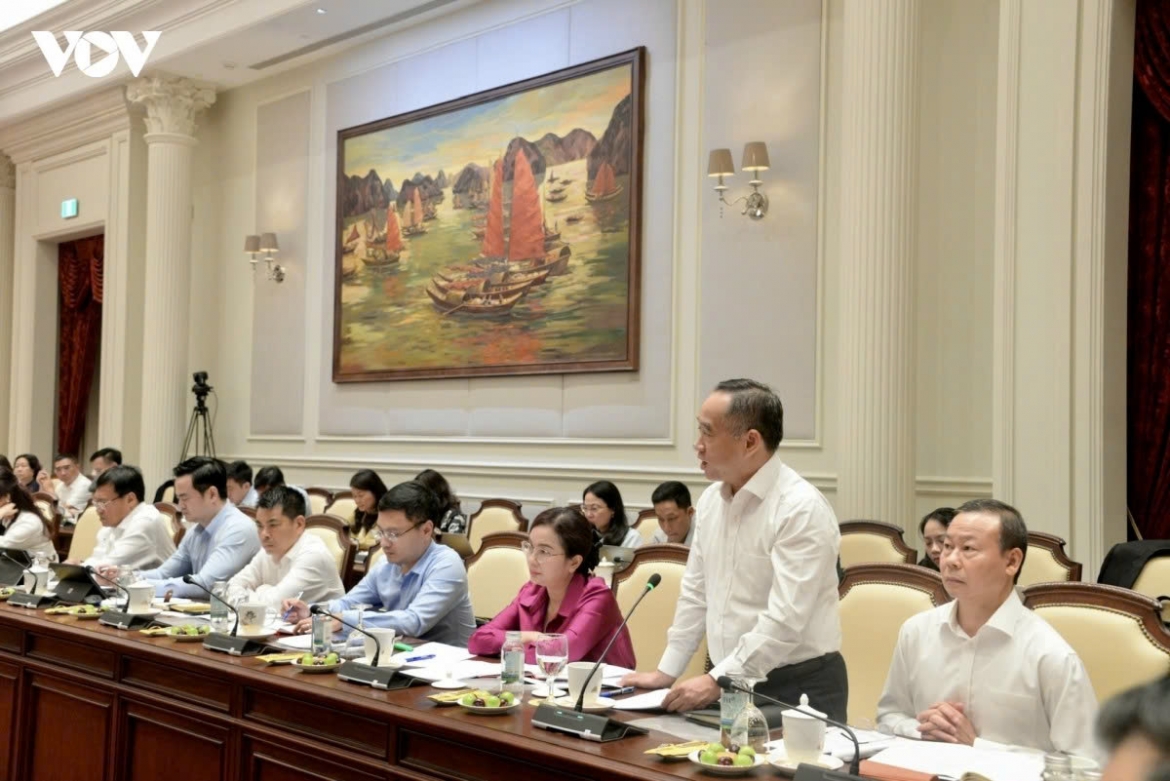
Another priority highlighted by the leader is the need to master Vietnam’s historical and cultural data in the age of artificial intelligence.
AI will play an increasingly important role in searching, synthesising, interpreting and disseminating knowledge. If Vietnam’s historical and cultural data are incomplete, poorly organised or not under Vietnamese control, other systems could increasingly shape how the world understands and tells Vietnam’s story.
For that reason, building, digitising and organising historical and cultural data is not simply a digital transformation task for the cultural sector. It also concerns knowledge sovereignty and the right of a nation to tell its own story.
The Party General Secretary and State President held that previous generations had entrusted today’s Vietnam with a rich legacy of history, culture and collective memory. The responsibility of the present generation is therefore not only to preserve what it has inherited, but also to understand it more deeply, enrich it and create new values to pass on to generations yet to come.
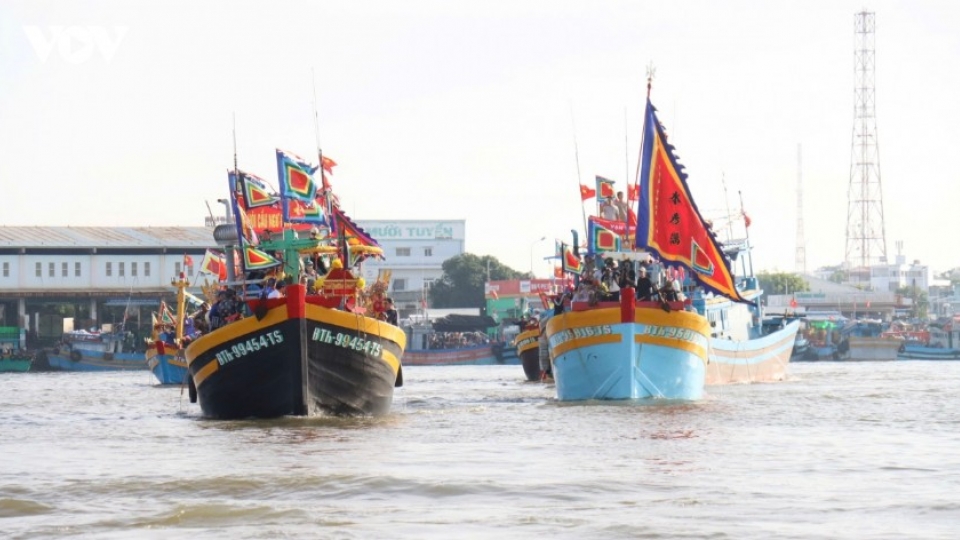
VOV.VN - The main procession of Leng Ong Sanh, a key ritual of the 2026 Whale Festival (Le hoi Cau ngu), took place on August 2 at sea, along the Ca Ty River, and through central streets in Phan Thiet ward, Lam Dong province.

VOV.VN - Vietnam is combining community-led preservation with digital technology to safeguard one of the traditional harvest rituals of the Ba Na ethnic minority, reflecting a broader effort to protect intangible cultural heritage while supporting sustainable tourism and cultural development.

VOV.VN - The Politburo has issued Resolution 80-NQ/TW on developing Vietnamese culture in the new era, aiming to create a major shift in development thinking and position culture as a spiritual foundation, an endogenous resource and a sustainable growth driver for the country.
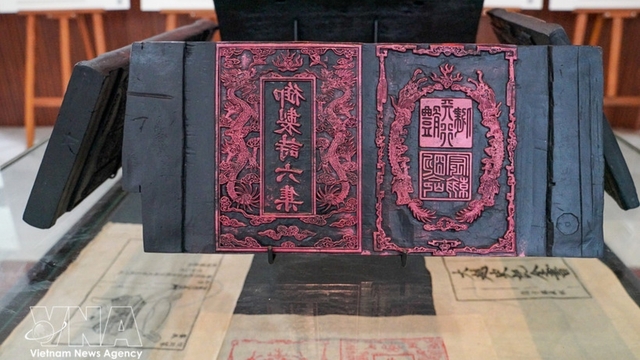
More than 2,000 visitors have toured the Vietnam World Documentary Heritage Space within a week of its opening, highlighting growing public interest in archival heritage.




.JPG&w=640&q=100)





Bình luận
Bình luận của bạn sẽ được xét duyệt trước khi đăng