

National digital platforms usher in data-based governance for construction sector
VOV.VN - 2025 marks a turning point for Vietnam’s construction sector as national digital platforms are officially brought into coordinated operation.

VOV.VN - Vietnam is accelerating its transition to a modern, efficient, and citizen-centric governance model, with the government emphasising digital transformation as a key driver for national development.
A draft Political Report for the 14th National Congress highlights the need to build a modern state management system and national governance model that is service-oriented, development-driven, and underpinned by digital infrastructure. Experts say this shift represents more than a change in terminology; it marks a fundamental move from traditional administrative management to modern governance.

At the public administrative service centre in Trung Khanh commune, Cao Bang province, Hoang Thi Tien, a local resident, successfully completed land transfer procedures without difficulty.
“Staff at the centre provided clear, step-by-step guidance, and the process was much faster than before,” Tien said, praising the staff’s professionalism and efficiency.
Since the implementation of the two-tier local government model several months ago, the Vietnamese government has increasingly shifted from a passive administrative approach to a proactive, service-oriented, and development-focused governance model. “Local governments must actively engage with citizens and businesses, identifying needs to build policies, plans, and projects that respond effectively,” said Do Xuan Hieu, Vice Chairman of the Hoa Phu commune People’s Committee, Dak Lak province.
Traditional governance in Vietnam relied heavily on administrative orders and leadership experience. Today, leadership effectiveness is measured by data-driven decision-making, evidence, and public feedback.
Experts said transitioning from experience-based leadership to data-driven governance is a key advancement of modern national governance, where political acumen is supported by digital technology.
Nguyen Quang Dong, director of the Institute for Policy and Media Development, emphasised that digital technology has transformed the way government operates and serves citizens.
“Online administrative procedures transcend geographic boundaries, shortening the distance between citizens and the state. On a national scale, data-driven strategic planning accelerates decision-making,” he noted.

Several Vietnamese provinces have pioneered digital governance initiatives. Quang Ninh province operates an Intelligent Operations Center (IOC) providing real-time information to enable transparent, timely decision-making. Meanwhile, Da Nang city has established an interactive digital governance model, allowing direct feedback channels between citizens and government.
Pham Ngoc Bac, CEO of CMC Technology & Solutions Group, said digital governance increases transparency and citizen trust.
“Policies built and implemented with transparency, speed, and interaction allow citizens and businesses to understand, monitor, and actively contribute. Administrative procedures are faster, and businesses can engage proactively in policy adjustments,” Bac explained.
Experts stressed that modern governance in Vietnam prioritizes coordination and development rather than mere administrative control. Dr. Nguyen Van Dang, Institute of Leadership and Public Administration, Ho Chi Minh National Academy of Politics, said, “A modern national governance system involves multiple stakeholders, with the state leading while encouraging broader social participation.”
The essence of modern national governance is a smart, lawful, and transparent state capable of serving citizens effectively. Law provides the framework, data forms the foundation, citizens are central, and sustainable development remains the ultimate goal.
At the recent 10th session of the 15th National Assembly, General Secretary To Lam highlighted the new direction that “National governance must be law-based, transparent, data-driven, digitally enabled, and staffed with principled officials. This is development-oriented governance, not a ‘give-and-take’ approach.”
Building a flexible, competitive, and effective national governance system is essential not only for international integration but also for realizing Vietnam’s development ambitions. In a modern governance model, the Communist Party leads with vision, the state governs by law, and society operates through citizen trust and participation.

VOV.VN - Delegates at the 18th Congress of the Hanoi Party Committee have emphasized that science and technology, innovation, digital transformation, and the two-tier local government model are two breakthrough pillars boosting the capital’s rapid, sustainable, and modern development in the 2025-2030 period.

VOV.VN - Over the past decade, digital technologies have become an integral part of Vietnam’s socio-economic life. Among them, artificial intelligence (AI), particularly generative AI, has seen rapid and widespread adoption in recent years.
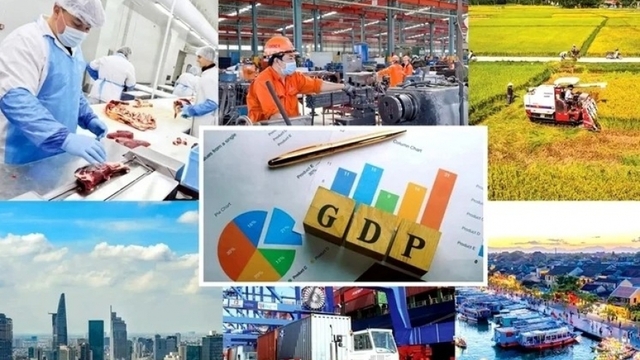
VOV.VN - The year 2025 marks a defining chapter in the Government’s leadership and administration, as the Government and the Prime Minister have demonstrated strong resolve, decisive action and coordinated execution across the board, from institutional reform and administrative restructuring to business support and responses to external challenges.

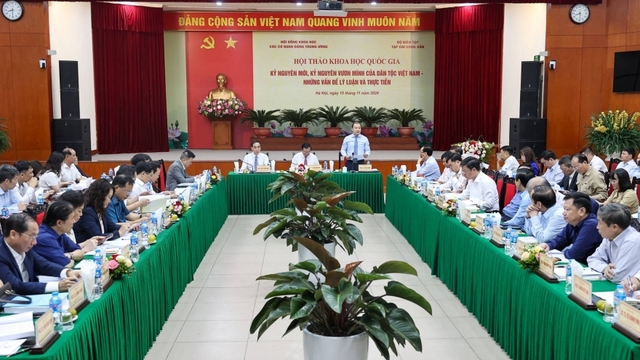





.JPG&w=640&q=100)










Bình luận
Bình luận của bạn sẽ được xét duyệt trước khi đăng