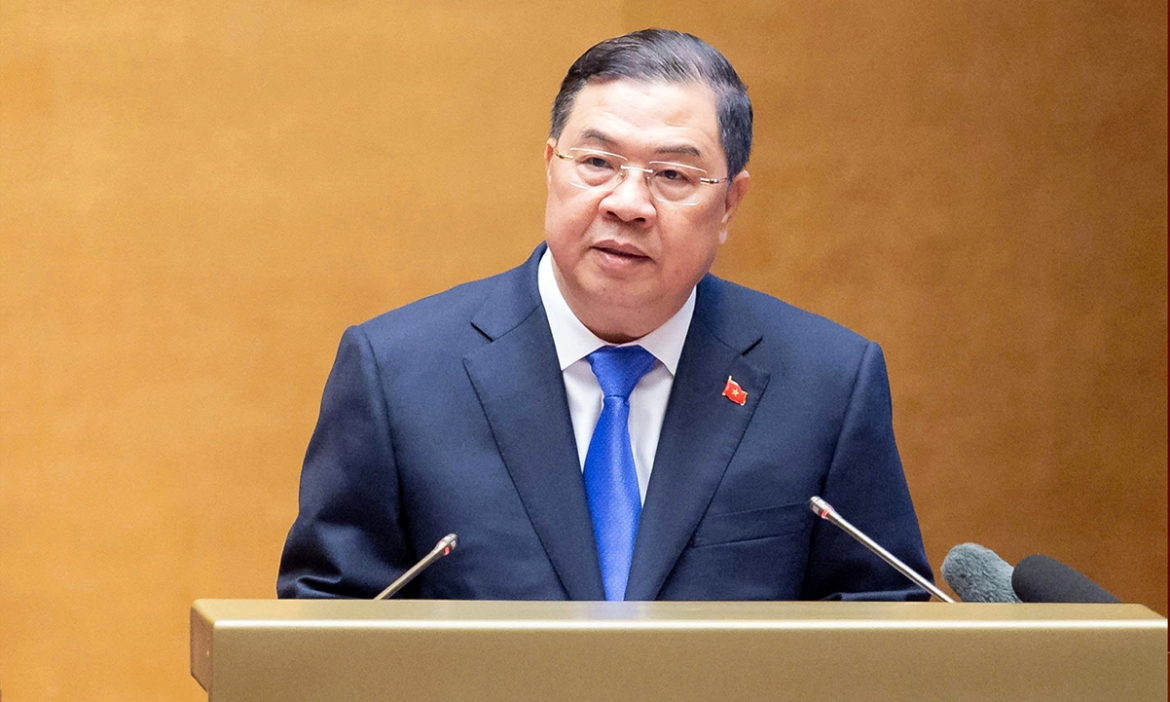
VOV.VN - Vietnam is shifting its foreign direct investment (FDI) strategy from prioritising the volume of inflows to attracting projects that deliver advanced technology, innovation, modern governance and stronger spillover effects for the domestic economy, Deputy Prime Minister Pham Gia Tuc said on June 30.
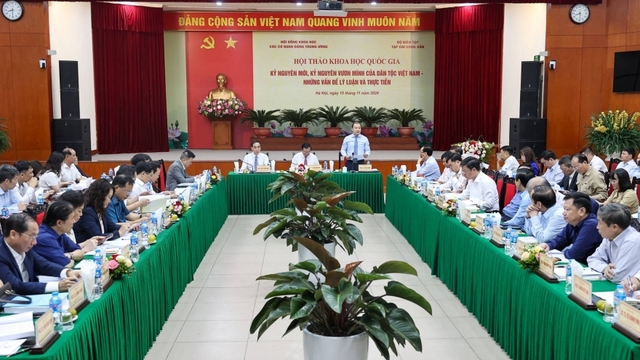
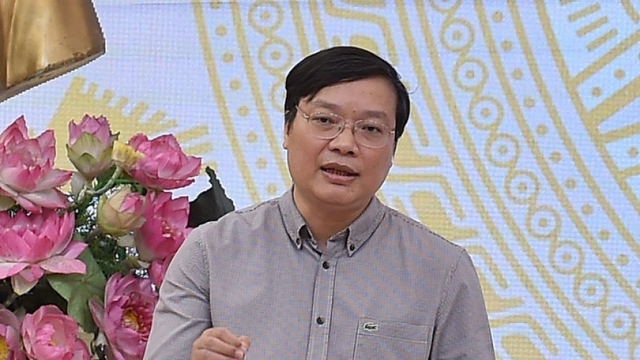
Deputy Prime Minister Pham Gia Tuc speaks at a national conference in Hanoi on June 30 to study and implement the Politburo’s Resolution No. 10 on the development of the foreign-invested sector
Presenting the key contents of the Politburo’s Resolution No. 10 on the development of the foreign-invested sector at a nationwide conference in Hanoi, the Deputy PM said Vietnam’s next stage of development requires a more selective approach to foreign investment.
He noted that strategic competition among major economies, rapid advances in science and technology, artificial intelligence, digital transformation, green transition, and the restructuring of global supply chains and capital flows are reshaping the international investment landscape.
In this context, the development of the foreign-invested sector should no longer focus solely on attracting additional capital but on improving the quality, efficiency and broader economic impact of international investment, thereby supporting sustainable growth and strengthening Vietnam’s competitiveness.
Six strategic shifts in FDI policy
According to the Deputy PM, Resolution No. 10 outlines six major shifts in Vietnam’s approach to foreign-invested economic development. The first is moving from a strategy centred on attracting foreign investment to one focused on the comprehensive development of the foreign-invested sector. The second emphasises investment quality, efficiency and value creation rather than the scale of capital.
The resolution also stresses the need to replace input-based investment incentives with performance-based incentives linked to investors’ commitments.
Other strategic changes include shifting from isolated FDI projects to an integrated ecosystem encompassing foreign direct investment, portfolio investment, capital markets, the international financial centre and new development zones; transitioning from investment administration to creating a more enabling investment environment through improved institutions, infrastructure and human resources; and replacing competition among localities for investment with nationally coordinated development, stronger regional connectivity and closer linkages between foreign-invested enterprises and domestic businesses.
“Where the previous focus was on attracting international investment, the goal in the new development stage is to maximise the value of those resources, together with Vietnam’s domestic strengths, to build new growth drivers, strengthen strategic self-reliance, enhance competitiveness and improve the economy’s resilience,” the Deputy Prime Minister said.
Prioritising high-quality capital
The resolution aims not only to expand investment inflows but also to improve growth quality, economic competitiveness and national self-reliance.
By 2030, Vietnam targets attracting US$200-300 billion in newly registered FDI, with US$150-200 billion expected to be disbursed. Around 75% of newly registered investment is expected to originate from developed economies with strengths in technology, capital and modern management.
The country also seeks to raise localisation rates in key manufacturing industries to 40-50%, integrate approximately 10,000 Vietnamese enterprises into the supply chains of foreign-invested companies, and upgrade its stock market to emerging-market status before 2030 to attract higher-quality portfolio investment.
Looking ahead to 2045, Vietnam envisions a foreign-invested sector that is efficient, sustainable and closely integrated with the state and private sectors, helping position the country as a regional hub for manufacturing, services, innovation and multinational corporate operations.
Under the resolution, the foreign-invested sector is expected to account for about 25% of total social investment and contribute roughly 30% of Vietnam’s GDP by 2045.
“Success in the new development stage should no longer be measured primarily by the number of investment projects or the size of capital inflows, but by the quality of investment, technological capability, innovation, linkages with domestic enterprises and their substantive contribution to Vietnam's rapid and sustainable development,” the Deputy Prime Minister stressed.
Building a next-generation investment environment
To achieve its 2030 targets and 2045 vision, the resolution sets out a comprehensive package of measures to further improve Vietnam’s investment climate by making it more transparent, stable and internationally competitive.
Investment incentives will be redesigned to reward project performance and fulfillment of investor commitments, while new mechanisms will be established to identify, support and oversee strategic investors.
The resolution also proposes piloting advanced institutional models in selected areas, promoting digital governance powered by data and artificial intelligence, and ensuring that legal changes are not applied retroactively to investors’ disadvantage except in matters involving national defence, national security, public order, public health or environmental protection.
In addition, authorities will introduce policies to strengthen workforce development by expanding training programmes and gradually increasing the number of Vietnamese professionals in technical, managerial, research, design and supply chain positions.
Vietnam also plans to attract more international experts, scientists and highly skilled entrepreneurs while modernising investment promotion efforts to focus on high-value sectors, including semiconductors, artificial intelligence, research and development, innovation, digital transformation, green transition and other strategic industries expected to drive the country’s next phase of economic growth.
VOV.VN - Nearly 2.1 million delegates joined a nationwide conference on June 30 to study and implement Politburo Resolution No.10 on developing the foreign-invested sector, underscoring the country’s renewed strategy to attract higher-quality foreign investment and strengthen its position in global value chains.
VOV.VN - Vietnam has unveiled a new strategy for developing its foreign-invested sector, setting a target for foreign-invested enterprises (FIEs) to contribute around 30% of the country’s GDP by 2045 as part of its long-term development vision.
VOV.VN - Exports by foreign-invested enterprises (FDI) are projected to reach US$390-410 billion in 2026, up 22-28% from 2025, reinforcing the sector’s role as a key pillar of Vietnam’s export growth.
VOV.VN - Vietnam attracted US$24.81 billion in registered foreign direct investment (FDI) in the first five months of 2026, up 34.9% year on year, according to the National Statistics Office under the Ministry of Finance.








.JPG&w=640&q=100)







Bình luận
Bình luận của bạn sẽ được xét duyệt trước khi đăng