
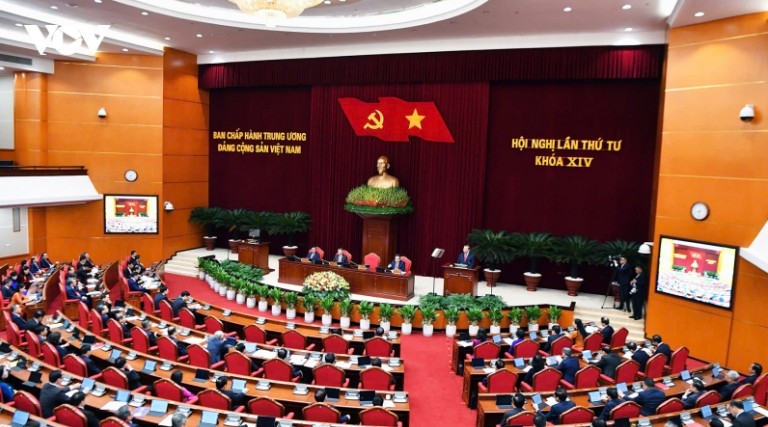

VOV.VN - General Secretary of the Communist Party of Vietnam Central Committee and President To Lam has demanded the renewal of leadership methods, the enhancement of official quality, the addressing of root causes of bottlenecks, and the creation of momentum for acceleration and breakthroughs in 2027.
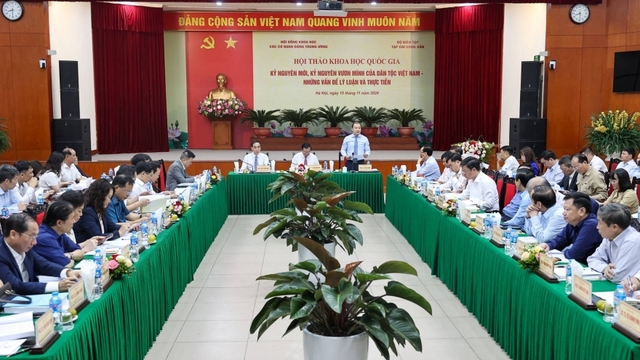
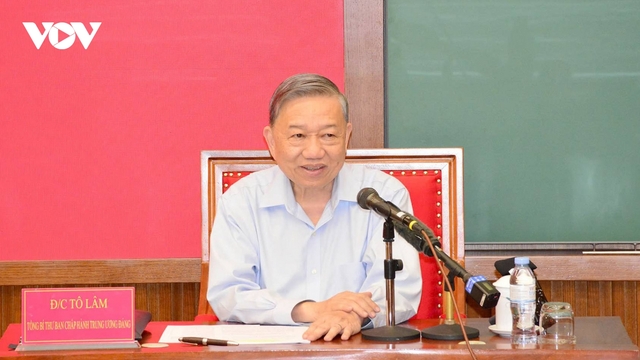
The 4th Plenum of the 14th Party Central Committee opened solemnly on October 5 in Hanoi under the chairmanship of Party General Secretary and President To Lam, with Politburo member and National Assembly Chairman Tran Thanh Man presiding over the opening session.
Delivering the opening remarks, General Secretary and State President To Lam stated clearly that the plenum takes place as the entire Party, people, and army are striving to complete the 2026 socio-economic development tasks and preparing plans for 2027 and subsequent years.
According to him, international fluctuations, technology competition, trade wars, and the requirement to renew the country's development model, along with the GDP growth target of over 10%, demand heightened strategic autonomy, resilience, adaptability, and determination to act. He emphasized that seizing opportunities requires strategic mindset and proactiveness to analyze situations, make correct decisions, and organize effective implementation. Of paramount importance is the consensus and support of the people.
In that spirit, the Party and State leader requested the enhancement of the Party's self-renewal, self-rectification capacity and orientation for national development. He stressed that the 15-year review of the implementation of resolutions and conclusions on Party building and rectification must clarify: to what extent have changes in Party organization and building enhanced leadership quality, the capacity to resolve development issues, and the consolidation of the people's trust? In which fields have Party organizations and members grown stronger and matured, and which areas require remedies?
He proposed that the Central Committee address lingering limitations directly: why shortcomings and flaws have been pointed out yet corrected slowly; why violations have been warned against yet continue to recur; and why certain matters followed proper procedures without selecting the right personnel, resolving tasks, or achieving high efficiency. According to him, new resolutions must tackle root causes and pinpoint responsibilities, including those of leading and advisory bodies at the Central level.
Regarding the renewal of leadership and ruling methods to enhance the operational efficacy of the political system, the top leader said clearly that organizational restructuring requires the synchronized perfection of leadership and ruling methods. It is impossible to simply rearrange the apparatus while retaining outdated working methods.
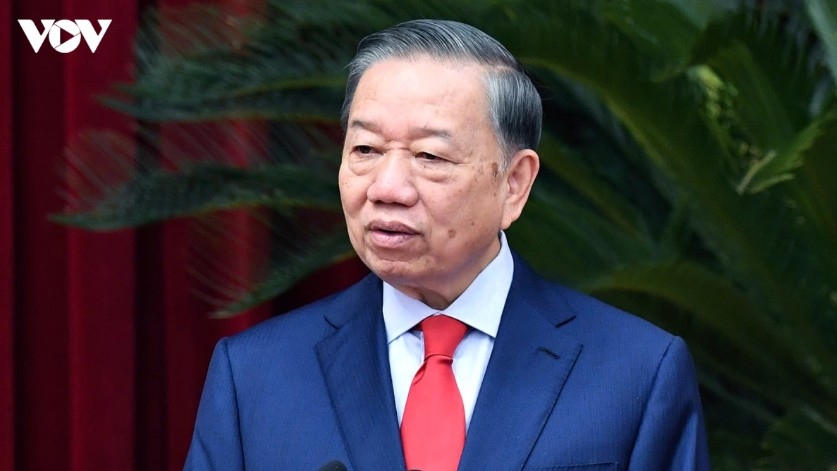
Renewing leadership and ruling methods must ensure unity in orientation, clear delineation of responsibilities, and the full promotion of authority and proactiveness of each party committee, organization, agency, and unit, he went on to say.
Therefore, the preliminary review of Resolution No. 28 must clarify how leadership and ruling methods must be renewed to yield higher-quality decisions, a more proactive apparatus, and better resolution of tasks. The mechanism of the Party leading, the State management, and the people being the masters must operate substantively, overcoming overreach, substitution, laxity in leadership, and multi-round consultations on matters falling under designated authority.
"Decisions can only materialize when there is a cadre team with sufficient qualities, capacity, and responsibility for implementation. The review of Resolution No. 26 must usher in a new step of development in cadre work, preparing a cadre team based on task requirements and long-term development. It is necessary to manage the team uniformly and seamlessly; link political tasks and job positions with sourcing, training, evaluation, placement, and screening; and overcome fragmentation across individual stages, levels, and terms. Cadre evaluation must identify qualities, true talent, prestige, and prospects through practical work, especially the handling of difficult tasks. Strategic-level cadres must possess vision, systematic thinking, and the capacity to select and organize the implementation of major decisions; grassroots-level cadres must thoroughly grasp local areas and have the capacity to resolve work and serve the people," the General Secretary and State President requested.
Assessing the socio-economic situation in 2026, To Lam stated that the country's GDP growth in the first nine months reached 9.01%, with 12 out of 34 provinces and centrally run cities achieving over 10%. However, macroeconomic management space is narrowing. He proposed that the Central Committee comprehensively evaluate the 2026 results, clarifying the degree of target fulfillment and the growth foundation for subsequent years. It is essential to examine growth quality through productivity, corporate health, and people's income and living standards; clearly point out the limitations of development drivers, their causes and responsibilities, and the tasks requiring focus to achieve the highest completion of 2026 targets. The results of implementing development tasks serve as an important benchmark for the effectiveness of decision-making, the quality of cadre work, and implementation capacity.
"The year 2027 must witness acceleration, breakthroughs, and robust transformation, generating momentum to realize the goals of the entire term. The Central Committee is requested to thoroughly discuss general targets, key indicators, and core solutions, particularly the basis and conditions for striving for a GDP growth rate of 10% or higher and inflation of around 4.5%. The issue is to generate stronger growth momentum while consolidating macroeconomic stability, ensuring major balances and economic resilience. The annual plan must concretize Conclusion No. 18-KL/TW, linking acceleration with the deployment of the renewed development model," emphasized the General Secretary President.
At the same time, he called on the Party Central Committee to clarify: what are the breakthroughs needed to translate resources into production and business capacities and substantive development outcomes? He laid stress on the need to remove institutional bottlenecks, enhance capital absorption capacity, and ensure infrastructure, energy, and human resources; unlock domestic and foreign investment, both direct and indirect; and bolster purchasing power and the competitiveness of domestic enterprises.
The General Secretary and State President stressed that the four aforementioned focal points all converge on a single requirement: building the Party and the political system with sufficient capacity to lead and organize the implementation of development goals, while promoting the participation and creativity of all people.
He urged the Party Central Committee to focus on clarifying that each proposal must correctly identify the issue to be addressed. Does the bottleneck lie in policies, institutions, or organization, coordination, and individual responsibility? Why do jobs remain delayed even though regulations have been amended and resources allocated? Clearly distinguish between policy inadequacies and implementation weaknesses; ensure that decisions are synchronized, so that removing barriers in one area does not create obstacles in another; guarantee personnel, authority, and resources right at the moment of decision-making; and ensure that every decision has a mechanism to verify outcomes and adjust based on practical realities. Which issues are resolved, what resources are unlocked, and what benefits do the people gain? All outcomes must ensure effectiveness. Immediate tasks must be linked to the plan and budget for 2027, while long-term studies must clearly define deliverables, timelines, and responsibilities.
Top leader To Lam asked the Party Central Committee to discuss the matters democratically and frankly, diving deep into major choices and differing opinions while explicitly stating the grounds, options, and recommendations. Furthermore, the Party Central Committee need to set an example in decisiveness, self-criticism, and implementation responsibility. All choices must place national and national interests, alongside the legitimate rights and interests of the people, above all else, he emphasized.
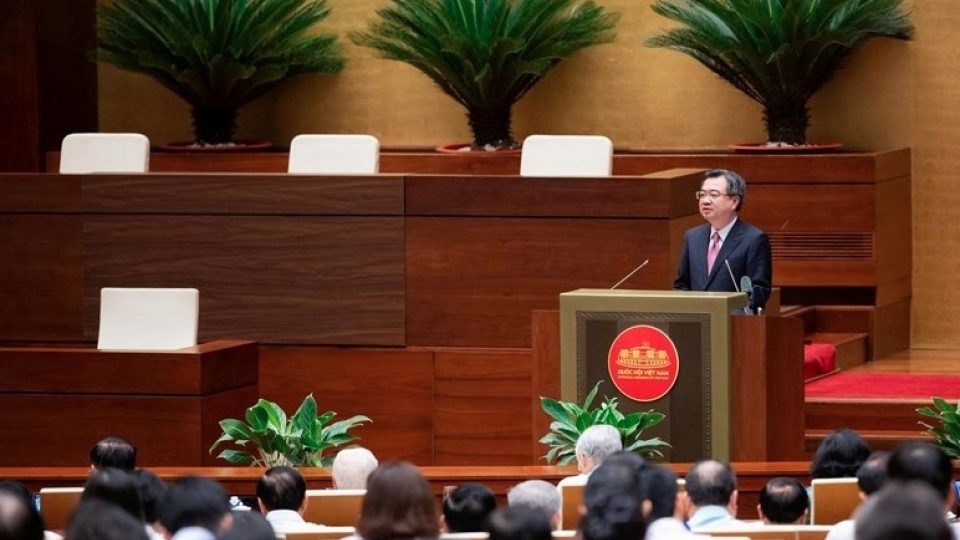
VOV.VN - A new resolution on building Vietnam into a strong maritime nation has identified the sea as a strategic development space, poised to cultivate new growth poles, key economic sectors, and fresh drivers for national progress.
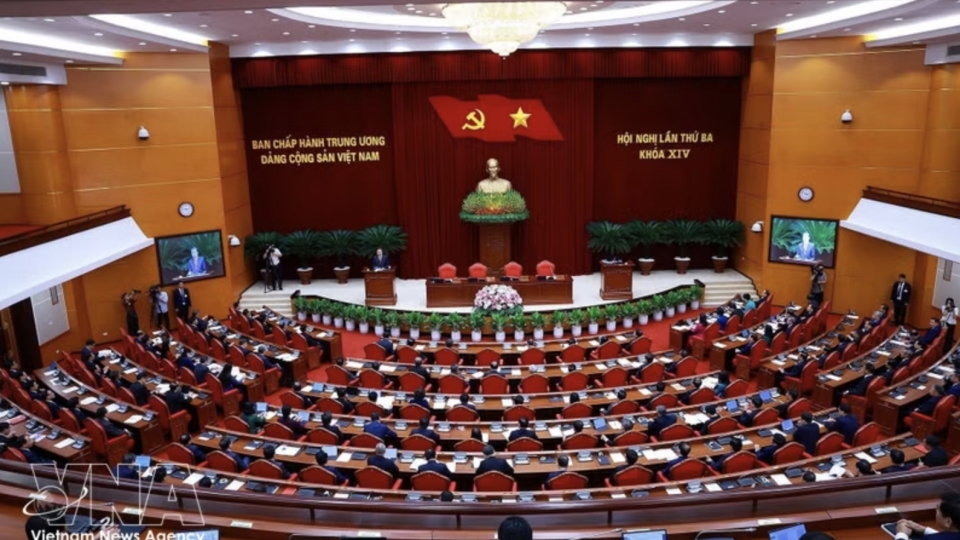
The 14th Party Central Committee continued its third meeting on July 24 - the fifth working day of this plenum - by discussing various issues at the hall.

VOV.VN - A new resolution on building Vietnam into a strong maritime nation has identified the sea as a strategic development space, poised to cultivate new growth poles, key economic sectors, and fresh drivers for national progress.





.JPG&w=640&q=100)





Bình luận
Bình luận của bạn sẽ được xét duyệt trước khi đăng