Vietnam leads push to realize ASEAN Community Vision 2045
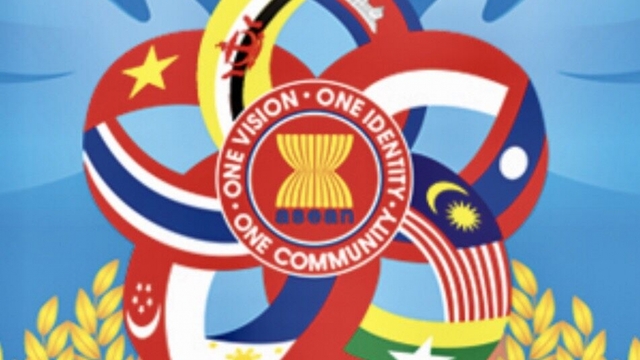
VOV.VN - The Association is entering its first year of implementing the ASEAN Community Vision 2045 as Vietnam marks 31 years of ASEAN membership (July 28, 1995 - July 28, 2026).
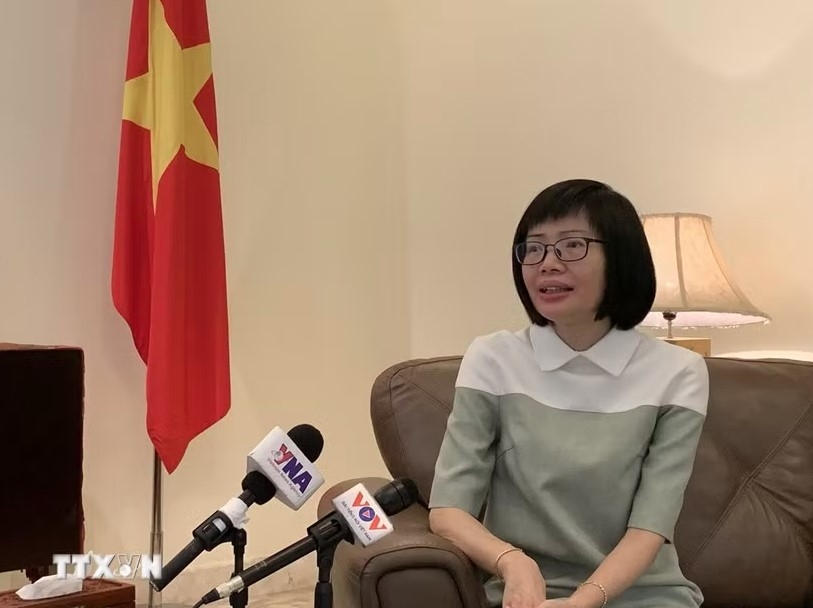
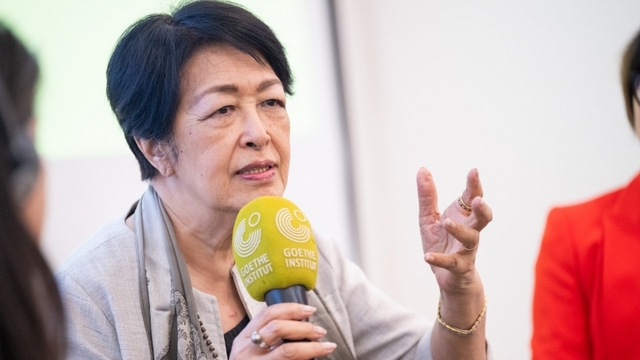
Ambassador Ton Thi Ngoc Huong, Head of the Permanent Mission of Vietnam to ASEAN
(Photo: VNA)
On this occasion, Ambassador Ton Thi Ngoc Huong, Head of the Permanent Mission of Vietnam to ASEAN, discussed Vietnam's contributions and the region's path forward.
Ambassador Ton Thi Ngoc Huong affirmed that with strong commitment and a high sense of responsibility, Vietnam is actively working alongside fellow ASEAN members to turn the Strategic Plans of the ASEAN Community Vision 2045 into concrete action.
According to the Ambassador, Vietnamese ministries and agencies are drafting specific implementation plans tailored to their respective mandates, helping establish monitoring and evaluation mechanisms while strengthening inter-sectoral and inter-pillar coordination. Vietnam is also proposing initiatives to consolidate unity, boost resilience, narrow the development gap, drive digital and green transitions, tackle climate change, ensure food and energy security, and respond to emerging challenges.
At the national level, Vietnam has integrated ASEAN Vision 2045 goals into its domestic development strategies to create synergy and deliver tangible benefits. The country is among the first member states to formulate and execute a National Action Plan for 2026-2030 to fulfill the Vision. Meanwhile, as coordinator for ASEAN-New Zealand and ASEAN-UK relations for the 2024-2027 term, Vietnam continues to rally practical partner support for the Vision’s implementation.
Regarding economic development and competitiveness, Ambassador Ton Thi Ngoc Huong emphasized the need to fully leverage the ASEAN Economic Community (AEC) and the region's network of free trade agreements. Access to an ASEAN market of nearly 700 million people, the Regional Comprehensive Economic Partnership (RCEP) covering roughly 2.3 billion people, and various ASEAN+1 FTAs offers Vietnamese businesses expanded market access, deeper integration into regional and global supply chains, and enhanced manufacturing capacity.
She noted that ASEAN provides a key channel for Vietnam to attract resources, particularly foreign direct investment (FDI) in high-tech, infrastructure, and flagship economic sectors.
Total FDI inflows into ASEAN reached US$244 billion in 2025, with an increasing share flowing into high-tech manufacturing. By utilizing mechanisms under the ASEAN Comprehensive Investment Agreement (ACIA) and broader FTA networks, Vietnam can move beyond assembly manufacturing to become a high-value, tech-driven link in global supply chains.
The Ambassador also highlighted major ASEAN-led infrastructure projects, such as the ASEAN Power Grid, which will gradually interlink power systems and facilitate cross-border electricity trade, enhancing energy security and mutual supply among member states.
The Master Plan on ASEAN Connectivity 2045 supports sustainable transport and digital infrastructure, promoting seamless regional trade and investment. Notably, the ASEAN Digital Economy Framework Agreement (DEFA), expected to be signed late this year as the world's first comprehensive regional digital agreement, will establish a unified digital market, boost e-commerce, ensure secure data flows, and help micro, small, and medium enterprises (MSMEs) thrive.
Cooperation in emerging fields like AI, semiconductors, quantum computing, renewable energy, and circular economy will further allow Vietnam to tap into external expertise and resources for sustainable growth.
Tackling challenges in a complex global environment, Ambassador Ton Thi Ngoc Huong observed that shifts in international relations, international law, and multilateral institutions are testing the region. ASEAN's centrality and purpose can only endure if the Association speaks with one voice, coordinates effectively, and maintains agile, responsive mechanisms.
The primary hurdle is maintaining unity and consensus amid escalating major-power competition. To navigate this, member states must prioritize dialogue, consultation, and confidence-building while balancing national interests with regional ones.
Crucially, ASEAN must uphold an independent stance, preventing strategic rivalries from eroding its cohesion. ASEAN-led dialogue mechanisms should be updated to engage partners constructively, build trust, and prevent conflict, alongside efforts to diversify external partnerships worldwide.
Another major challenge lies in implementation capacity and resource constraints. As new ASEAN goals require substantial resources while member capabilities vary, the Association must ensure resource autonomy in critical areas while adopting flexible approaches to mobilize external support. Operationally, ASEAN needs to continuously refine its efficiency and resource allocation.
Working alongside ASEAN to identify and resolve challenges, Vietnam will actively contribute effective solutions, both in the short and long term, to reinforce and preserve the values of the ASEAN Community as the region's shared home, Huong stressed.
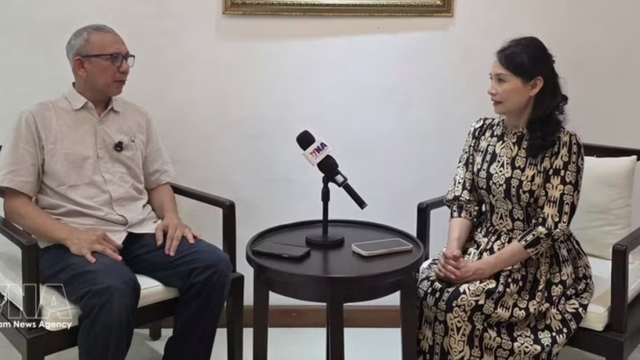
Vietnam will play an increasingly important role in advancing the ASEAN Community Vision 2045, Senior Coordinator at the Indonesian Institute for Defence and Strategic Studies (LESPERSSI) Beni Sukadis told the Vietnam News Agency.
VOV.VN - Prime Ministers of Laos, Cambodia, Thailand and Timor-Leste will pay official visits to Vietnam and attend the third ASEAN Future Forum (AFF) from June 7-10, 2026.
Vietnam will play an increasingly important role in advancing the ASEAN Community Vision 2045, Senior Coordinator at the Indonesian Institute for Defence and Strategic Studies (LESPERSSI) Beni Sukadis told the Vietnam News Agency.
VOV.VN - Prime Ministers of Laos, Cambodia, Thailand and Timor-Leste will pay official visits to Vietnam and attend the third ASEAN Future Forum (AFF) from June 7-10, 2026.







.JPG&w=640&q=100)







Bình luận
Bình luận của bạn sẽ được xét duyệt trước khi đăng