
Party building, cadre management of paramount importance to Vietnam-Laos relations
VOV.VN - Party building, organizational work, and cadre management are of top importance to the revolutionary cause of both Vietnam and Laos.

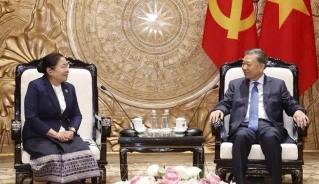
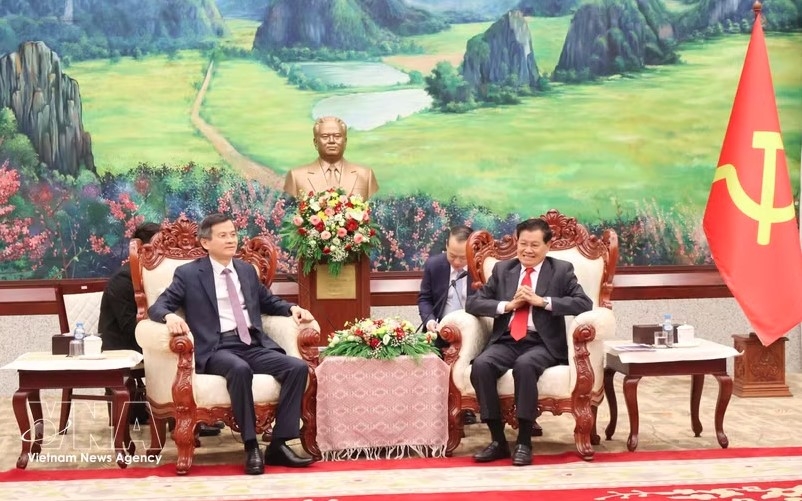
Politburo member and President of the Ho Chi Minh National Academy of Politics Doan Minh Huan paid courtesy calls to Party General Secretary and President of Laos Thongloun Sisoulith and Prime Minister Sonexay Siphandone in Vientiane on August 6 as part of his working trip from August 4 to 6.
Huan said the delegation held working sessions and talks with the Lao Central Theory Council and National Academy of Politics and Public Administration. The centrepiece was an international scientific conference that put Laos’ push for an independent and self-reliant economy side by side with Vietnam’s lessons from nearly four decades of Doi Moi (renewal).
He said the conference not only generated valuable academic insights and policy recommendations but has also become an effective mechanism for cooperation between political theory research and training bodies of the two countries.
The two sides will keep working closely to deliver on joint plans, helping deepen the great friendship, special solidarity, comprehensive cooperation and strategic cohesion binding the two countries’ Parties, States and peoples, he said.
Thongloun, for his part, affirmed that tighter collaboration between political theory and social science bodies will give both nations a stronger footing to protect and advance their socialist paths in the new era, each on its own terms.
He urged agencies on both sides to turn the conference’s takeaways and the meetings’ outcomes into real projects, so the Vietnam–Laos special relationship delivers more.
Meanwhile, Sonexay praised the growing teamwork among the four leading political theory and research bodies, describing it as one of the pillars underpinning the Laos–Vietnam special relationship.
To make that partnership sharper, he proposed keeping and expanding existing cooperation mechanisms humming, raising the bar on studies into strategic issues like economic self-reliance, state governance, the digital economy and the green economy, and facilitating the exchange of experts and students.
He also pushed for joint research databases, channelling findings into policy advice submitted to high-ranking leaders, and holding regular academic gatherings to keep the special relationship firmly stitched together.
On August 5, the four leading Vietnamese and Lao political theory and research bodies, namely the Ho Chi Minh National Academy of Politics, the Lao National Academy of Politics and Public Administration, the Vietnam Academy of Social Sciences and the Lao National Academy of Social and Economic Sciences, co-hosted that conference in Vientiane.
Participants zeroed in on the Lao People’s Revolutionary Party’s leadership role in building an independent and self-reliant economy, calling it the decisive factor to get national policy right.
They suggested practical fixes on fiscal policy, public debt management and creating fiscal space for development. The urgent need to beef up workforce skills came through clear, drawn straight from Laos’ own experience on the ground.
Vietnamese scholars brought their own theoretical know-how and real-world lessons from 40 years of Doi Moi, with a heavy focus on what it takes to build an economy that can stand on its own, deeply integrate into the world and remain steadfast on the socialist path.
To turn the two countries’ special political relationship into stronger economic muscle, the conference mapped out three pillars for future cooperation.
The first is renewing mindset around economic connectivity. That means jointly building production, supply and value chains that actually complement each other, encouraging business tie-ups and technology transfers, and putting a premium on breakthroughs in transport, energy and digital infrastructure. Top of the list is the East–West Economic Corridors linking Laos to Vietnam’s seaports, unlocking a wider pathway to global markets.
Second, bulking up institutional capacity and macro risk management is a must. The two sides agreed to share more experience in fine-tuning socialist-oriented market economies, push decentralisation hand in hand with real accountability, and build early warning and information sharing systems to navigate global financial and trade turbulence.
The third is taking cooperation in political theory research and strategic advice to a new level. The four bodies want to move past simple information exchange and start creating knowledge together by running joint, long-term research on digital transformation, green transition, energy security and supply chains. The findings will then feed straight into policy recommendations and training courses for both countries’ Party and State officials.

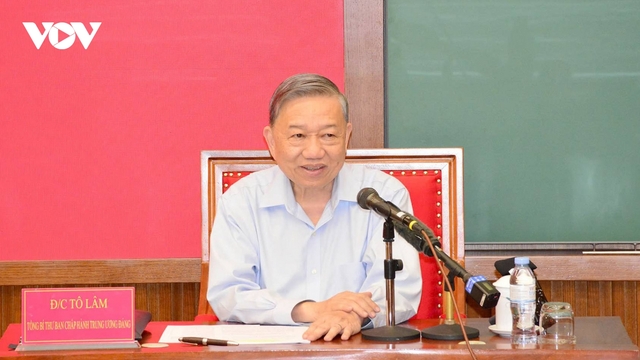
VOV.VN - Party General Secretary and State President To Lam has called for a comprehensive yet carefully targeted revision of the Communist Party of Vietnam's Charter, saying the updated document should strengthen Party governance, improve power checks and provide a stable institutional foundation for the country's next stage of development.
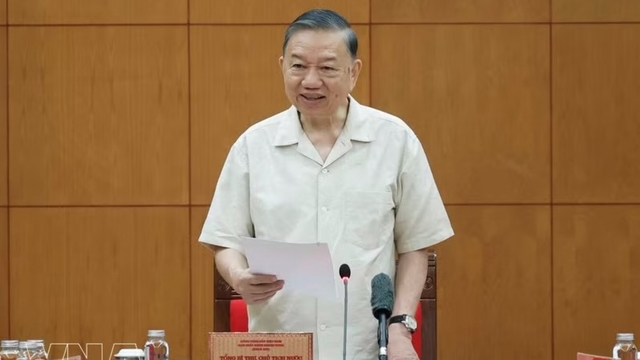
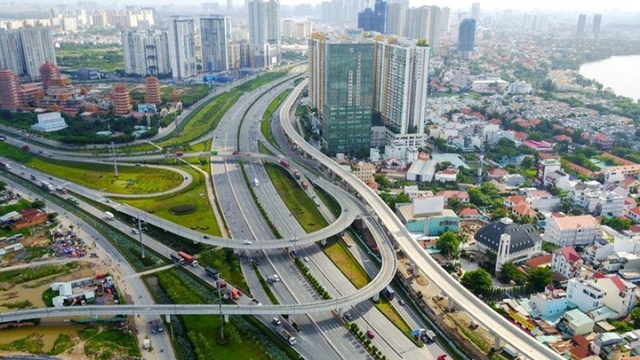
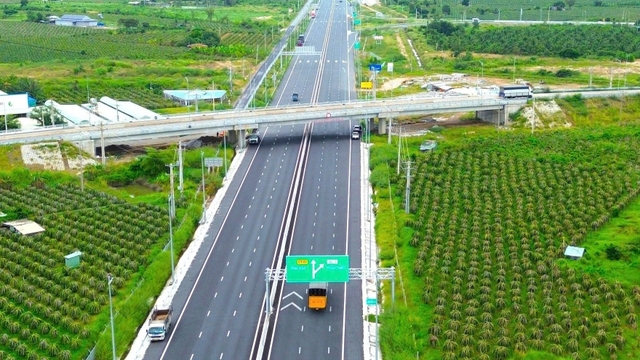
Party General Secretary and State President To Lam on August 6 called for strong reforms of infrastructure planning and development, stressing that infrastructure has become a decisive factor in enhancing national competitiveness and must be planned and managed with a long-term strategic vision.



.JPG&w=640&q=100)




Bình luận
Bình luận của bạn sẽ được xét duyệt trước khi đăng