
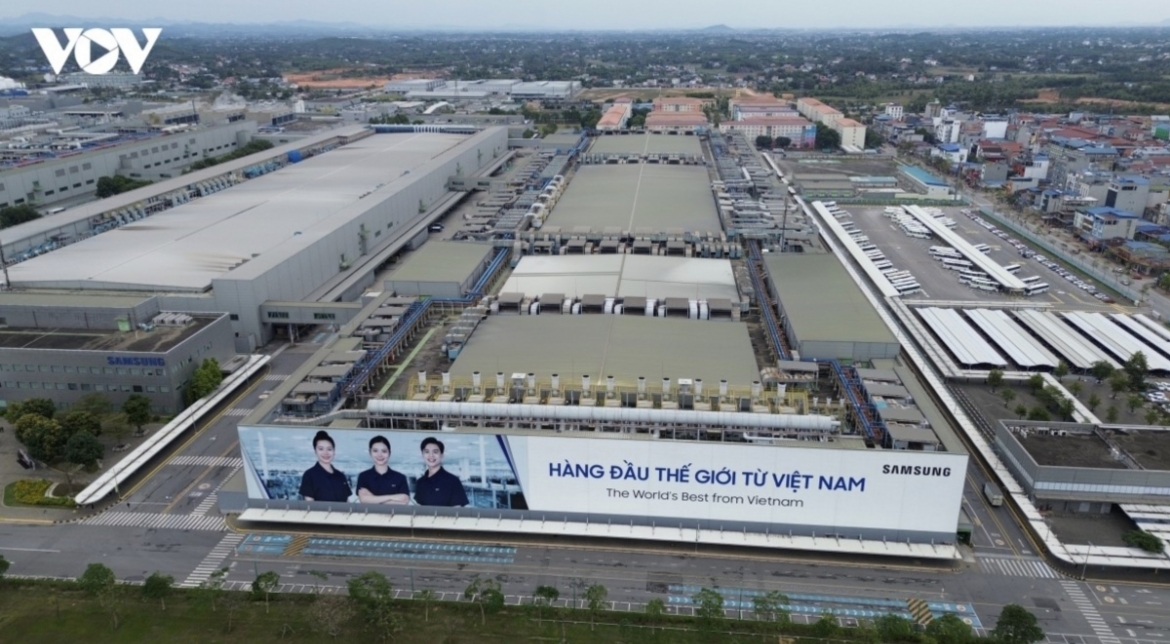

VOV.VN - Resolution No. 10 is opening a strategic turning point: moving Vietnam from the position of a "contract manufacturing workshop" to a higher step-a center for innovation and the absorption of global technologies.
From quantitative accumulation to qualitative breakthrough
After decades of firmly establishing its position as a dynamic "production workshop" and a leading manufacturing destination in the region, Vietnam is facing a turning point.
The Politburo's Resolution No. 10 on foreign-invested economic development was issued as a strategic message: strongly shifting from the mindset of "attracting foreign direct investment (FDI) at all costs" to building an "integrated FDI ecosystem." There, added value, core technology, innovation capacity, and the degree of organic linkage with the domestic enterprise sector serve as the ultimate measures of success.
After over three decades of economic opening, FDI has become one of the pillars of Vietnam's economy. Cost advantages, a network of free trade agreements, and its position in the global supply chain help the country become a destination for many multinational corporations.
Economic statistics continue to reflect this strong attractiveness. In the first seven months of 2026, total registered FDI capital in Vietnam reached US$38.1 billion, while actual disbursed FDI capital touched US$15.2 billion. Alongside this, export turnover rose to US$319.5 billion, and the Index of Industrial Production (IIP) recorded an impressive growth rate of 11.4%.
However, hidden behind these impressive figures are structural bottlenecks. The FDI sector still accounts for 79.9% of the country's total export turnover and 72.3% of its import turnover. The economy clearly reveals a dualistic nature as the level of technology spillovers from the foreign sector to the domestic sector remains very limited.
According to a recent survey by BIDV, a mere 0.5% of domestic enterprises possess sufficient technical and managerial capacity to participate deeply in the global value chain. The majority of domestic enterprises still remain at primitive processing segments with low added value, failing to connect and share commensurate benefits from the influx of international capital.
This shift is entirely inevitable and urgent. Vietnam is sending a definitive signal: Toward becoming a platform for connectivity and knowledge exchange, and in the long term, an innovation center serving as a launching pad for high-tech enterprises and large value-added capital flows.
Regional competitive pressure and changing global "rules of the game"
Competition to attract FDI in Southeast Asia is increasingly fierce as Thailand, Malaysia, and Indonesia continuously introduce new incentive policies and strategies to capture shifting capital flows. In the early stage of development, cheap labor was a decisive factor helping Vietnam win labor-intensive and simple assembly projects. However, in the era of the semiconductor industry, artificial intelligence (AI), precision electronics engineering, and research and development (R&D) centers, these traditional advantages are gradually losing their inherent weight.
When making multi-billion-dollar investment decisions, the world's leading technology corporations now place the highest priority on institutional transparency, legal system stability, smooth administrative procedures, data protection, modern telecommunications infrastructure, and above all, a stable and reliable energy supply.
Clearly, for strategic investors, the Government's consistency, decisive execution, and policy predictability hold far more practical value than mere slogans. If institutional reforms are thoroughly realized, Vietnam will not only protect its investment attraction market share but also create a distinct difference, surpassing regional competitors.
Capital market upgrade: Financial leverage and international "quality certificate"
One of the key highlights identified in Resolution No. 10 is the goal of upgrading Vietnam's stock market to emerging market standards according to MSCI classification before 2030.
Upgrading the capital market is not merely a matter of stock industry indices. On an international plane, this serves as a "quality guarantee" for the entire national financial infrastructure, reflecting liquidity, exchange rate stability, transparent corporate governance capacity, and viable divestment mechanisms for global financial institutions.
Market reality has shown major strides. In the first half of 2026, Vietnam mobilized US$6.9 billion, accounting for 46% of the total IPO market capitalization value across ASEAN.
Operating a deep and liquid capital market will help ease the medium- and long-term funding burden weighing on the commercial banking system. More importantly, the capital market channel will serve as a primary financial resource backing supporting industry enterprises, renewable energy projects, logistics infrastructure, and digital technology enterprises in Vietnam.
Only when domestic enterprises possess sufficient financial capacity to invest in machinery, technology, and people can they become worthy supply partners for FDI corporations, thereby sustainably raising the localization rate.
A trio of foundational resolutions: Solution lies in execution
Resolution No.10 cannot stand alone; it sits within the overall structure of synchronized reforms strongly promoted by the Government over the past two years, including Resolution No. 68 on creating a breakthrough and promoting the development of the domestic private economy, and Resolution No. 5 on placing national focus on science, technology, innovation, and digital transformation.
Vietnam has never lacked vision or strategic ambition. The most critical challenge at present is execution capacity, or as the classic management principle goes: "Doing the right things and doing things right."
To concretize ambitious goals into substantive investment results, five groups of urgent action solutions need to be drastically implemented:
First, substantively cut and digitize administrative procedures. Deploy a comprehensive "interconnected single-window" mechanism and digitize the entire process of licensing and resolving investment procedures, thoroughly eradicating harassment and minimizing compliance costs for enterprises.
Second, synchronously modernize energy infrastructure and digital infrastructure. Accelerate the progress of power transmission projects, develop stable renewable energy sources, expand fiber-optic infrastructure, 5G, and international-standard data centers to be ready to receive technology and semiconductor "eagles."
Third, restructure the supply chain and nurture the supporting industry network. Build specific incentive mechanisms (regarding taxes, credit, and premises) for FDI enterprises to directly accompany, provide technical support for, and off-take products from domestic suppliers. Create a bridge tightly connecting small and medium-sized enterprises (SMEs) to the global production network.
Fourth, operate international financial centers. Urgently finalize an exceptional regulatory sandbox framework for international financial centers in Ho Chi Minh City and Da Nang to attract venture capital flows, private equity funds, and regional risk management services.
Fifth, make a strategic breakthrough in high-quality human resource development. Promote the "triple helix" cooperation model involving the State, research institutes, and enterprises. Integrate practical skills training programs, automation, AI, and semiconductor technology into education to retain and elevate domestic human resources.
Resolution No. 10 will truly prove effective only when FDI not only generates capital and jobs, but also becomes a driving force for technology, knowledge, and capacity spillovers to Vietnamese enterprises. The strategic framework has paved the way, but the ultimate outcome will depend on the quality of execution, thereby propelling Vietnam deeper into the high-tech and innovation value chain.
Resolution No. 10 will truly prove effective only when FDI generates capital and jobs while also becoming a driving force for technology, knowledge, and capacity spillovers to Vietnamese enterprises. The strategic framework has paved the way, but the ultimate outcome will depend on the quality of execution, thereby propelling Vietnam deeper into the high-tech and innovation value chain.
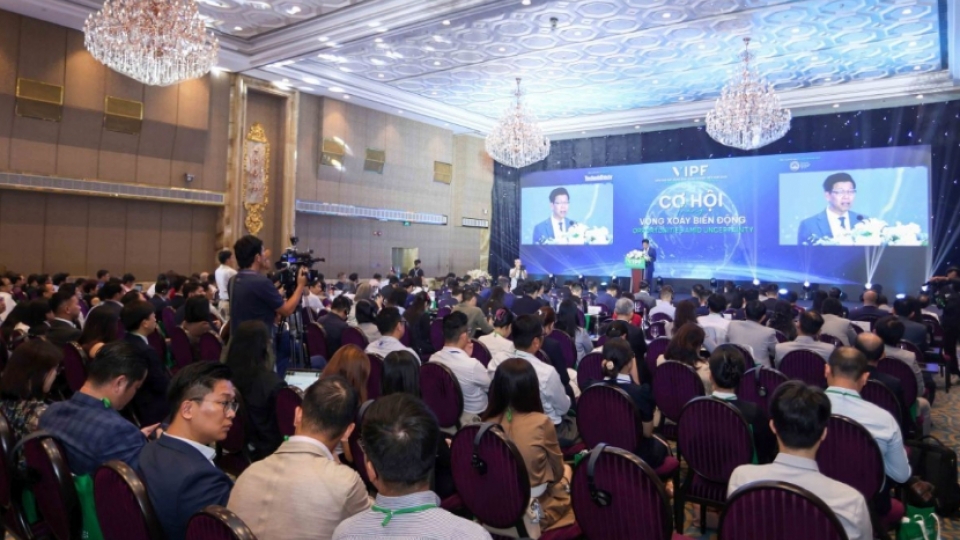
VOV.VN - Administrative procedures and high-quality human resources are critical factors determining Vietnam's competitiveness in attracting foreign direct investment (FDI), industry experts and businesses said at the 2026 Industrial Real Estate Forum held in Ho Chi Minh City on September 29.
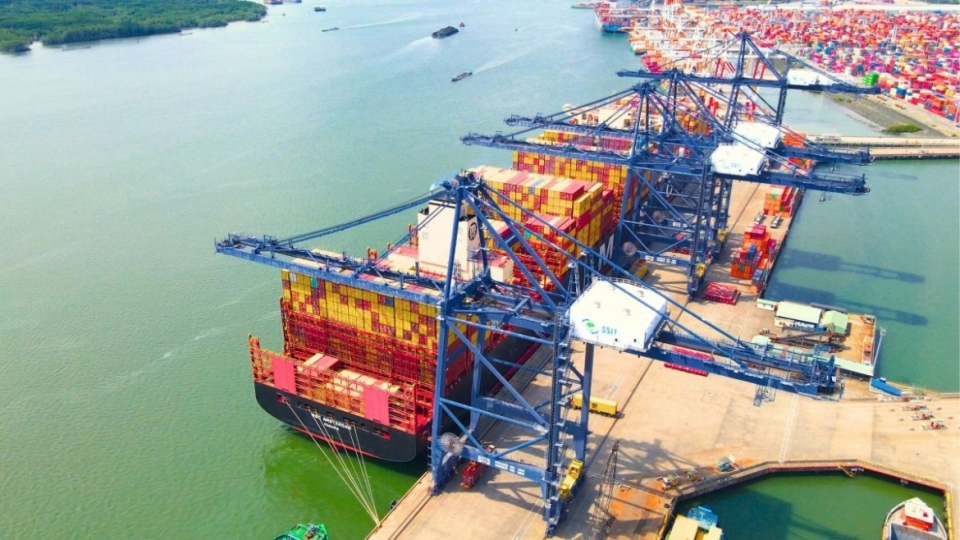
VOV.VN - Registered foreign direct investment (FDI) in Ho Chi Minh City had topped US$17.2 billion as of September 19, 2026, about 4.19 times the figure recorded a year earlier and equivalent to 156.6% of the full-year target.
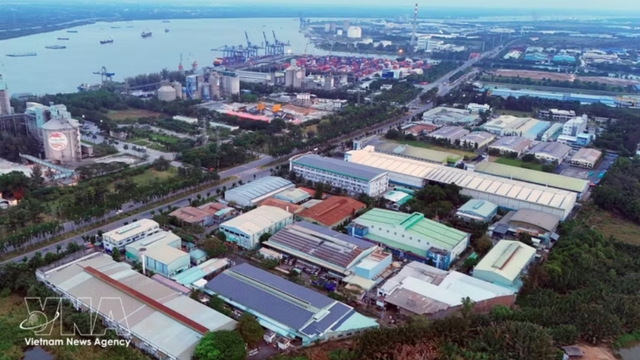
Ho Chi Minh City is expanding its development space, forming new growth poles and attracting investment into technology- and knowledge-intensive sectors.
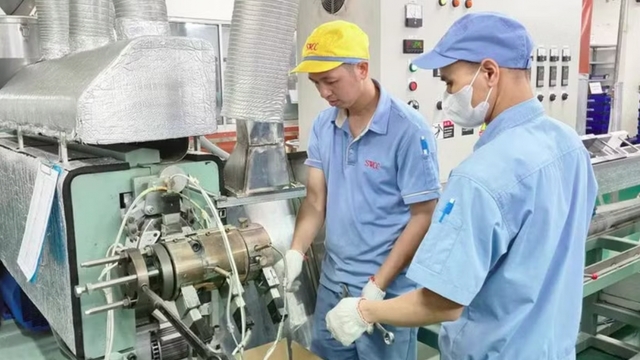
Hanoi recorded strong growth in foreign direct investment (FDI) attraction in the first nine months of 2026, with capital concentrated in high-tech and high-value-added industries, according to the municipal Department of Finance.

VOV.VN - Registered foreign investment in Vietnam surged in the first nine months of 2026, while disbursed FDI also maintained strong momentum, reaching its highest nine-month level in five years, according to the Foreign Investment Agency under the Ministry of Finance.





.JPG&w=640&q=100)









Bình luận
Bình luận của bạn sẽ được xét duyệt trước khi đăng