
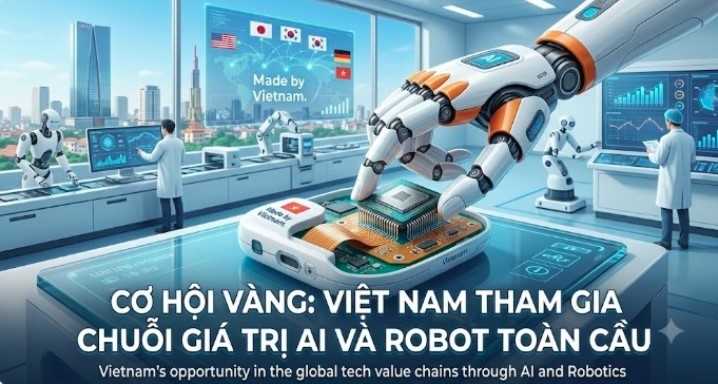

VOV.VN - Vietnam sees a major opportunity as artificial intelligence (AI), robotics, and smart manufacturing develop alongside one another. If the country makes good use of this period, it can fully participate in global technology value chains.
Associate Professor Dr. Ta Duc Tung, Head of Tung Laboratory at Keio University in Japan made the assessment, while sharing his thoughts on the potential for Vietnam-Japan cooperation in human resource training, research, and the development of strategic technologies.
Associate Professor Ta Duc Tung's research focuses on the intersection of digital fabrication, soft robotics, and human-computer interaction, specifically robotic hands, tactile sensors, and AI for robotics.
Speaking with the press in Japan, he noted that the contribution of a Vietnamese scientist overseas lies not merely in technology transfer, but more importantly in connecting knowledge, people, and research ecosystems. Currently, his research group at Keio University focuses on soft robotics, dexterous robotic hands, tactile sensors, and AI for robotics. These are foundational technologies for a new generation of robots capable of working flexibly in real-world environments, from manufacturing and logistics to healthcare.
The scientist aims to contribute to Vietnam in three main directions. First is training high-level research human resources through joint supervision of students and doctoral candidates, organizing specialized courses and workshops, and running exchange programs between Vietnam and Japan.
Second is building joint research projects that help domestic groups directly participate in new global research directions, rather than just receiving technology after it is already finalized. Third is connecting enterprises with international laboratories to form products capable of commercialization and creating practical value.
Over the years, Associate Professor Ta Duc Tung has maintained close ties with domestic universities, particularly Hanoi University of Science and Technology, through research projects, student mentoring, and international co-publications. Many Vietnamese doctoral students and engineers are currently engaging directly in his research group's projects in Japan.
According to him, this is an effective way for young scientists to access modern research methods before bringing this experience back to Vietnam.
Additionally, his group is building open data platforms and AI tools for robotics research. Associate Professor Ta Duc Tung hopes research groups in Vietnam can join in developing, sharing data, and building AI models for the community.
He assessed that the quality of Vietnamese students is continuously improving, noting that with a good research environment and favorable international cooperation mechanisms, young people are fully capable of taking part in international-level projects.
Regarding practical applications, soft robotics offers the advantage of interacting safely with humans and easily deformable objects, opening up many applications suited to Vietnam's needs. In agriculture, soft robots can harvest fruits and vegetables and handle fragile products that traditional industrial robots find difficult to process. In healthcare, this technology, together with tactile sensors, can support rehabilitation, surgery, or the manufacturing of assistive devices for the elderly and people with disabilities.
In manufacturing, dexterous robotic hands can help automate assembly steps that currently require significant manual labor. For disaster response, soft robotics and robots capable of adapting to environments can support search and rescue operations or perform tasks in hazardous areas.
A new research direction for the group is combining AI with tactile perception, helping robots not only "see" but also "feel" like humans. Associate Professor Ta Duc Tung emphasizes that this will be an important foundation for robots to work in real-world environments.
Sharing his views on priority factors for building human resources and research ecosystems, the Associate Professor noted two key aspects. First is long-term investment in people. Fields like robotics or AI cannot yield results in just a few years; it is essential to build stable, long-term research groups that are empowered to develop.
Second is encouraging interdisciplinary research. Modern robotics involves not only mechanical engineering, but also electronics, new materials, AI, and data science, requiring educational models to adapt accordingly. Furthermore, he believed conditions should be created for young scientists to join international research networks early, viewing this as the fastest way to raise research capacity and integrate with the global scientific community.
In the coming period, Associate Professor Ta Duc Tung hoped to expand long-term and sustainable cooperation with Vietnam.
One goal is building a research network between Vietnamese universities, Keio University, and international partners, enabling Vietnamese students and researchers to participate directly in international projects. He also aims to promote joint PhD supervision programs, student exchanges, and joint laboratories in robotics, AI, and smart manufacturing.
On the enterprise side, he desired more collaborative R&D projects between Vietnamese companies and Japanese laboratories, thereby shaping "Made by Vietnam" technologies capable of competing in international markets.
Associate Professor Ta Duc Tung expressed his confidence that Vietnam is entering a crucial period in scientific and technological development. With a young workforce, fast learning capacity, and growing state support for innovation, Vietnam can make breakthroughs in strategic tech domains like robotics, AI, and smart manufacturing by strengthening connections between scientists at home and abroad, as well as between universities and enterprises.
VOV.VN - The Vietnamese Prime Minister has issued a list of strategic technologies and strategic technology products, identifying 10 priority technology groups in which artificial intelligence (AI) and digital technologies play a central role to concentrate resources on core technologies, strengthen competitiveness and safeguard national security.
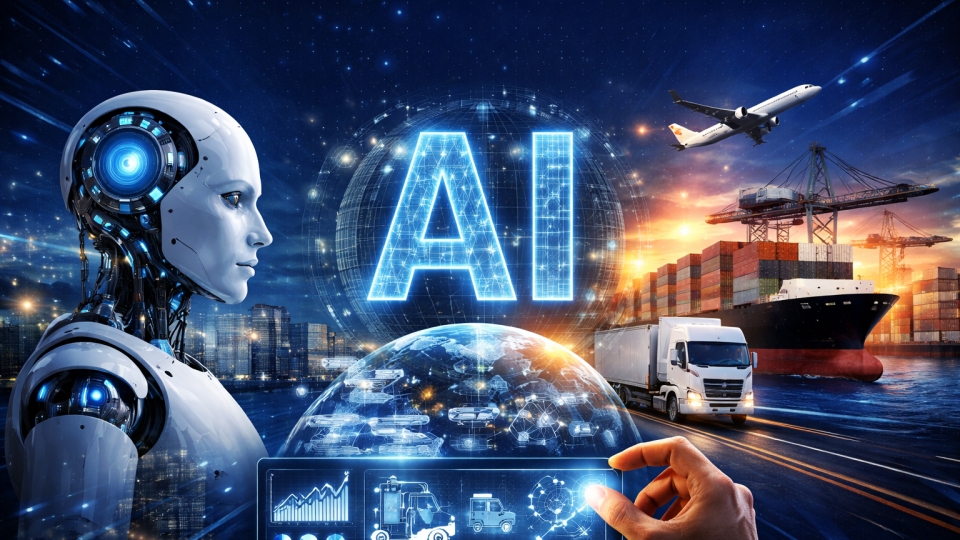
VOV.VN - The Vietnam Logistics Human Resources Development Association (VALOMA) will host a logistics technology forum in May to highlight the role of artificial intelligence (AI) in shaping future logistics, according to the organisers.
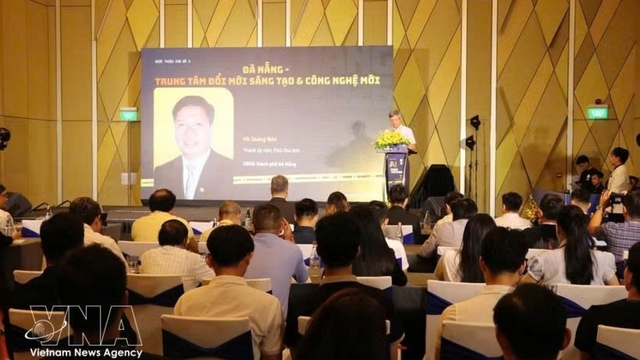
Da Nang is stepping up cooperation with global technology companies to develop artificial intelligence (AI) infrastructure, cloud computing, an innovation ecosystem, creating a cornerstone for digital transformation and the digital economy, heard the Frontier AI & Local Zones Innovation 2026 conference held on July 17.
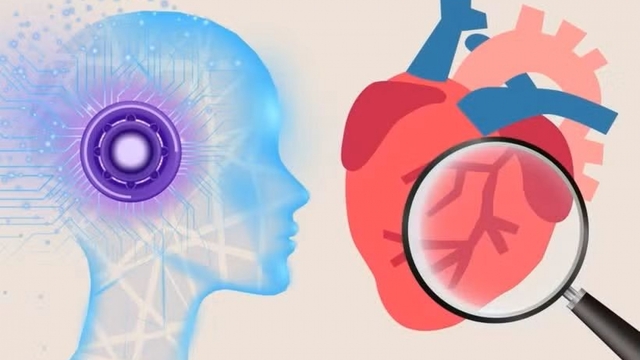
Rather than pursuing absolute technological self-sufficiency, Vietnam should adopt an approach of “open technological sovereignty” by retaining control over strategic technology layers and remaining deeply integrated into the global innovation ecosystem.






.JPG&w=640&q=100)






Bình luận
Bình luận của bạn sẽ được xét duyệt trước khi đăng