
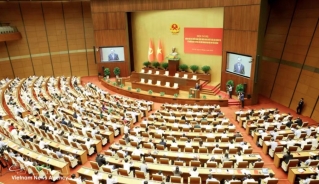
Diplomacy considered as driver of national development
In Vietnam’s development journey, diplomacy has never occupied as a central position as it does today.

VOV.VN - As Vietnam’s foreign affairs continue to chart new paths, its expanding bilateral and multilateral relations actively contribute to maintaining a peaceful environment, broadening market access, attracting development resources, and elevating the nation’s global standing.
Recent diplomatic activities show that the foreign policy guidelines of the Party’s 14th National Congress are being put into practice, reaffirming that foreign affairs constitute a "vital and regular" task alongside national defence and security.
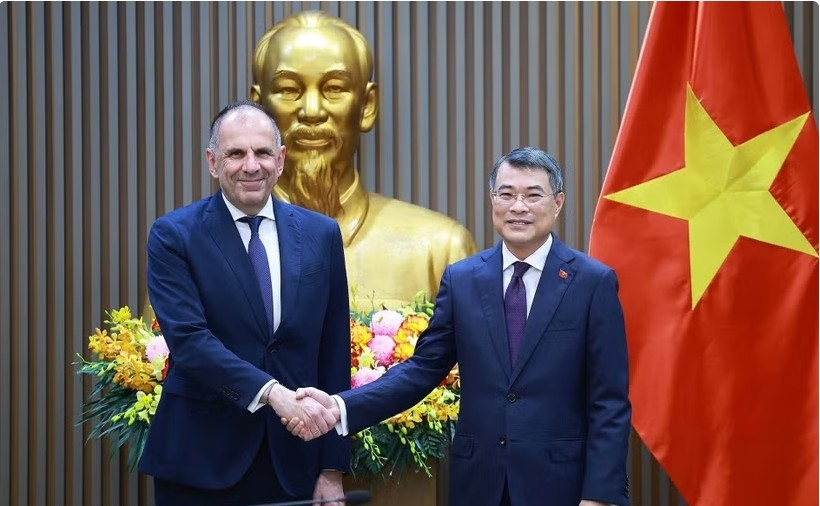
The recent meeting between Prime Minister Le Minh Hung and Greek Foreign Minister George Gerapetritis extended far beyond consolidating traditional friendly relations. The focus centered on accelerating economic, trade, and investment cooperation, while effectively exploiting the EU-Vietnam Free Trade Agreement (EVFTA).
Key agendas included strengthening business-to-business connectivity and expanding cooperation in the maritime economy, logistics, shipbuilding, renewable energy, science and technology, alongside exploring a direct air route between the two countries.
Political ties are being turned into concrete cooperation programs capable of generating additional growth for both nations.
In parallel with bilateral relations, Vietnam further asserts its role within ASEAN-EU relations. As the coordinator for ASEAN-EU economic relations, one of the few ASEAN nations to sign a Free Trade Agreement (FTA) with the EU, and a participant in the Just Energy Transition Partnership (JETP), Vietnam actively bolster cooperation in the digital economy, energy transition, sustainable development, and trade. This aligns with the mandates of Resolution No. 06 of the Political Bureau, which requires the nation not only to participate in existing cooperation mechanisms but also to progressively shape new spaces for stronger cooperation.
Friendly relations with Mauritania, an African nation, clearly illustrate the current direction of Vietnamese diplomacy. Rather than limiting exchanges to traditional friendship, both sides anchor cooperation in sectors of mutual strength and demand, including agriculture, telecommunications, mining, oil and gas, education, healthcare, and aquaculture—a synergy that deepens bilateral ties while generating new growth opportunities for both nations.
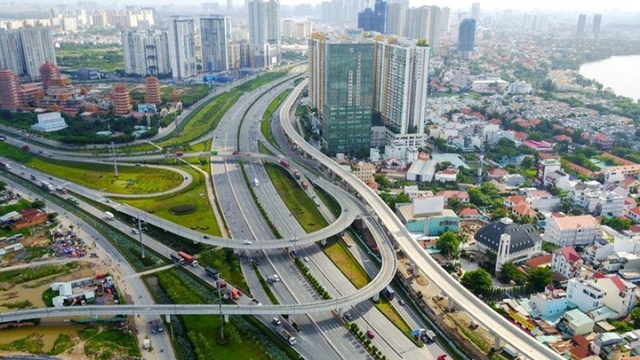
This trend is equally evident at the local level. Working with Lang Son province, PM Le Minh Hung urged the locality to fully leverage its border gate advantages, focusing on the development of logistics, cross-border trade, cross-border economic cooperation zones, and smart border gates.
In the first half of 2026, import-export turnover through the province reached US$57.69 billion, a 42% increase and accounting for roughly 11% of the country’s total. These figures demonstrate that when foreign policy advantages are effectively capitalized on, border gates expand far beyond customs clearance points to become hubs for market connectivity, investment attraction, and growth.
In border areas, building boundaries of peace, friendship, and cooperation has become a regular task for the entire political system. In Dak Lak, the Fatherland Front of Dak Lak province and its Cambodian counterpart in Mondulkiri province signed a new memorandum of understanding for cooperation.
The agreement expands joint coordination from protecting borderlines and landmarks to developing border economies, people-to-people exchanges, human resource training, and social welfare in border regions. During the recent period alone, competent forces organized 125 educational campaigns with over 7,530 participants, consolidating public awareness, strengthening consensus, and maintaining stability from the grassroots level.
Regarding international and regional issues, Vietnam and its partners continue to reaffirm a consistent stance on maintaining peace, stability, security, safety, and freedom of navigation and aviation.
The country advocates settling disputes through peaceful measures based on international law, particularly the 1982 United Nations Convention on the Law of the Sea (UNCLOS). Steadfast adherence to this principle safeguards a peaceful environment for national development while building trust and regional stability.
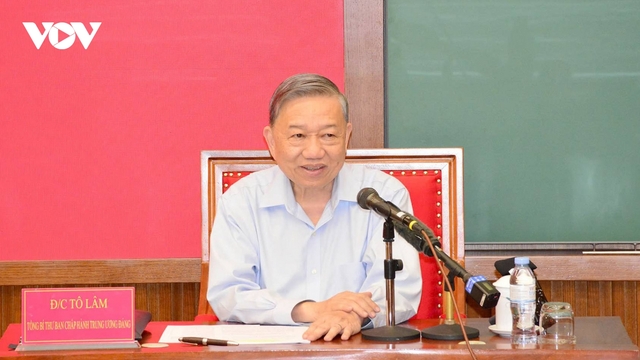
This embodies the philosophy of "defending the country early and from afar," which extends beyond traditional security issues. This is why the Party determined that foreign affairs must stand at the frontline and cannot be the sole task of the diplomatic sector. Recalling President Ho Chi Minh’s teaching: "National strength is the gong, diplomacy is the sound. Only when the gong is good can the sound echo far," General Secretary and State President To Lam recently emphasized: "By performing their tasks well, each ministry, sector, and locality makes a worthy contribution to the nation’s overall foreign affairs."
Practical realities have proven this principle. A locality with good administrative reforms attracts investors. A well-organized business that honors its commitments raises the reputation of Vietnamese goods. A high-performing university expands international cooperation. Every positive action contributes to the nation's prestige.
The Vietnam Summer Camp 2026 serves as a vivid example. More than 100 overseas Vietnamese youths and students from 32 countries and territories traveled nearly 1,500 kilometers across the country to learn about Vietnam’s history, culture, and people. Such activities nurture a love for the homeland, generating additional resources for national construction and development.
People-to-people diplomacy is also deployed through highly practical actions. These ranged from the 250th anniversary of US Independence Day in Ho Chi Minh City, the 73rd anniversary of the assault on Cuba’s Moncada Barracks, to the 55th anniversary of Vietnam-Chile diplomatic relations. The highlights centered on expanding people-to-people exchanges and connecting cooperation among localities, businesses, and the younger generation.
A recent unfortunate accident involving Indian citizens also demonstrated Vietnam’s responsible conduct. Competent forces acted urgently in rescue operations, supporting the victims and the Indian side. This response contributes to the reputation of a humane and responsible diplomacy.
The diplomatic activities carried out over the past week indicate that the foreign policy lines of the 14th National Congress are progressively entering daily life. From high-level diplomacy, economic diplomacy, local foreign affairs, to people-to-people diplomacy and handling regional and international issues, all goals are directed toward maintaining a peaceful environment, leveraging external resources, and elevating the nation’s standing.
This marks a new development in the Party’s foreign policy thinking. All activities must serve national development and the lives of the people. When every diplomatic activity brings an additional cooperation opportunity, a new market, a new resource, or an additional trusted friend, the foreign policy guidelines of the 14th National Congress are successfully realized into concrete outcomes.

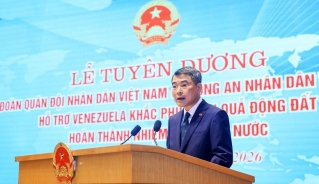
VOV.VN - International disaster relief is not only a humanitarian undertaking but also an essential component of national capacity that helps build trust, strengthen diplomacy and reinforce Vietnam's standing in the international community, Prime Minister Le Minh Hung said on July 11.



.JPG&w=640&q=100)




Bình luận
Bình luận của bạn sẽ được xét duyệt trước khi đăng