
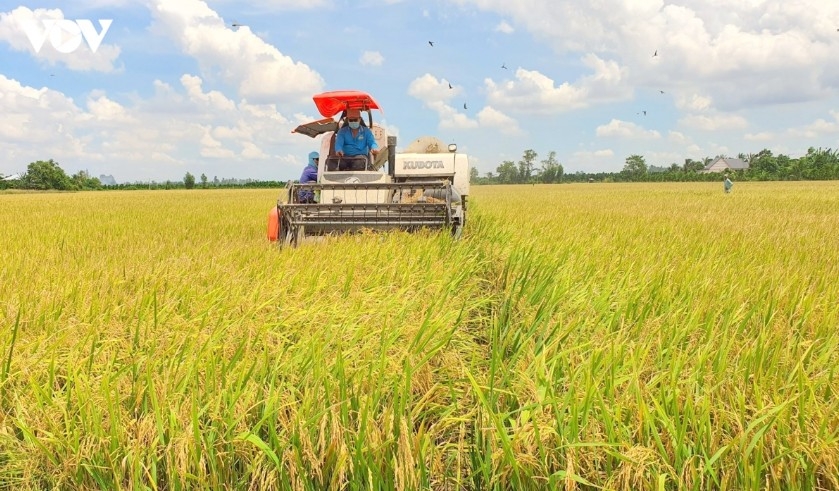

VOV.VN - After 40 years of Doi Moi (Renovation), Vietnam's agricultural sector has undergone a profound transformation, transitioning from a post-war economy constrained by capital shortages and small-scale production into one of the world's leading exporters of farm produce.
Spurring growth through land policy reform
The year 2025 marked a historic milestone as total export turnover of agro-forestry-fishery products surpassed US$70 billion for the first time, generating a trade surplus of approximately US$21.4 billion. Looking back on the four-decade journey of Doi Moi, agriculture stands out as a clear demonstration of reform in economic thinking and policy frameworks.
Moving away from viewing agriculture merely as a food security safety net, national policy has increasingly leveraged the sector as a primary economic pillar driven by market demand, value addition, and international competitiveness.
Over the past 40 years, Vietnamese agriculture maintained an average annual growth rate of 3.5%, outstripping the global average of 2%. Rice production increased from roughly 16 million tonnes in 1985 to 45 million tonnes in 2015, reaching 43.5 million tonnes in 2024.
From a nation dependent on food aid in the immediate post-war period, Vietnam has secured a place among the world's top 15 agro-forestry-fishery exporters. Concurrently, rural livelihoods have improved substantially, with average monthly per capita income rising from US$16 in 1999 to US$185 in 2024.
Reviewing the sector’s 40-year journey, former Minister of Agriculture and Rural Development Nguyen Xuan Cuong noted that policy shifts served as the decisive catalyst for breakthroughs in yield, operational scale, and competitiveness.
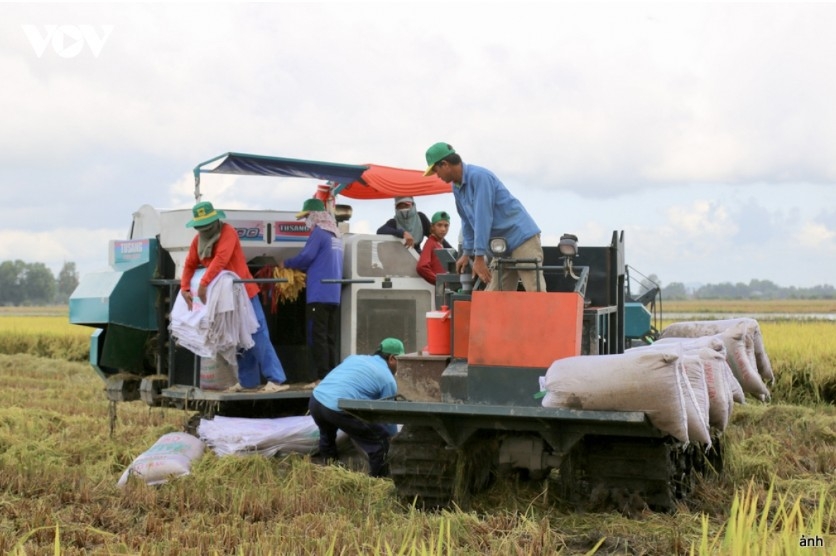
In the post-war era, limited national resources forced Vietnam to place food security as the single highest priority of its agricultural agenda. Efforts focused on expanding rice acreage, boosting yields, and meeting basic domestic consumption needs. Irrigation infrastructure was positioned as the strategic core, with state funding concentrated on building major reservoir networks, dams, and canals across the country. Today, approximately 3.6 million hectares of arable land, including 95% of rice fields, benefit from guaranteed irrigation.
Cuong highlighted that out of Vietnam's 33 million hectares of natural land, three-quarters consist of mountains and plateaus. With terrain spanning 15 degrees of latitude and sloping steeply from west to east, developing water infrastructure presented immense engineering challenges.
Nevertheless, the government consistently prioritized investment in irrigation throughout all development stages.
Large-scale water supply systems built from North to South initially met fundamental farming requirements before expanding their scope to serve broader national economic needs, including hydropower generation, industrial production, urban development, and domestic consumption.
Alongside physical infrastructure, reforms directly resolved a critical bottleneck: land management. Prior to Doi Moi, collective farming mechanisms denied individual households operational autonomy over production assets. Contract farming policies, particularly Resolution 10 (commonly known as Contract 10) in 1988, fundamentally reshaped the relationship between farmers and their land. While land remained under entire-people ownership managed by the State, land-use rights were granted to farming households on a stable, long-term basis.
Pivoting to market economy and boosting agricultural value
According to Prof. Dr. Tran Duc Vien, People's Teacher and former Director of the Vietnam National University of Agriculture, institutional changes produced immediate effects. In 1987, Vietnam was still forced to import nearly 1.6 million tonnes of food staples. However, just six months after Resolution 10 was introduced, the country exported roughly 1.4 million tonnes of food.
Once domestic food security was secured, agricultural policy transitioned from basic subsistence toward enabling farmers to diversify crop and livestock production based on market signals and regional competitive advantages. This marked a vital transition from a model focused primarily on food security to a commercialized, commodity-based agricultural economy.
On this foundation, key commodity sectors rapidly gained scale. Coffee output rose from about 90,000 tonnes in 1990 to nearly 2 million tonnes in 2024; rubber production expanded roughly twentyfold; and black pepper grew from 9,000 tonnes to 250,000 tonnes, positioning Vietnam as the world's largest pepper supplier. Livestock farming and aquaculture expanded in parallel, with fishery production multiplying nearly tenfold compared to 1990 levels.
Prof. Dr. Nguyen Hong Son, President of the Vietnam Academy of Agricultural Sciences, observed that management authorities acted promptly to reform operational mechanisms. Recognizing that staple food production was approaching yield caps and market limits, Vietnam launched a structural restructuring of crop allocation. This shift triggered a series of targeted policies governing land conversion, production incentives, agricultural extension services, technical support for farmers, and market integration.
The US$70-billion export milestone in 2025 marks the culmination of a 40-year process of institutional, policy, and organizational reform throughout Doi Moi. Experts emphasize that policy innovation is the prerequisite factor boosting development.
Land policies empowered farming households; market policies expanded consumption space both domestically and internationally; financial and credit policies funneled resources into production; while reforms in co-operatives, enterprises, and agricultural service systems completed the framework. When integrated within a long-term strategy, agriculture not only fulfills its duty of ensuring food security but has transformed into a highly competitive economic sector, contributing increasingly to national growth, incomes, and public welfare.
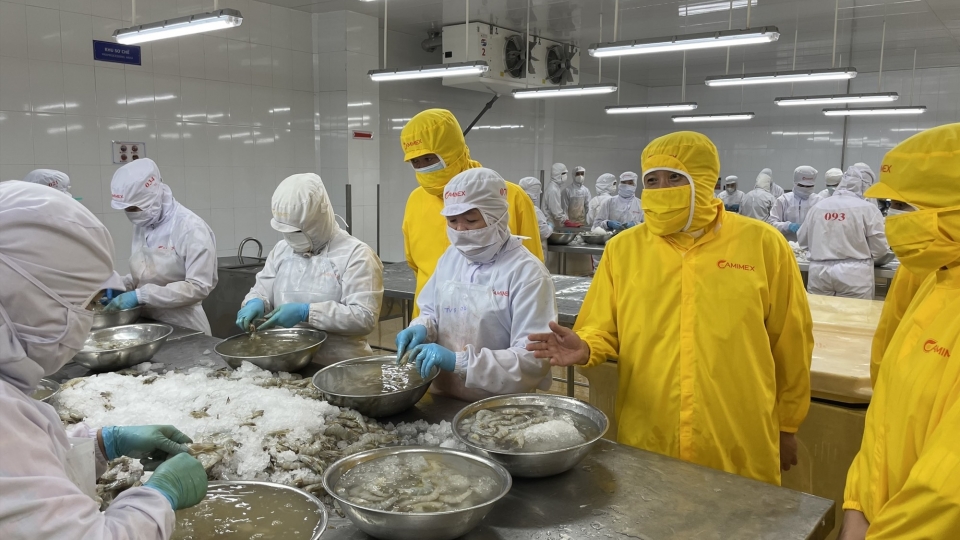
VOV.VN - Vietnam's agro-forestry-fishery exports hit an estimated US$42.8 billion in the first seven months of 2026, up 7.5% year on year, keeping the sector on track toward its full-year export target of US$74 billion.
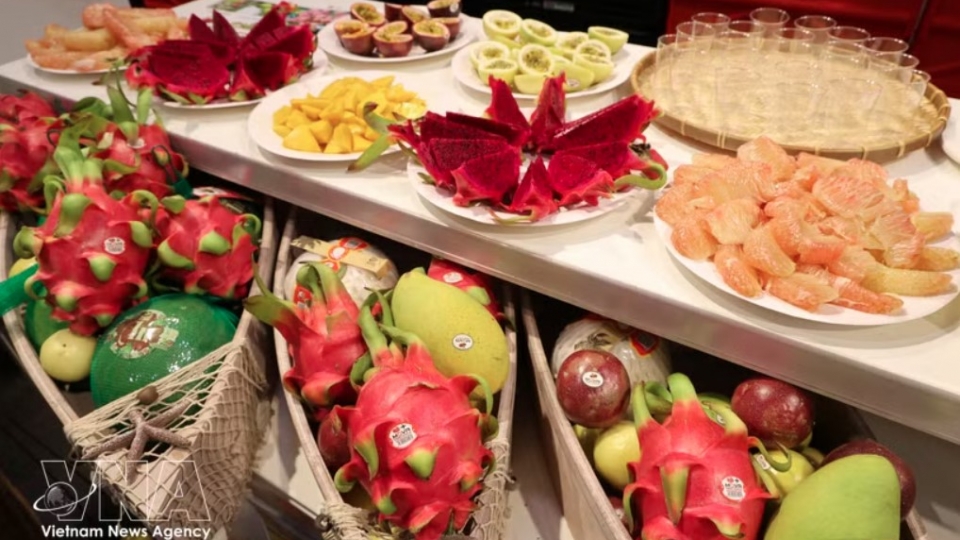
The Ministry of Agriculture and Environment (MAE)'s national agricultural traceability system has officially come into operation, creating a unified nationwide database to enhance transparency, strengthen competitiveness and expand export opportunities for Vietnamese agricultural products.
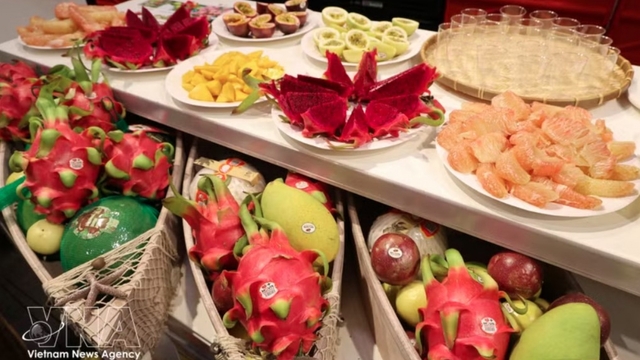
The Ministry of Agriculture and Environment (MAE)'s national agricultural traceability system has officially come into operation, creating a unified nationwide database to enhance transparency, strengthen competitiveness and expand export opportunities for Vietnamese agricultural products.
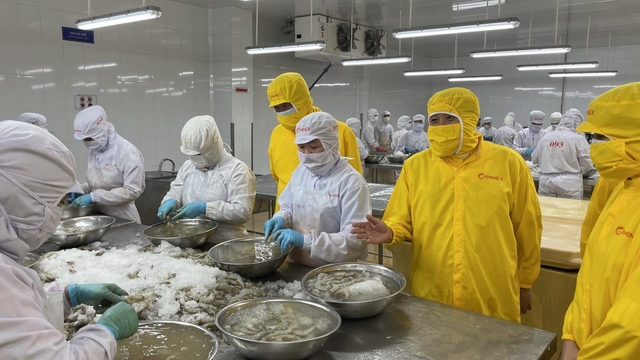
VOV.VN - Vietnam's agro-forestry-fishery exports hit an estimated US$42.8 billion in the first seven months of 2026, up 7.5% year on year, keeping the sector on track toward its full-year export target of US$74 billion.




.JPG&w=640&q=100)









Bình luận
Bình luận của bạn sẽ được xét duyệt trước khi đăng