Party Congress XIV: A turning point in thinking for breakthrough development
VOV.VN - The core significance of the 14th National Congress of the Communist Party of Vietnam lies in its determination to achieve a breakthrough in thinking on development, shifting from a management-oriented approach to a development-creating approach, while establishing a new growth model based on science and technology.
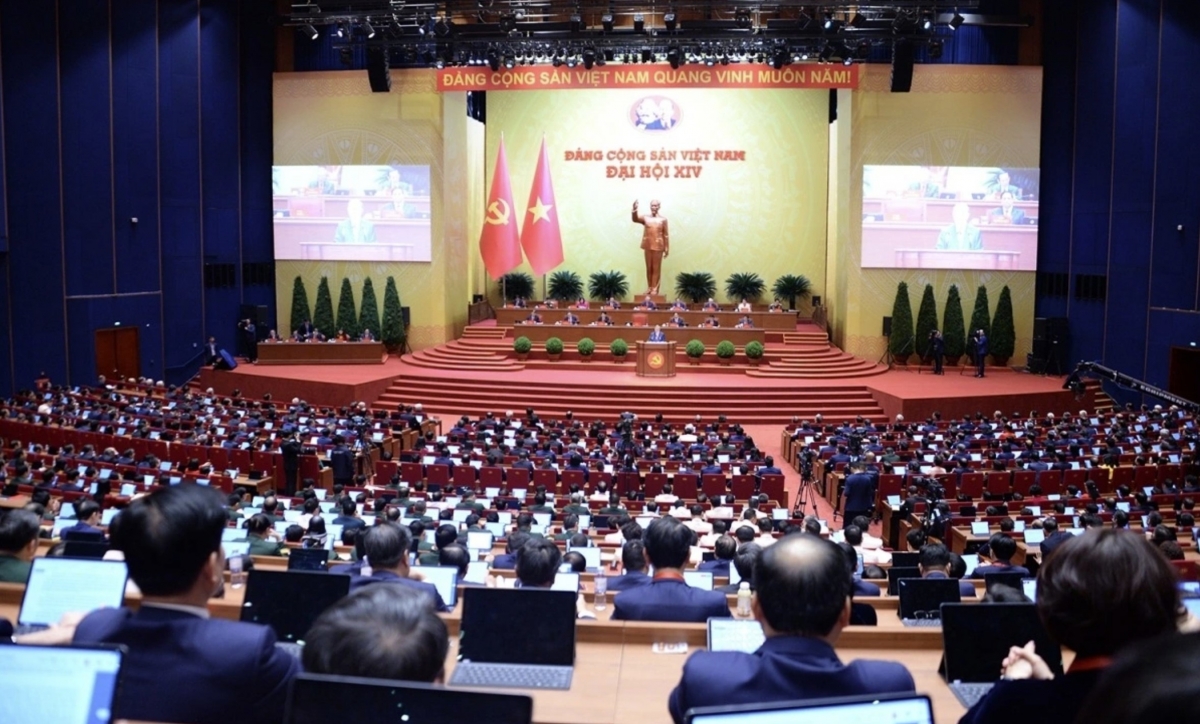
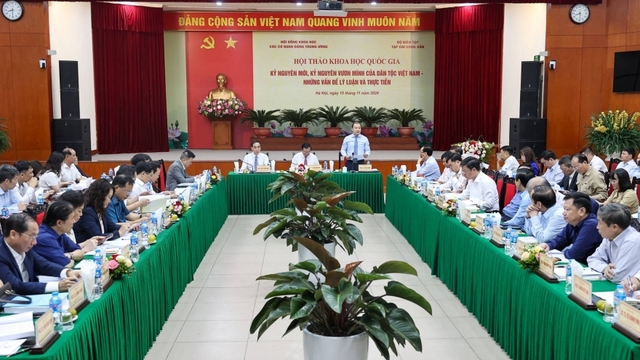
The 14th National Party Congress opens at the National Convention Center in Hanoi on January 20, 2026.
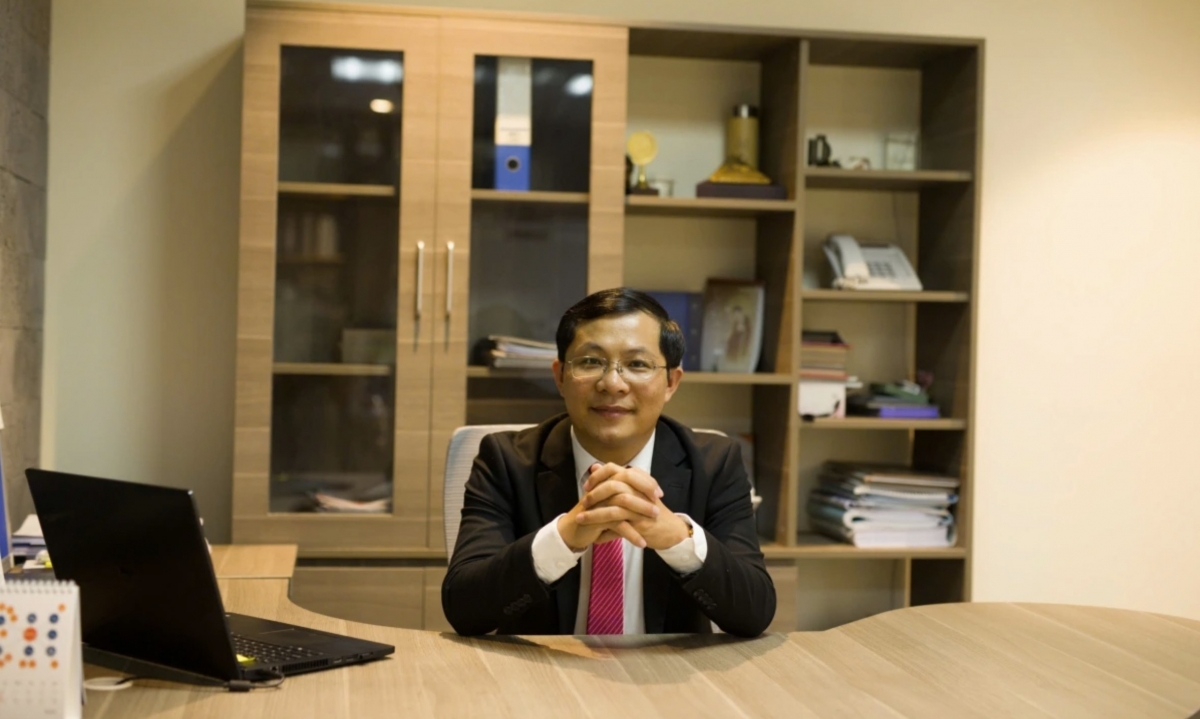
Dr Doan Van Tinh of the National Academy of Public Administration and Governance made the assessment in a recent interview with the Voice of Vietnam (VOV).
The 14th National Party Congress is identified as a major political event of historic turning-point significance, marking the moment when the country enters a new development era – the era of national rise. This phase is defined by the goal of accelerated and breakthrough development, enabling Vietnam to become prosperous and strong, stand alongside the world’s major nations, and compensate for development opportunities missed in the past.
The stature of the Congress is reflected in its role as a “launching pad” for the realisation of two strategic centennial goals. By 2030, coinciding with the centennial of the founding of the Communist Party of Vietnam, the country aims to become a developing nation with modern industry and upper-middle income status. By 2045, marking 100 years since the founding of the nation, the vision is to become a developed, high-income country following a socialist orientation.
The 14th Party Congress sets the direction for the 2026–2030 term and defines strategic issues with long-term implications for the future and destiny of the nation. Its significance lies in the resolve to achieve a breakthrough in thinking on development, shift from management to development creation, and carry out a revolution to streamline the organisational apparatus in order to unblock all resources. At the same time, it establishes a new growth model based on science and technology.
Compared with previous congresses, the 14th Party Congress defines this period as one of convergence, bringing together overall advantages and strengths to drive breakthrough development after the era of national independence and freedom and the era of renewal. The objective is no longer merely to escape poverty or reach an average level of development, but to realise the aspiration of becoming a developed, high-income country by 2045.
While earlier congresses often focused on consolidation, reorganisation and staff streamlining, as seen in Resolution 18 of the 12th Party Central Committee, the 14th Party Congress launches a revolution in organisational restructuring on an unprecedented scale and with unprecedented determination. The aim is to build a modern national governance apparatus and deal with the long-standing problems of bulkiness and multiple intermediate layers that have persisted across many terms.
The Congress also marks a breakthrough in economic thinking by establishing a new growth model based on science, technology and innovation, and by emphasising the development of new productive forces, new production relations, the digital economy, the green economy, the circular economy and, in particular, the data economy. Although science and technology have been identified as a top national policy since the 11th, 12th and 13th Party Congresses, the 14th Congress elevates their role to that of a decisive driver of growth.
A further notable point lies in the approach to drafting documents and organising implementation. The action programme to implement the Resolution of the 14th Party Congress is designed to clearly identify responsible actors, roadmaps, resources and targets.
The guiding principle marks a shift from “words accompanied by action” to “seeing things through to the end”, linking responsibility with concrete and measurable results, and addressing the problem of resolutions being strong on paper but slow in implementation in previous terms.
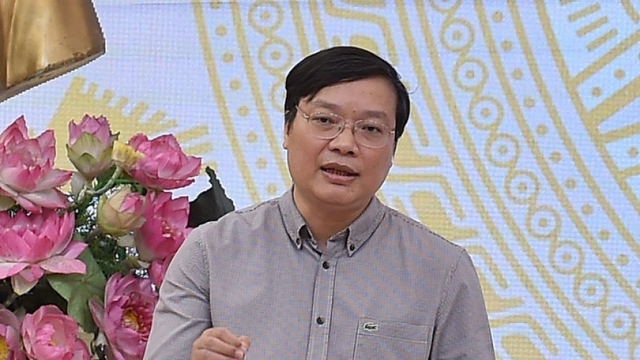
Dr Doan Van Tinh of the National Academy of Public Administration and Governance
The 14th Party Congress also views institutions not only as a breakthrough area but frankly identifies them as the “bottleneck of bottlenecks”. This underpins a strong shift from a management mindset to a development-creating mindset, with thorough decentralisation and delegation of authority under the principle that localities decide, act and take responsibility. At the same time, it promotes policy sandbox mechanisms for new economic models and emerging technologies.
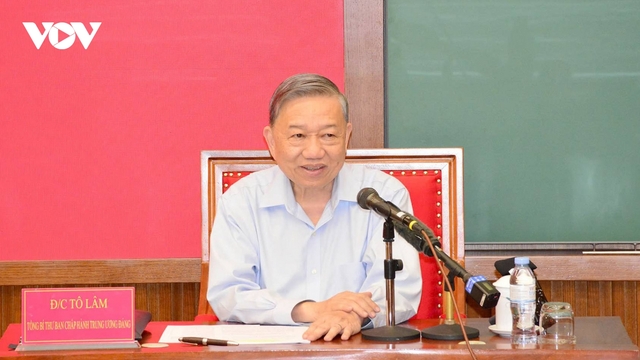
Regarding the strategic breakthrough in human resources, particularly high-quality human resources linked to science, technology and innovation, Dr Doan Van Tinh said the requirement to act “forcefully, rapidly and thoroughly”, as directed by the Party General Secretary, calls for systemic solutions.
From an institutional perspective, this requires a shift from a mindset of “ownership” to one of “talent utilisation”, alongside special and superior mechanisms on income and working conditions to attract leading experts, especially Vietnamese professionals overseas. In education and training, resources should be prioritised for key industries such as semiconductors, artificial intelligence and new energy, while strengthening digital skills training. Breakthrough policies are also needed to develop a number of research-oriented higher education institutions into science, technology and innovation centres comparable with those in advanced countries.
In implementation, mechanisms should be specified to protect officials who embody the principle of “six dares”, particularly provisions on exemption from legal liability when breakthrough initiatives pursued for the common good encounter objective risks. In capacity and performance governance, a digital-based talent database and capacity scoring system are needed to assess officials based on concrete results.
Dr Doan Van Tinh stressed that high-quality human resources are a prerequisite for establishing knowledge-based, digital and green economic models. Among the strategic breakthroughs, while institutions open the way and infrastructure creates space, human resources are the “resource of all resources”, determining the success of institutions and infrastructure, as well as the speed and quality of the new growth model.
Science and technology, regardless of how advanced, are ultimately tools; people are the creators, operators and controllers. Without a workforce capable of absorbing and mastering technology, advanced technologies may become wasteful or even turn a country into a “technology dumping ground”. In today’s global competition, national advantage no longer lies in natural resources but in intellectual resources.
A breakthrough in human resources is therefore a vital factor for Vietnam to shift from extensive growth to intensive growth, improve total factor productivity and realise its development aspirations. In other words, developing a digital economy and a knowledge economy requires digital human resources and knowledge-based human resources.
Dr Doan Van Tinh emphasised that for science, technology, innovation and digital transformation to truly become key drivers of growth, the human factor plays the most decisive role, serving as the centre, the subject and the objective of development. People are the core of policy implementation; without a capable implementing workforce or an effective public service culture, policies will remain on paper.
The essence of the new growth model lies in human intelligence. A digital economy requires digital citizens equipped with digital skills to participate effectively in a digital society. Without high-quality human resources, it will be impossible to absorb, transfer and master core and strategic technologies, or to successfully transition towards an intensive growth model.
Nguyen Huy Thang, the only overseas Vietnamese (OV) journalist from Germany invited to Vietnam to cover the 14th National Congress of the Communist Party of Vietnam (CPV), has shared his deep sense of emotion, honour and pride with Vietnam News Agency correspondents in Germany.
Delegates are gathering in full attendance at the 14th National Party Congress, which officially opened in Hanoi on January 20, with a strong sense of pride and responsibility, carrying with them the aspirations, intellect and expectations of officials, Party members and people nationwide.
The 14th National Congress of the Communist Party of Vietnam is widely viewed as a historic event, marking a significant turning point in the country’s development process and the continued advancement of its renewal cause.


.jpg&w=640&q=100)





.JPG&w=640&q=100)







Bình luận
Bình luận của bạn sẽ được xét duyệt trước khi đăng