
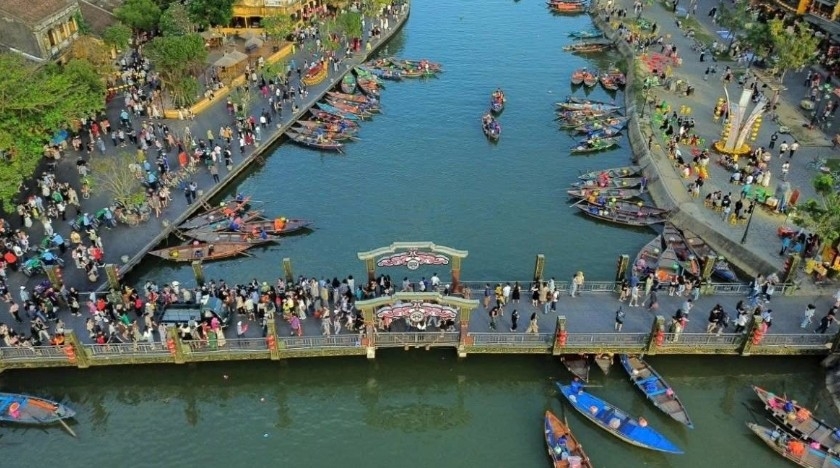

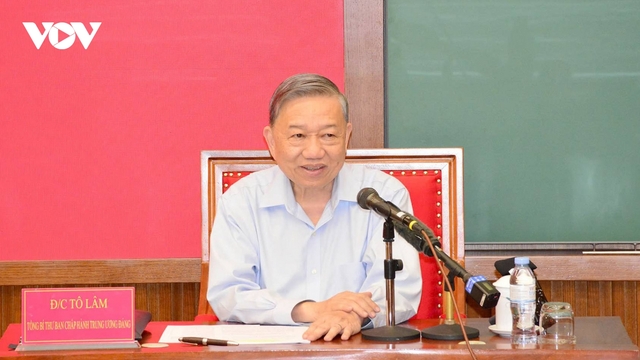
VOV.VN - General Secretary of the Communist Party of Vietnam Central Committee and State President To Lam, on behalf of the Politburo, signed Resolution No. 26 on August 22, 2026, on developing tourism into a key economic sector in the new era.
According to the Politburo, developing tourism into a primary economic driver serves as a new growth momentum for the country, contributing to the double-digit growth target.
The resolution sets the goal of developing high-quality, smart, green, creative, and culturally rich Vietnamese tourism with high added value, regional and international competitiveness, and strong spillover effects into other sectors to spur economic growth, innovation, and sustainable development.
Under specific targets, by 2030, tourism will become a primary economic sector, directly contributing 10% to 12% to GDP and maintaining a leading position in Southeast Asia in scale and growth rate.
Vietnam aims to welcome 45-50 million international visitors and serve 160 million domestic tourists, focusing on high-spending and long-stay segments, with total tourism revenue reaching US$80-90 billion.
The country will strongly develop three tourism growth poles, including Ha Noi, Ho Chi Minh City, and Da Nang, along with 10 key tourism hubs, 20 national tourism areas, and 15 tourism corporations and general companies with strong brands and international competitiveness, ensuring around 1.5 million accommodation rooms.
By 2045, Vietnamese tourism is projected to develop in a modern and sustainable manner, confirming its role as an economic driver, directly contributing 14% to 15% to GDP, and ranking among the world’s top 30 nations in tourism competitiveness. The country envisions becoming an attractive, high-quality, and distinct destination, targeting 70 million international arrivals.
To achieve these targets, the Politburo emphasized shifting the development mindset from extensive, quantity-based growth reliant purely on resource exploitation to intensive, high-quality, efficient, and sustainable growth associated with creative products and unique experiences.
Regarding institutional improvements, the Politburo requested focusing on breakthrough mechanisms and policies for new business models, such as the sharing economy, digital platforms, night-time economy, riverine and coastal economies, and integrated tourism-entertainment-culture-sports complexes.
It also called for perfecting policies on value-added tax (VAT) refunds at major commercial centers, tourism hubs, and qualified shopping sites to foster retail tourism and boost tourist spending.
In addition, support policies regarding investment, land, finance, procedures, taxes, fees, and business premises will be provided for high-quality tourism projects linked with healthcare, MICE (meetings, incentives, conventions, and exhibitions), sports, shopping centers, and night-time entertainment at national tourism areas and tourism centres.
The Politburo urged continued research into favorable entry and exit policies for tourists, alongside expanding bilateral visa waivers and offering preferential visa schemes for visitor segments that contribute significantly to tourism development.
Notably, the Politburo suggested pilot controlled mechanisms to attract long-stay visitors, remote workers, and international capital into tourism and resort real estate. Urgent pilot measures can be implemented immediately to create breakthroughs even when explicit legal frameworks are lacking, accompanied by post-inspection and supervision controls.
To develop synchronous infrastructure and create highly competitive tourism centers, the Politburo directed the development of high-quality, internationally competitive sea and island resort centers.
Alongside these are multi-service hubs for tourism, shopping, dining, and unique entertainment with high appeal, operating around the clock (including large-scale integrated entertainment complexes, concert halls, performing arts centers, and festival streets).
The Politburo suggested establishing international-standard outlet centers and developing brand-name shopping markets with preferential prices at major tourism centers, national tourism areas, international border gates, airports, seaports, and qualified shopping sites.
In addition, the Politburo called for developing tourism corporations and general companies with strong brands, modern governance capabilities, and international competitiveness to take a leading role in international travel.
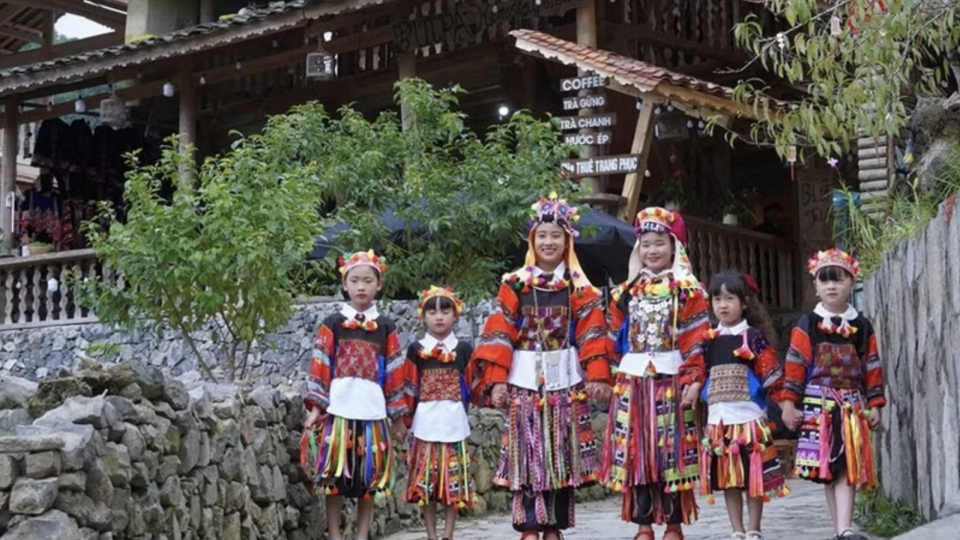
The nationwide merging and restructuring of administrative units is reshaping the development landscape, expanding geographic space and resource capacity for localities, with tourism emerging as a key growth driver by harnessing integrated natural and cultural assets.
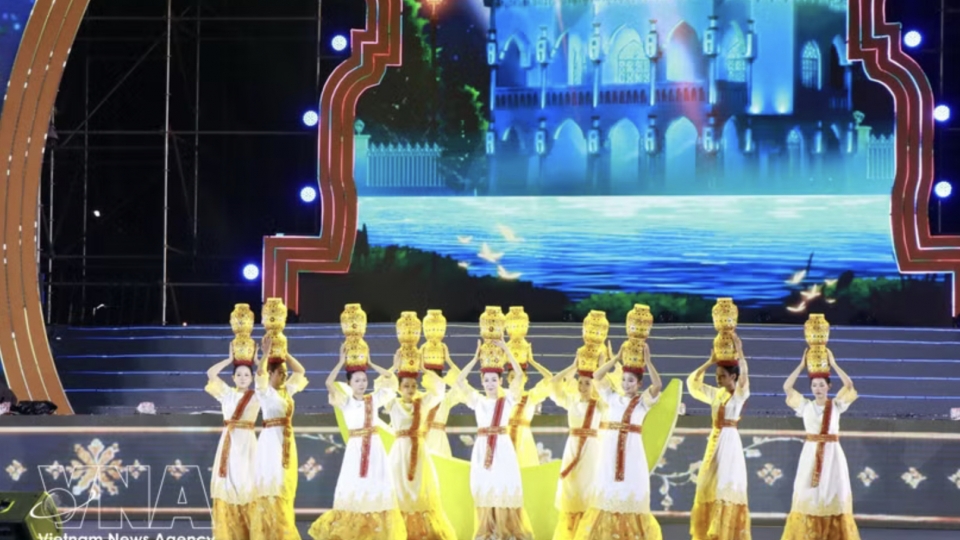
The sixth Cham Ethnic Culture Festival 2026 concluded on the evening of June 28 in Dong Hai ward, Khanh Hoa province, after three days of vibrant activities celebrating and promoting the rich cultural heritage of the Cham ethnic community.
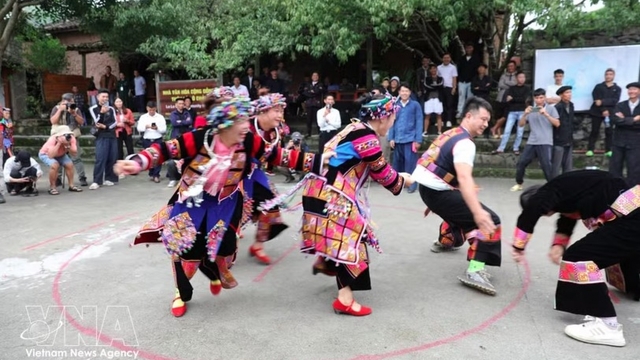
Localities nationwide have rolled out measures to preserve and promote cultural heritage while linking it with tourism and economic development as part of effort to implement the Politburo's Resolution No. 80-NQ/TW on the development of Vietnamese culture.
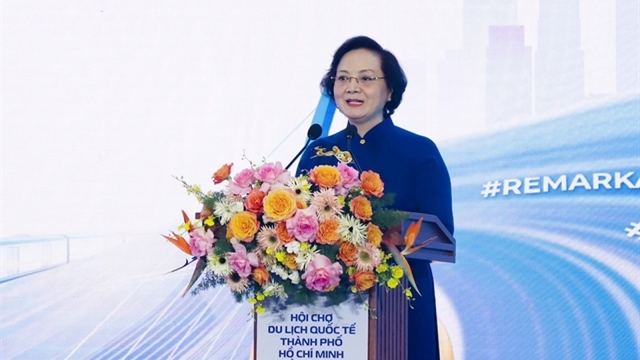
More than 300 experts and tourism executives shared expertise and proposed initiatives to develop MICE (meetings, incentives, conferences and exhibitions) tourism at a high-level forum in HCM City on August 27.



.JPG&w=640&q=100)




Bình luận
Bình luận của bạn sẽ được xét duyệt trước khi đăng