
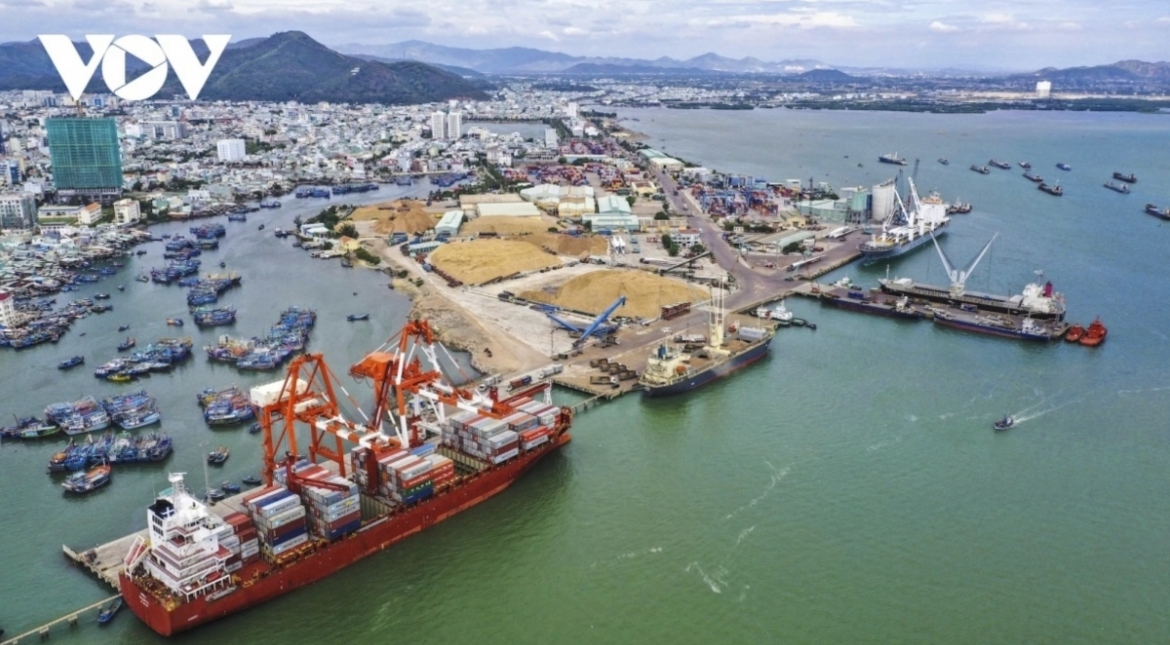

VOV.VN - Resolution No. 20 on building and developing Vietnam into a strong maritime nation opens an important shift in development mindset, from seaports, logistics, and offshore energy to tourism and fisheries, laying the groundwork for the maritime economy to become an important driver of the national economy.
On July 28, 2026, the 14th Party Central Committee issued Resolution No. 20 on building and developing Vietnam into a strong maritime nation. The resolution inherits and builds upon the achievements of eight years of implementing Resolution No. 36 issued in 2018 on the Strategy for Sustainable Development of Vietnam's Marine Economy. At the same time, it frames maritime development within a broader context: the sea is not merely a resource to exploit, but a strategic national development space.
The general objective set out in the resolution is to build a solid foundation for Vietnam to become a strong maritime nation; establish a modern, unified, synchronous national maritime governance system based on science, technology, and digital data; manage, exploit, and sustainably use marine resources and space; gradually master the high seas, deep seas, and new marine development spaces; and protect the environment while conserving and restoring marine ecosystems.
The marine economy is expected to develop modernly with high competitiveness. The living standards of people in coastal areas and islands will be improved, and marine culture preserved and promoted. National defense, security, sovereignty, sovereign rights, and jurisdiction at sea will be firmly safeguarded, thereby elevating Vietnam's position, prestige, and role. The vision to 2045 is for Vietnam to become a strong maritime nation, prosperous from the sea, and sustainably developed from the sea.
From "marine exploitation" to "marine spatial governance"
The first notable new point of Resolution No. 20 lies not only in adding new maritime economic sectors, but in changing the perception of the marine space itself. The resolution defines the sea as the space for survival, development, and national defense, requiring that modern marine economic development be closely tied to ecosystem protection, living standard improvement, and national sovereignty safeguarding.
For years, marine economic development was structured by individual sectors: fisheries, oil and gas, shipping, tourism, and coastal economic zones. Each sector maintained its own strategies and objectives, which could lead to conflicts over space, resources, and development interests.
Resolution No. 20 requires a strong shift from simple marine economic development thinking to comprehensive development of the national marine space, strengthening inter-sectoral and inter-regional coordination. This change is fundamental because a marine area may simultaneously involve shipping, fisheries, energy, tourism, nature conservation, defense-security, and the livelihoods of coastal residents.
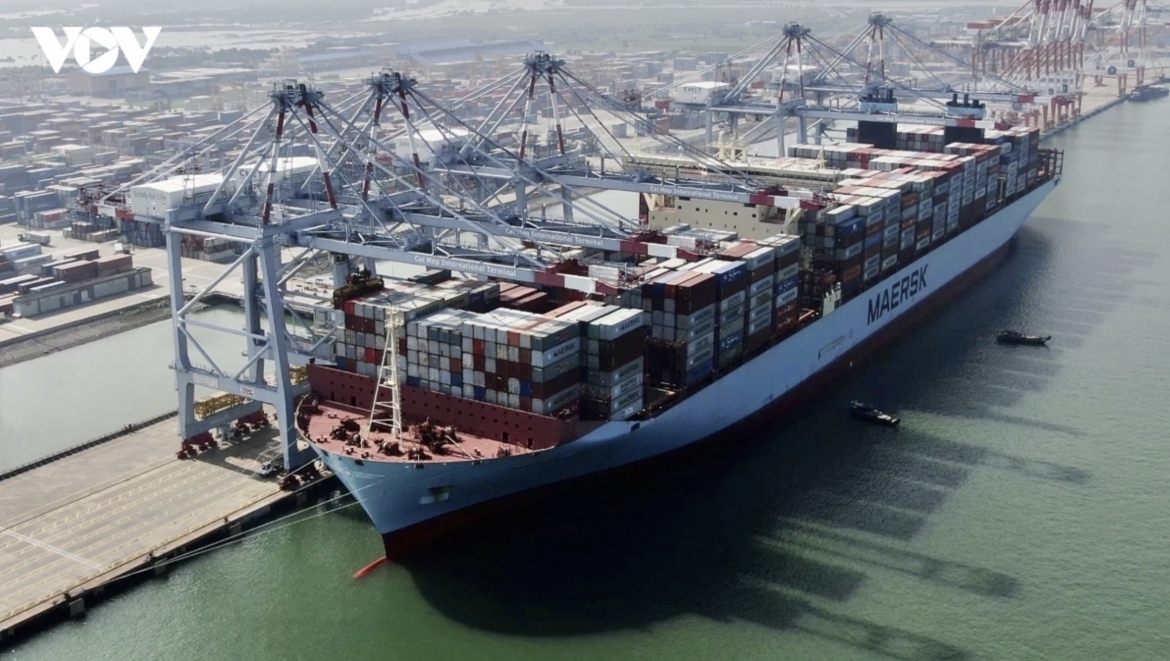
Assoc. Prof. Dr. Nguyen Chu Hoi, a member of the 15th National Assembly and Permanent Vice Chairman of the Vietnam Fisheries Society, stated that to realize this objective, Vietnam must achieve breakthroughs in scientific and technological autonomy while removing institutional and implementation bottlenecks to effectively bring Party guidelines and resolutions into life.
"Marine space is characterized by a three-dimensional environment with complex interactions between the sea and land via river basin systems, between coastal areas and the open sea, and between the atmosphere and oceanic water masses. Spatial marine governance helps harmonize development objectives because the sea is a multi-purpose, multi-sector resource base," Hoi noted. "If governance is integrated right at the planning stage, it creates a foundation for long-term development. That is why the 2017 Planning Law incorporated marine spatial planning into the national planning system. Accordingly, effective marine spatial planning must be developed and carried out to balance economic development with national defense, security, environmental protection, and social objectives."
From this perspective, National Marine Spatial Planning is no longer merely a map dividing marine use zones, but must become a tool to coordinate development interests. An offshore wind power project, shipping lane, industrial aquaculture zone, or marine conservation area cannot be considered in isolation; it must be placed within the broader national space and interest.
In addition, institutions must take a step ahead. If spatial governance represents a change in thinking, institutions provide the conditions for that thinking to become a tangible resource.
The resolution frankly points out current limitations, including inconsistent institutions and policies, limited state management effectiveness in certain areas, overlapping functions and duties in some localities, and a marine economy that has yet to match its potential and advantages.
Assoc. Prof. Dr. Nguyen Chu Hoi observed that institutions and technology are two particularly important conditions for Vietnam to venture into the open ocean. Policies must generate sufficient motivation for enterprises, fishermen, and economic forces to invest at sea, while establishing mechanisms to share and handle the specific risks of the marine environment.
Resolution No. 20 can be viewed as opening a broader "door" toward the sea. However, the gap between a sound strategy and a genuinely strong maritime nation still lies in implementation. This remains the bottleneck to be removed and the most important benchmark in the coming years.
How many overlapping procedures need to be resolved? How many new marine economic projects will become operational? To what extent will the logistics share handled by Vietnamese enterprises increase? How will marine research and technological capacity improve? Will fish stocks and marine ecosystems recover? How will the income and quality of life of coastal and island residents change?
If these questions are answered by practical indicators, Resolution No. 20 will open a new development space on the map and fundamentally reshape Vietnam's growth structure.
To become a "strong maritime nation," Vietnam requires more than just the advantage of over 3,260 kilometers of coastline. The decisive factor will be the capacity to build modern marine governance, master technology, establish strong maritime enterprises, protect ecosystems, and make the people the true subjects of the development process. At the same time, the country must resolutely refuse to trade the environment for growth while enhancing maritime and island sovereignty.
The sea will then serve no longer as the country's geographical boundary, but as a space for survival, growth, and the creation of national power for decades to come.
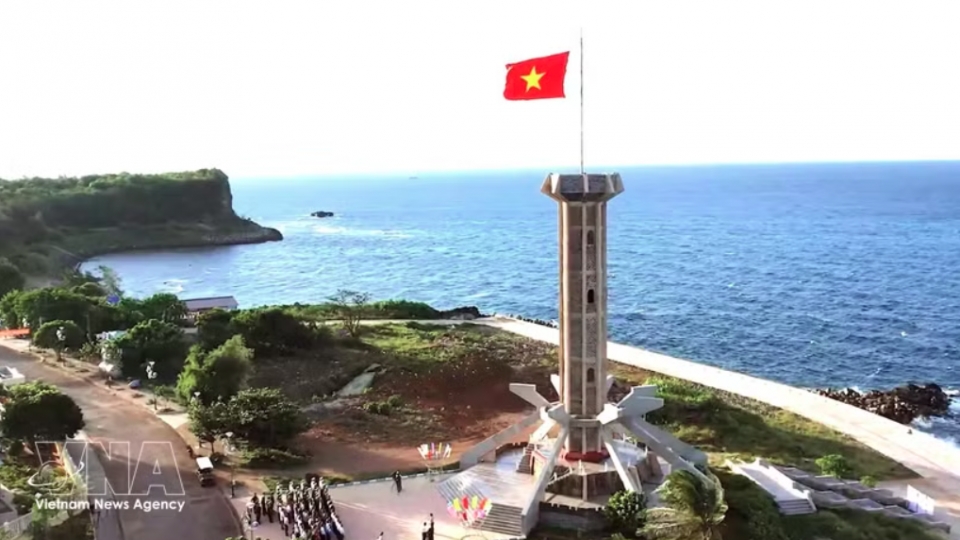
Vietnam needs to translate its policy foundations into concrete actions, promote modern marine governance, develop a blue marine economy and mobilise resources effectively to create sustainable livelihoods for coastal communities, according to Ramla Khalidi, Resident Representative of the UNDP in Vietnam.
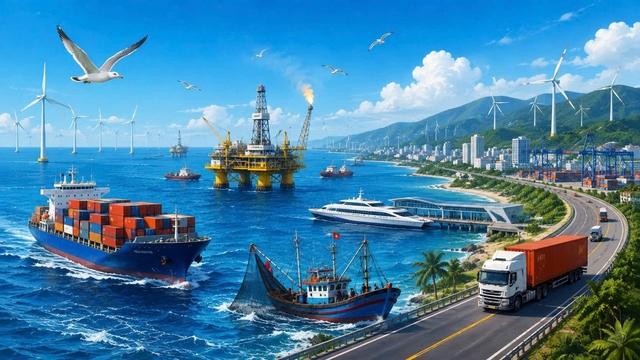
VOV.VN - Resolution 20 adopted recently by the Politburo marks a major shift in Vietnam’s development strategy, moving beyond marine economic growth to build a strong maritime nation, with the sea positioned as a strategic space, a key growth driver and a pillar of national strength in a new era of development.

Vietnam needs to translate its policy foundations into concrete actions, promote modern marine governance, develop a blue marine economy and mobilise resources effectively to create sustainable livelihoods for coastal communities, according to Ramla Khalidi, Resident Representative of the UNDP in Vietnam.








Bình luận
Bình luận của bạn sẽ được xét duyệt trước khi đăng