While the state sector provides strategic direction, leads key industries, and ensures macroeconomic stability, the private sector is an important engine for growth, innovation, and international integration.
Ho Chi Minh City acknowledges that while the private sector is inherently dynamic, its enterprises remain small in scale, with limited technological capacity and constrained participation in global value chains. The local innovation ecosystem has yet to produce large-scale tech enterprises. Concurrently, the state-owned sector still needs further restructuring to enhance efficiency, increase its guiding role, and coordinate better with the private sector.
Restructuring to fulfill its enabling and guiding role
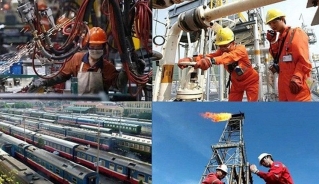
Ho Chi Minh City currently manages nearly 50 state-owned enterprises (SOEs), including wholly state-owned firms and those undergoing divestment, spanning many key sectors.
According to Dr. Tran Anh Tuan, Chairman of the Board of Directors at Tan Thuan Industrial Development Company, despite many difficulties between 2021 and 2023, the net profit and return on equity (ROE) across this enterprise block continued to rise.
Nguyen The Duy, Vice Chairman of Becamex IDC, notes that after mergers, Ho Chi Minh City holds many wholly state-owned entities and equitised firms where the State retains a controlling stake of over 50%. These companies possess large financial, developmental, and infrastructure resources.
For Ho Chi Minh City to achieve breakthrough development in subsequent phases, Duy suggests that city-managed enterprises need clear equitisation roadmaps and simplified procedures for investment and capital expansion to timely invest in key strategic projects.
"From Becamex's practical experience, a developing state enterprise is not merely a commercial business. It serves as an instrument for the State to invest in local development fields such as business, economy, logistics infrastructure, industrial parks, healthcare, education, and key connectivity projects," Duy says.
According to many experts, the restructuring process requires clearly identifying which SOEs play essential roles (public services, social welfare) and which can be equitised or fully divested. Proceeds from divestment should be used to invest in infrastructure or priority sectors, avoiding overlapping and spread-out investments to focus on core areas. SOEs must also restructure towards autonomy to offer competitive products, participate deeply in global supply chains, and build a closed-loop ecosystem of significant scale.
The State facilitates market creation for new sectors
Prof. Dr. Vo Xuan Vinh, Director of the Institute of Business Research at the University of Economics Ho Chi Minh City, emphasizes that market competition must be fair, and the state economic sector and SOEs must create that fairness.
The state sector needs to invest in spearhead economic fields such as AI or semiconductor technology, or difficult, high-risk areas with uncertain profits.
"The State creates a fair mechanism, participates in the market as a fair player, and invests in difficult sectors and major infrastructure requiring large investments. State enterprises carry out these tasks while encouraging private firms to join. Cooperation principles must be market-based and fair, enhancing the role of the state economy to take on areas where the private sector finds difficult, unviable, or non-profitable in the short term, thereby creating a playing field and market," Prof. Vinh stresses.
Increasing influence and highlighting social benefits
Practical SOE reforms from many countries show that apart from equitisation, restructuring offers various options, including improving corporate governance, creating competitive open markets, establishing regulatory rules, and creating synergies with the private sector through partnership models.
The state economy and SOEs need self-reliance and support to become large, influential enterprises capable of leading the market.
Nguyen Dinh Tung, CEO of Vina T&T Group, states "All economies need flagship enterprises to lead the ecosystem. Developed countries all have very large national corporations that lead enterprises within the ecosystem to grow together."
Echoing this view, Dr. Nguyen The Khang from the University of Finance - Marketing highlights that the spirit of Resolution 68 and Resolution 79 reinforces the complementary relationship between the public and private spheres. While the state economy maintains macroeconomic stability and provides strategic infrastructure and public services, the private sector brings dynamism, productivity, and job creation.
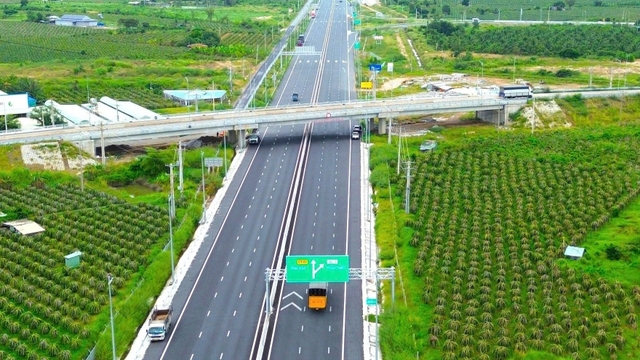
The state economic sector invests in strategic infrastructure
Crucially, for SOEs, financial return is not the sole metric of success. "The state sector must be evaluated through the lens of social benefit rather than pure financial gain. A project may appear financially unviable on paper, yet deliver substantial social benefits for communities, local businesses, and regional development. If a project enables private sector growth and benefits the public, the state enterprise must step forward, a vital perspective articulated in Resolution 79," Dr. Khang analyzes.
In recent years, value-chain cooperation between the public and private sectors through Public-Private Partnerships (PPP) and value-chain linkages has gained growing attention. PPP is not only a tool to mobilize private capital, but also a new governance model based on cooperation between the State and the private sector.
These models allow the combination of state resources with private capital, technology, and management expertise to raise investment efficiency and spur economic development. From these approaches, it is evident that relations between the public and private sectors are not necessarily substitute or competitive, but can be designed for coordination.
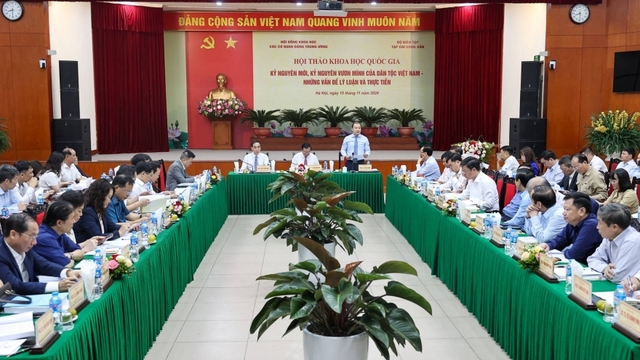
VOV.VN - A series of breakthrough solutions will be introduced to enhance the leading role of the state economy in Vietnam, Deputy Minister of Finance Ho Sy Hung said at a meeting on September 12 examining the drafting of a Politburo Resolution on the development of the state economy.
VOV.VN - As Vietnam seeks to renew its growth model and strengthen competitiveness, the role of the state economic sector is being repositioned toward a narrower scope in areas where the market performs well, while concentrating resources on the national economy’s pillars.
VOV.VN - As Vietnam seeks to renew its growth model and strengthen competitiveness, the role of the state economic sector is being repositioned toward a narrower scope in areas where the market performs well, while concentrating resources on the national economy’s pillars.













.JPG&w=640&q=100)







Bình luận
Bình luận của bạn sẽ được xét duyệt trước khi đăng