
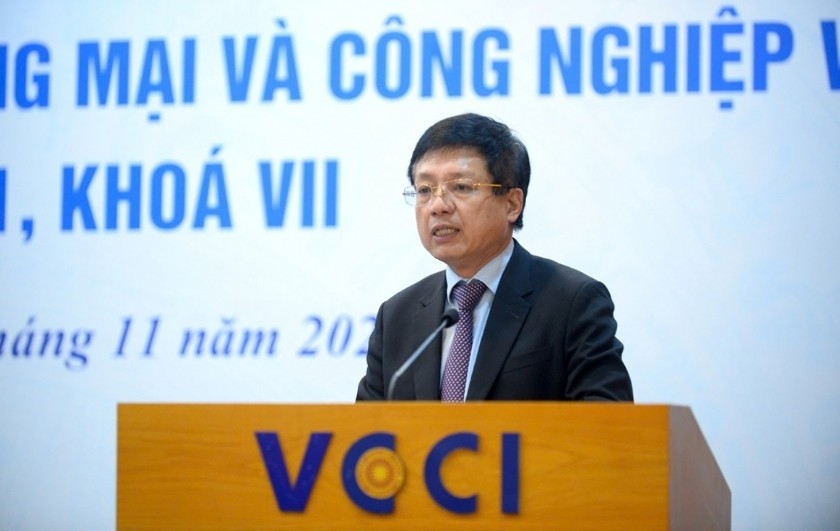

VOV.VN - As the growth model relying heavily on capital, resources, and low-cost labor narrows, the imperative is no longer merely expanding business quantity, but building a corporate force capable of mastering technology, leading value chains, and generating new growth drivers.
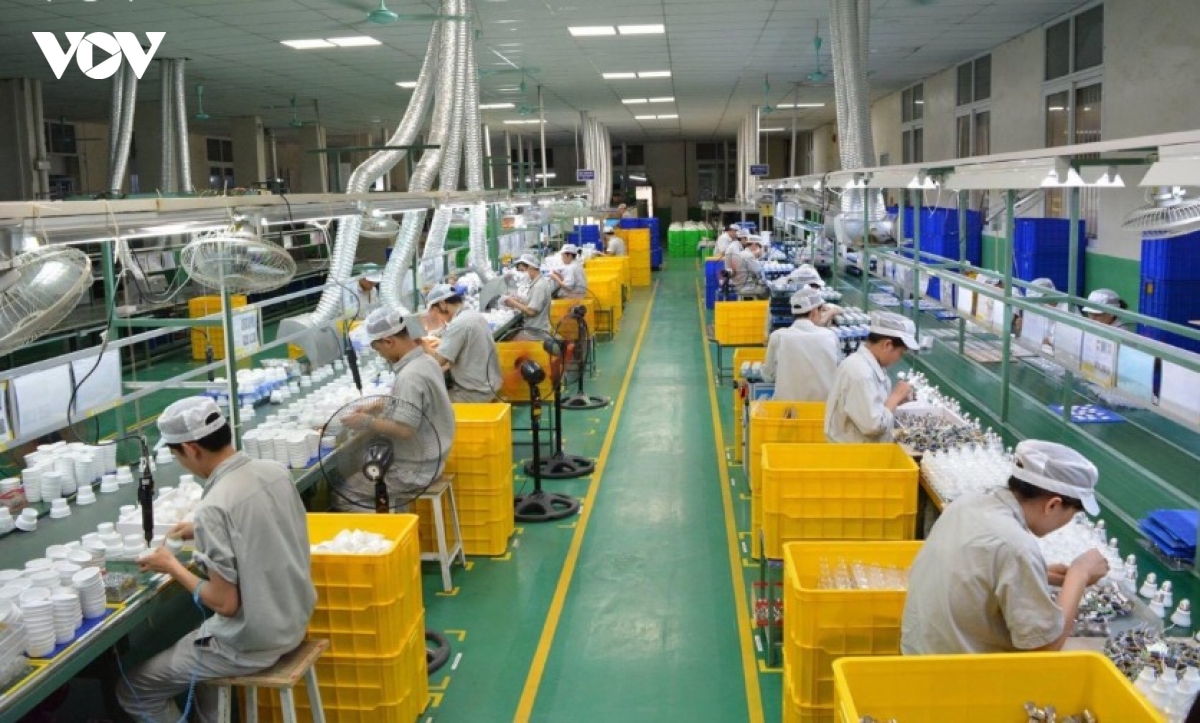
Resolution 19 of the 14th Party Central Committee establishes a fundamental shift: transitioning from the old growth framework toward one boosted by productivity, science and technology, innovation, digital transformation, green transition, and high-quality human resources.
The Resolution sets the target by 2030 to achieve breakthroughs in institutions, science and technology, infrastructure, high-quality workforce, and leading Vietnamese enterprises acting as spearheads for economic development. Looking further, the new development model aims for a strong corporate force holding vital positions in modern industries, value chains, and development ecosystems.
Shifting mindset, enhancing competitiveness
For years, competitive labor costs, natural resources, and investment expansion have enabled Vietnam to integrate deeper into global production chains. However, to move up higher rungs of the value chain, the economy cannot rely indefinitely on simple assembly, processing, or low-value raw material supply with limited domestic value retention.
Assoc. Prof. Dr. Ho Sy Hung, Chairman of the Vietnam Chamber of Commerce and Industry (VCCI), remarks, "This breakthrough trajectory of the private sector serves as the core foundation and launchpad toward establishing the new economic growth model and achieving double-digit growth targets."
Dr. Can Van Luc, Chief Economist of BIDV, emphasizes that this represents a major test for Vietnamese enterprises. Digital transformation must extend beyond purchasing software or listing on e-commerce platforms; technology must permeate production lines, cash flow management, logistics, market forecasting, and decision-making. Similarly, innovation must shape tangible R&D capabilities, inventions, new products, intellectual property, and ultimately revenue and productivity.
Building integrated corporate ecosystem
Resolution 19-NQ requires developing a tiered enterprise ecosystem, with a focus on leading corporations, core enterprises, and highly competitive industrial networks while strengthening linkages between large firms, small and medium-sized enterprises (SMEs), cooperatives, research institutes, universities, and innovation centers.
SMEs currently account for roughly 98% of active businesses. Therefore, policy design must tackle two challenges simultaneously: forming conglomerates large enough to compete internationally while elevating the baseline capabilities of hundreds of thousands of domestic SMEs, avoiding a scenario where a few "lead sharks" stand atop a weak domestic ecosystem.
Dr. Nguyen Quoc Viet, Deputy Director of the Institute for Economic and Policy Research (VEPR), states that the Government needs to shift from a "grant-and-request" mindset, pre-approval, and strict control to an enabling, guiding, and post-audit framework to expand development space and unlock resources. Vietnamese businesses must likewise move from merely "participating in supply chains" to upgrading their positions: from processing to design, from technology import to technology mastery, from simple components to high-tech components, and from contract manufacturing to building independent brands and distribution networks.
Clearing institutional and resource bottlenecks
As of late June 2026, Vietnam recorded nearly 1.062 million valid enterprises employing over 17.6 million workers. Yet, beneath this scale lie persistent bottlenecks in capital, land, procedures, technology, and compliance costs.
According to Ho Sy Hung, fundamental barriers include: institutional uncertainty and legal gaps; clogged cash flow (particularly value-added tax refunds); heavy compliance burdens driven by pre-approval thinking; and unreleased resources for innovation due to a lack of genuine risk-taking mechanisms, alongside credit remaining heavily reliant on real estate collateral.
Dang Hong Anh, Chairman of the Vietnam Young Entrepreneurs Association, proposes expanding capital access for SMEs and startups through cash-flow, order-based, and data based lending; allocating dedicated credit packages (such as 1-2% of total credit institution outstanding loans); reviewing land rental policies to ensure stability aligned with industry specifics; and accelerating state divestment in equitized state-owned enterprises where the State does not hold controlling shares.
The major challenge for the upcoming period is not simply increasing the number of businesses, but enhancing the quality of Vietnam's corporate ecosystem. A new growth-leading enterprise force must be demonstrated through higher productivity, larger R&D investment ratios, stronger ownership of technology and intellectual property, higher positioning in value chains, and the ability to build an accompanying domestic business ecosystem.
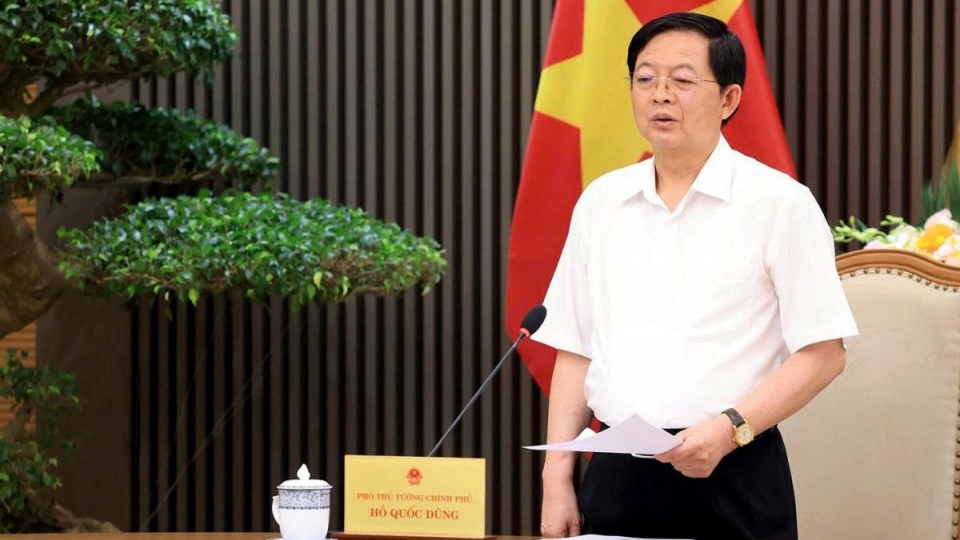
VOV.VN - Deputy Prime Minister Ho Quoc Dung has called for bottlenecks in policy implementation to be removed and stronger links between businesses and research institutions to be forged, aiming to turn science, technology and innovation into tangible drivers of economic growth.
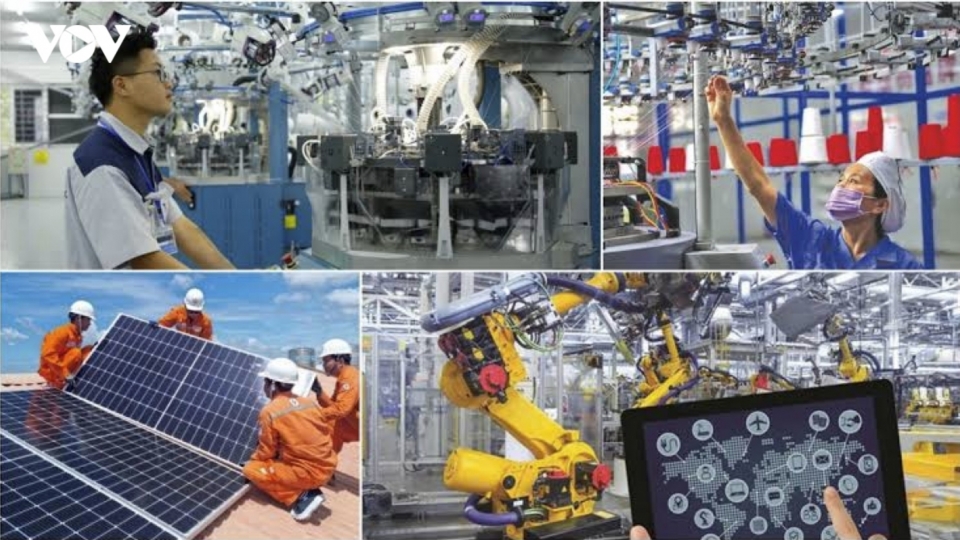
VOV.VN - Vietnamese enterprises and entrepreneurs play an important role in the nation’s new development era, generating high-speed growth to support long-term national progress.

The Autumn Economic Forum 2026 (AEF 2026) will bring together more than 1,500 delegates for discussions and business networking to mobilise investment, technology, finance, and innovation and foster international cooperation to shape new growth drivers.
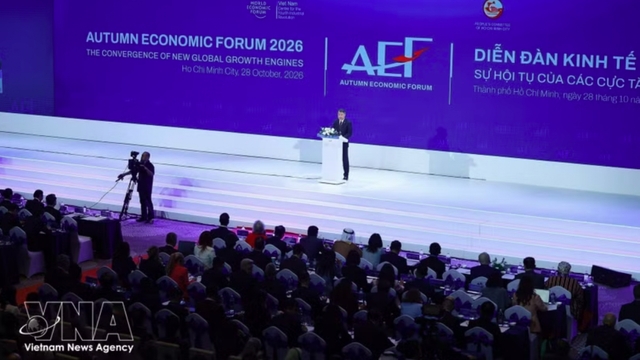
Science and technology, artificial intelligence (AI), digital transformation and green transition are emerging as new drivers of economic growth amid global challenges, speakers told a high-level plenary session of the Autumn Economic Forum 2026 in Ho Chi Minh City on October 28.















Bình luận
Bình luận của bạn sẽ được xét duyệt trước khi đăng