Paris march calls for justice, compensation for Agent Orange victims
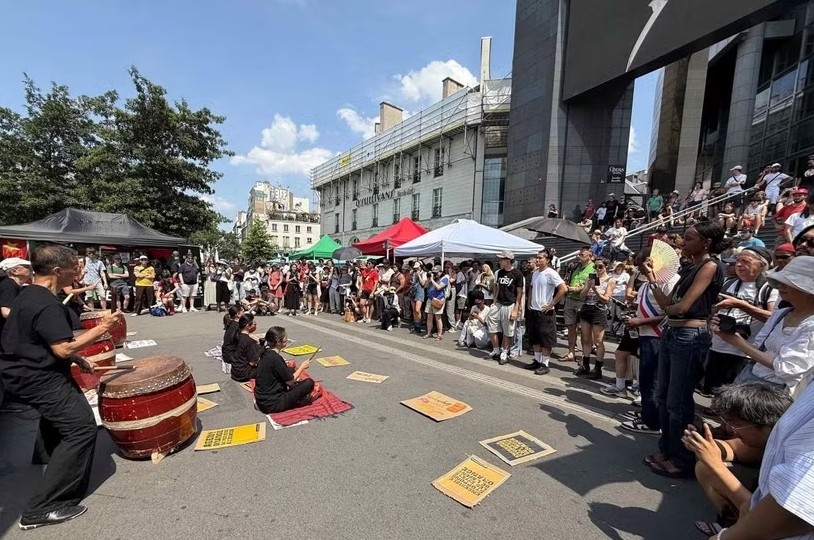
VOV.VN - Hundreds of people marched in Paris’ Bastille Square on June 20, calling for justice and compensation for victims of Agent Orange/dioxin in Vietnam, Laos and Cambodia, as well as victims of chlordecone pesticide pollution in the French overseas territories of Guadeloupe and Martinique.
People take part in th march calling for justice for victims of Agent Orange and chlordecone at Bastille Square in Paris. (Photo: VNA)
The event was jointly organised by Collectif Vietnam Dioxine and Communities in Solidarity with Victims of Colonial Poisoning (DSAVEC).
During the march, speakers and representatives from social, environmental and health organisations stressed the long-term impact of toxic chemicals on human health and the environment. They expressed solidarity with communities affected by Agent Orange and chlordecone, while calling for continued efforts to support victims, address pollution damage and promote solutions to prevent similar environmental disasters in the future.
The march took place amid two major legal developments. On June 16, the French Court of Cassation reviewed an appeal filed by Tran To Nga against companies that produced or commercialised Agent Orange. On June 22, the Paris Court of Appeal is expected to rule on an appeal against the suspension of an investigation into a criminal case linked to chlordecone pollution.
According to lawyer Christophe Lèguevaques, the fight for justice for Agent Orange/dioxin victims is both necessary and legitimate. He said positive signs had emerged in the Court of Cassation’s review of Tran To Nga’s case, and expressed admiration for her determination and perseverance in pursuing justice for Agent Orange victims.
Representing social organisations participating in the event, Aurélien said the march aimed to condemn the use of toxic chemicals in war or through colonial policies. It was important to show solidarity with communities continuing to suffer from the long-term effects of these toxic substances, and expressed support for those fighting injustices linked to what he called “chemical colonialism, he added
Fleur Breteau, founding member and spokesperson for Cancer Colère, expressed admiration for the long fight led by Tran To Nga and Collectif Vietnam Dioxine over the past 17 years to seek justice for Agent Orange victims.
She described the campaign as a fight for life and a source of inspiration for many other social movements. Breteau said public awareness of the long-term impact of toxic chemicals on human health is growing and pledged to continue supporting Tran To Nga in her pursuit of justice for Agent Orange victims, particularly ahead of the Court of Cassation’s expected ruling on September 16.
According to Vo Dinh Kim, coordinator of Collectif Vietnam Dioxine, the march shows support for both ongoing legal cases involving Agent Orange and chlordecone.
The two cases share a common feature: toxic chemicals were used on a large scale, causing serious harm to affected communities. Tt was unjust that U.S. veterans had received compensation while Vietnamese victims have yet to be recognised as entitled to compensation, he stressed.
He also noted that some chemicals banned in mainland France had been used for years in Guadeloupe and Martinique. He said these are among the reasons social organisations continue to demand justice and compensation for victims in both cases.
The Villejuif committee for the Van Canh Friendship Village in France’s Val-de-Marne province organised a concert on October 26 to raise funds for victims of Agent Orange (AO)/dioxin in Vietnam.
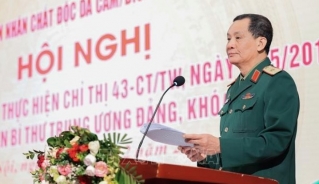
A conference reviewing 10 years of implementing the Directive of the Party Central Committee’s Secretariat on strengthening the Party's leadership in dealing with the consequences of toxic chemicals used by the US during the war in Vietnam was held in Hanoi on December 10 by the Vietnam Association for Victims of Agent Orange/dioxin (VAVA).
A conference reviewing 10 years of implementing the Directive of the Party Central Committee’s Secretariat on strengthening the Party's leadership in dealing with the consequences of toxic chemicals used by the US during the war in Vietnam was held in Hanoi on December 10 by the Vietnam Association for Victims of Agent Orange/dioxin (VAVA).










.JPG&w=640&q=100)








Bình luận
Bình luận của bạn sẽ được xét duyệt trước khi đăng