
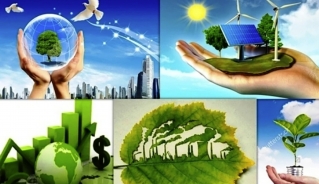
Energy security key to self-reliance in green transition
VOV.VN - Amid escalating geopolitical tensions in the Middle East, energy security is drawing growing attention from fast-growing economies in Southeast Asia, including Vietnam.

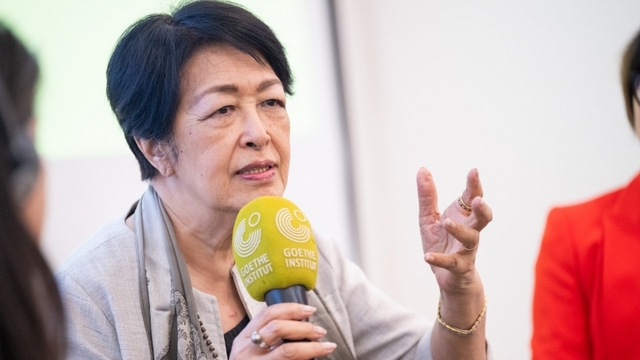
VOV.VN - Mel Shalev, a former senior Israeli technology expert with more than 40 years of experience in the technology sector, including 37 years at IBM, believes Vietnam's greatest resource lies not in capital or natural resources but in its people, particularly its younger generation and a long-standing cultural emphasis on learning.
Having worked, conducted research and cooperated with partners in Vietnam for decades, Shalev said one of the strongest impressions from his first visit to Hanoi more than 25 years ago was the respect shown to talented individuals and the Vietnamese people's commitment to learning.
He described this as a distinctive competitive advantage that few countries possess. Vietnam, he said, should continue investing in education, ensuring a high-quality young workforce and steadily improving the quality of training.
Shalev noted that the development of artificial intelligence (AI) is bringing profound changes to education worldwide. Vietnam should take advantage of this trend to improve teaching and learning outcomes.
In the future, teachers will gradually move from the role of knowledge providers to organisers, guides and mentors, while much of the learning process will be supported by digital education platforms and AI tools, he said.
According to Shalev, if Vietnam were to prioritise strategic sectors over the next five years, it needs to focus on five main areas.
The first is educational technology (EdTech), particularly AI-based solutions for children. In his view, the early years of life are the most important period for intellectual and creative development. If Vietnam succeeds in developing effective digital education products for the domestic market, it could expand and export those solutions to other countries.
The second area is the software industry. According to Shalev, software development and maintenance services will continue to offer growth potential for many years. Vietnam already has several software companies capable of competing internationally and is gradually moving into higher value-added segments of global value chains.
However, he said Vietnam should choose suitable market segments rather than compete directly with major technology corporations in areas such as operating systems, software development platforms or enterprise resource planning (ERP) systems.
In his view, the greatest opportunities currently lie in specialised AI applications built on large language models (LLMs) for sectors such as tourism, healthcare, commerce, education, smart homes and investment.
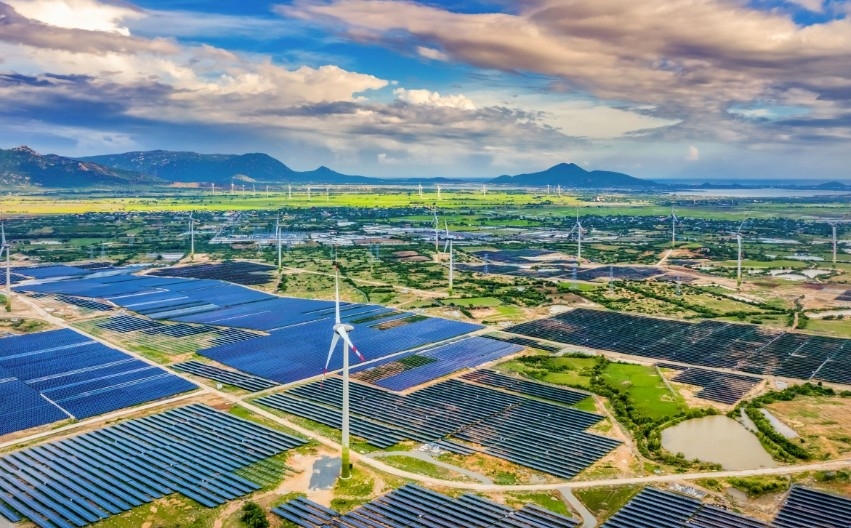
The third area is green energy. Shalev went on to say that Vietnam has favourable conditions for developing solar power, wind power, small-scale hydropower, geothermal energy and marine energy.
At a time when Vietnam still relies significantly on imported fossil fuels, expanding renewable energy would strengthen energy security and create opportunities for new industries.
According to Shalev, Vietnam should cooperate with leading global companies and technology groups to implement large-scale projects while gradually mastering technologies and developing manufacturing capacity for export-oriented components.
The fourth area is biotechnology and agricultural technology. Vietnam already has a certain foundation in the production of generic medicines, vaccines, antibiotics and other pharmaceutical products, he continued.
One suitable direction would be to promote cooperation or joint ventures with the world's leading generic pharmaceutical companies in order to strengthen research, production and export capabilities.
In agriculture, he stressed that AI, robotics and automation technologies could help improve product quality and increase the value of key export products such as coffee through precision farming and harvesting solutions.
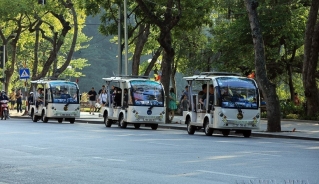
The final area is consumer electronics and the semiconductor industry. The former Israeli technology specialist said smart small-scale electric vehicles, including personal electric vehicles and electric scooters, represent a promising segment for Vietnam.
He added that Vietnam should encourage the development of capabilities in the design and production of printed circuit boards (PCBs), as well as chip design and testing services.
As for semiconductor manufacturing, Shalev suggested Vietnam should only enter the sector if it can attract direct investment from leading global technology companies willing to bear most of the costs of building fabrication facilities, similar to approaches previously adopted by countries such as China, India, Israel, Ireland and Malaysia.
Dealing with the issue of developing strategic technology products, Shalev said self-reliance is necessary, but it should not be understood as a closed or self-sufficient approach, adding that
businesses and economies pursuing sustainable growth must participate in international cooperation networks.
He cited IBM's experience during the development of its first personal computers in the early 1980s. Rather than producing all components and software internally, IBM chose to cooperate with multiple external suppliers in order to shorten the time needed to bring products to market.
That open approach contributed to IBM's success and later became an important lesson for many technology companies around the world.
He said Vietnam should pursue a similar approach. Rather than trying to do everything themselves, domestic enterprises should actively seek international partners, participate more deeply in global supply chains and make use of external resources to strengthen their competitiveness.
"In today's business, technology and geopolitical environment, it is very difficult for a country or company to develop if it relies only on itself," he said.
According to Shalev, the foundation of innovation begins with education. He said creativity is not entirely innate but can be taught and developed through appropriate educational programmes.
He suggested that Vietnam consider introducing courses on creative thinking, innovation and invention into engineering and science curricula at universities in order to cultivate a generation of engineers and researchers with stronger innovative capabilities.
Regarding high-risk research and development (R&D) activities, Shalev said Vietnam does not necessarily need to rely on direct state budget subsidies.
Instead, it could adopt tax incentives for companies investing in R&D, similar to models used by many technologically advanced countries.
He also recommended that Vietnam actively attract foreign investment for research projects through cooperation with universities and international companies with strong R&D capabilities. However, he said Vietnam should take the initiative in seeking and building partnerships rather than waiting for potential partners to approach.
From a policymaking perspective, Shalev said the formulation of a national technology strategy should draw on the views of experts, businesses, academia and modern AI tools.
At the same time, he cautioned that the world is entering a period of unprecedented technological change driven by AI, artificial general intelligence (AGI), quantum computing, next-generation batteries and many other breakthrough technologies.
According to Shalev, these developments could rapidly alter the underlying assumptions of any technology development strategy. As a result, policies and plans should be designed with a high degree of flexibility and updated regularly to reflect changing realities.

VOV.VN - Amid escalating geopolitical tensions in the Middle East, energy security is drawing growing attention from fast-growing economies in Southeast Asia, including Vietnam.






.JPG&w=640&q=100)







Bình luận
Bình luận của bạn sẽ được xét duyệt trước khi đăng