Workshop outlines long-term strategy for human-centered AI development
VOV.VN - Artificial intelligence (AI) is increasingly recognized as a transformative force in the digital era, offering unprecedented opportunities while posing potential economic, social, and security risks.
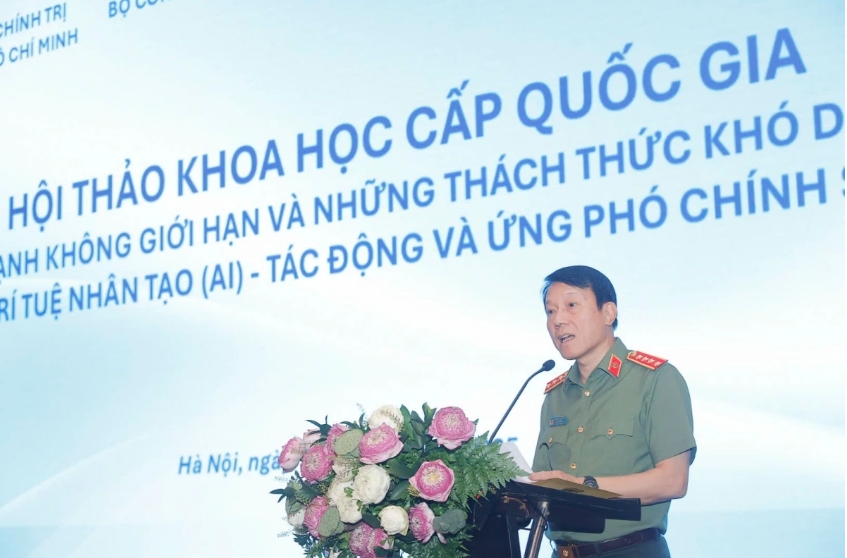
General and Minister of Public Security Luong Tam Quang delivers opening remarks at the event
A scientific workshop titled Unlimited Power and Unpredictable Challenges of Artificial Intelligence – Impacts and Policy Responses, jointly organized on September 19 by the Ho Chi Minh National Academy of Politics, the Ministry of Public Security, the Ministry of National Defence, the Central Theoretical Council, and the Ministry of Science and Technology in Hanoi, drew nearly 400 delegates from Party and State agencies, research institutes, universities, and enterprises.
The workshop focused on three key themes. First, AI is acknowledged as a highly productive force capable of driving comprehensive socio-economic development. Second, experts highlighted risks such as job displacement, social inequality, privacy violations, ethical concerns, and cybersecurity threats, with current legal frameworks remaining insufficient to manage accountability and control. Third, participants accentuated the urgent need for governance and policy measures to ensure AI development aligns with technological autonomy, innovation, and competitiveness, while promoting a humane, safe, and sustainable ecosystem.
General Luong Tam Quang, Politburo member and Minister of Public Security, emphasized AI’s strategic importance as a breakthrough technology that can influence global order, modernize governance, and enhance national competitiveness. Applied effectively, AI could contribute up to US$79.3 billion, equivalent to 12% of Vietnam’s GDP by 2030.
Under the Party leadership, Vietnam has progressively established a legal and strategic framework for AI, including the 2025 Law on Digital Technology Industry and national strategies on AI and semiconductors.
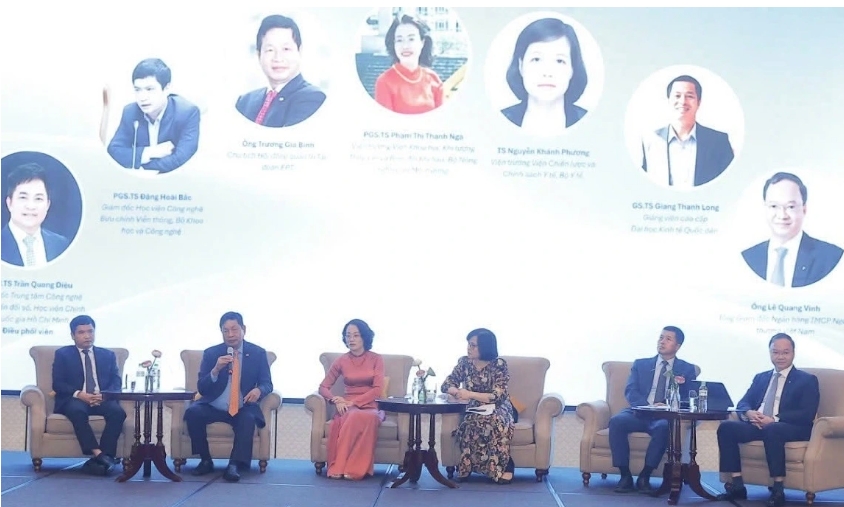
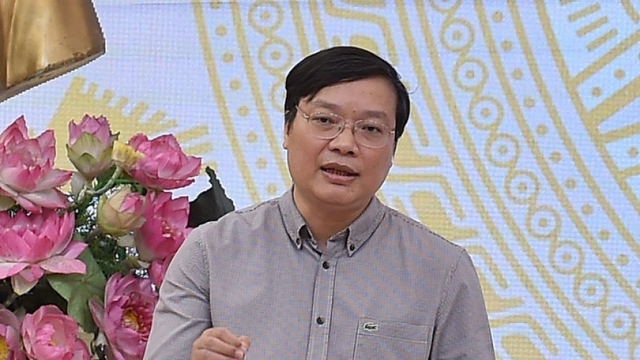
Speakers at the discussion session
Hundreds of AI startups and enterprises have integrated AI into business operations, with many viewing it as central to long-term growth and international integration. However, challenges remain, such as the shortage of high-quality human resources, limited research infrastructure, underdeveloped semiconductor industry, and incomplete regulation on data security, privacy, and AI-specific legislation.
Nguyen Xuan Thang, Politburo member, Director of the Ho Chi Minh National Academy of Politics, and Chairman of the Central Theoretical Council, laid stress on the importance of the workshop in providing actionable policy recommendations to refine national AI strategies and support the development of a competitive, modern, and transparent economy.
Minister of Science and Technology Nguyen Manh Hung stated that by year-end, Vietnam will release a national AI ethics framework and complete the AI Law and Strategy, emphasizing human-centric AI, risk-based governance, digital sovereignty protection, and sustainable, autonomous AI growth.
Policymakers reaffirmed that AI must serve as the nation’s intellectual infrastructure, prioritizing the people’s welfare, protection, and development while acting as a critical driver for innovation, economic growth, and national competitiveness.
The Vietnam Artificial Intelligence Day 2024 (AI4VN) opened in Hanoi on August 23 with a plenary session highlighting the remarkable strides made by Vietnam in artificial intelligence (AI).









.JPG&w=640&q=100)







Bình luận
Bình luận của bạn sẽ được xét duyệt trước khi đăng