HCM City moves to diversify energy sources amid supply volatility
VOV.VN - Ho Chi Minh City is stepping up efforts to diversify its energy supply and build a more self-reliant system, as global fuel market volatility driven by geopolitical tensions continues to pose risks to energy security.
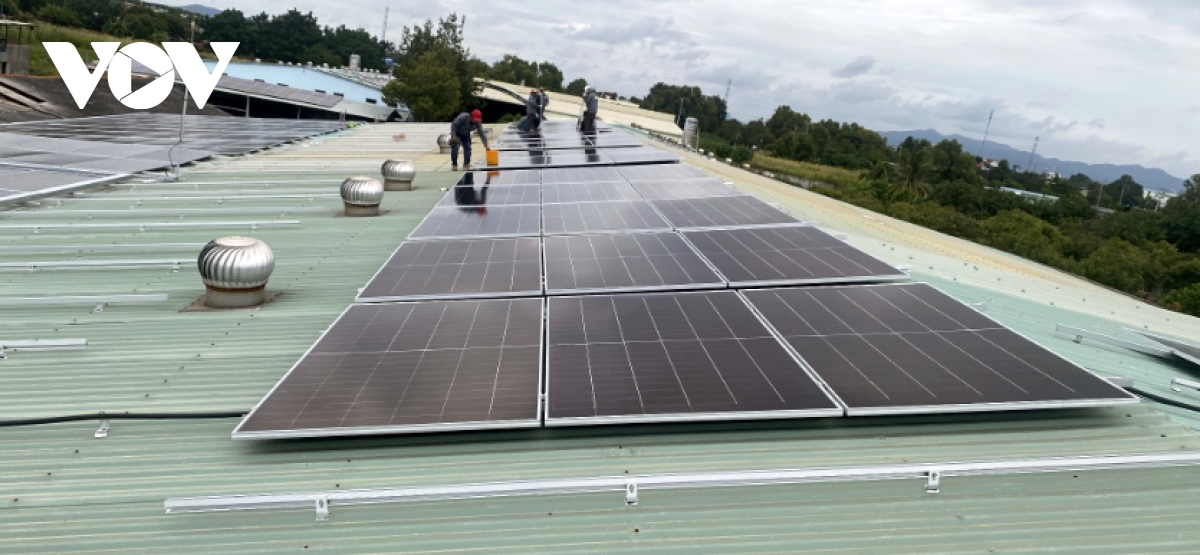
Ho Chi Minh City has installed more than 21,500 rooftop solar systems with a combined capacity of about 1,600 MW, to help ensure enegy security
Business leaders and policymakers say the southern economic hub needs a closed-loop, resilient energy system with diversified sources to support sustainable growth.
Dinh Hong Ky, chairman of the Ho Chi Minh City Green Business Association, stresses that reliance on fossil fuels is becoming increasingly challenging, while fluctuations in petroleum supply underscore the urgency of energy transition.
He suggests the city accelerate the development of a smart power grid and expand supply sources, including liquefied natural gas (LNG), wind and solar energy. LNG and gas-fired power, in particular, are seen as having strong potential in the Vung Tau area.
According to Ky, existing LNG-related projects such as Son My, Long Son and Phu My could collectively supply between 10 and 15 billion cubic metres of gas annually, meeting an estimated 60–70% of the city’s energy demand.
Offshore wind power is also expected to play a key role. Estimates suggest the expanded Ho Chi Minh City area could generate around 40 billion kWh per year in the long term, with output projected to reach 5 billion kWh by 2030, 10 billion kWh by 2040, and 15–20 billion kWh by 2050.
In parallel, rooftop solar power offers significant potential. With around 30 industrial parks and millions of square metres of factory rooftops, distributed solar capacity could reach 5–6 billion kWh annually.
Experts also emphasise the need to develop a smart electricity dispatch system capable of integrating multiple energy sources. Energy storage solutions, particularly battery systems, are seen as essential to improving efficiency and stability.
Nguyen Khac Hieu, deputy head of the Energy Management Division at the municipal Department of Industry and Trade, reveals several businesses have already registered to invest in energy storage systems.
“Such systems would allow companies to purchase electricity during off-peak hours, store it, and supply it back to the grid during peak demand, creating a potential new business model while helping reduce strain on the power system,” he says.
Currently, the city’s annual commercial electricity consumption stands at approximately 55.9 billion kWh. It has installed more than 21,500 rooftop solar systems with a combined capacity of about 1,600 MW.
Looking ahead, Nguyen Thi Ngoc, deputy director of the Department of Industry and Trade, notes the city is working to build a comprehensive energy supply-demand database, accelerate investment in power grids, gas infrastructure and storage facilities, and strengthen reserve and backup mechanisms.
Ho Chi Minh City is also promoting regional coordination and aligning energy planning with green transition goals, including the development of EV charging infrastructure and green logistics, she says.
With these measures put in place, businesses expect the city to enhance energy autonomy, reduce dependence on external fossil fuel supplies, and mitigate the impact of global price fluctuations.
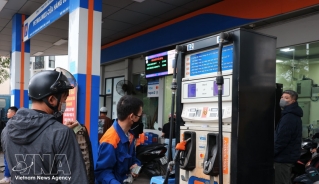
Holding nearly 70% of Vietnam’s fuel market, the Vietnam National Petroleum Group (Petrolimex) and the Petrovietnam Oil Corporation (PVOIL), have proactively taken measures to enable the sale of E10 RON95 biofuel nationwide ahead of schedule, easing pressure on gasoline imports, strengthening national energy security.
VOV.VN - Prime Minister Pham Minh Chinh has directed authorities to ensure sufficient energy supply, particularly petroleum, for production, business activities and people’s daily consumption under all circumstances, amid growing global uncertainties linked to Middle East tensions.
VOV.VN - Vietnam and Russia have agreed to deepen bilateral energy cooperation, with a landmark nuclear power agreement marking a strategic breakthrough amid increasing global energy market volatility.
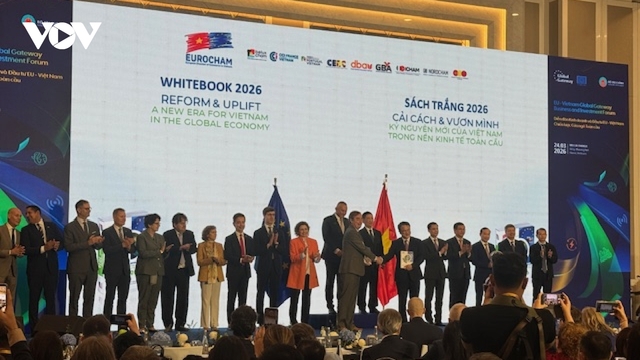
VOV.VN - The European Union (EU) will invest EUR560 million in sustainable transport and clean energy to create jobs, boost sustainable economic growth, and reduce pollution in Vietnam, in line with the EU Global Gateway strategy.







.JPG&w=640&q=100)





Bình luận
Bình luận của bạn sẽ được xét duyệt trước khi đăng