Resolution 19 aims to help Vietnam’s SMEs scale up and drive growth
VOV.VN - Vietnam is seeking to help small and medium-sized enterprises (SMEs) scale up and join global value chains, making them a stronger foundation for the country’s double-digit growth ambitions under the Politburo’s Resolution 19.
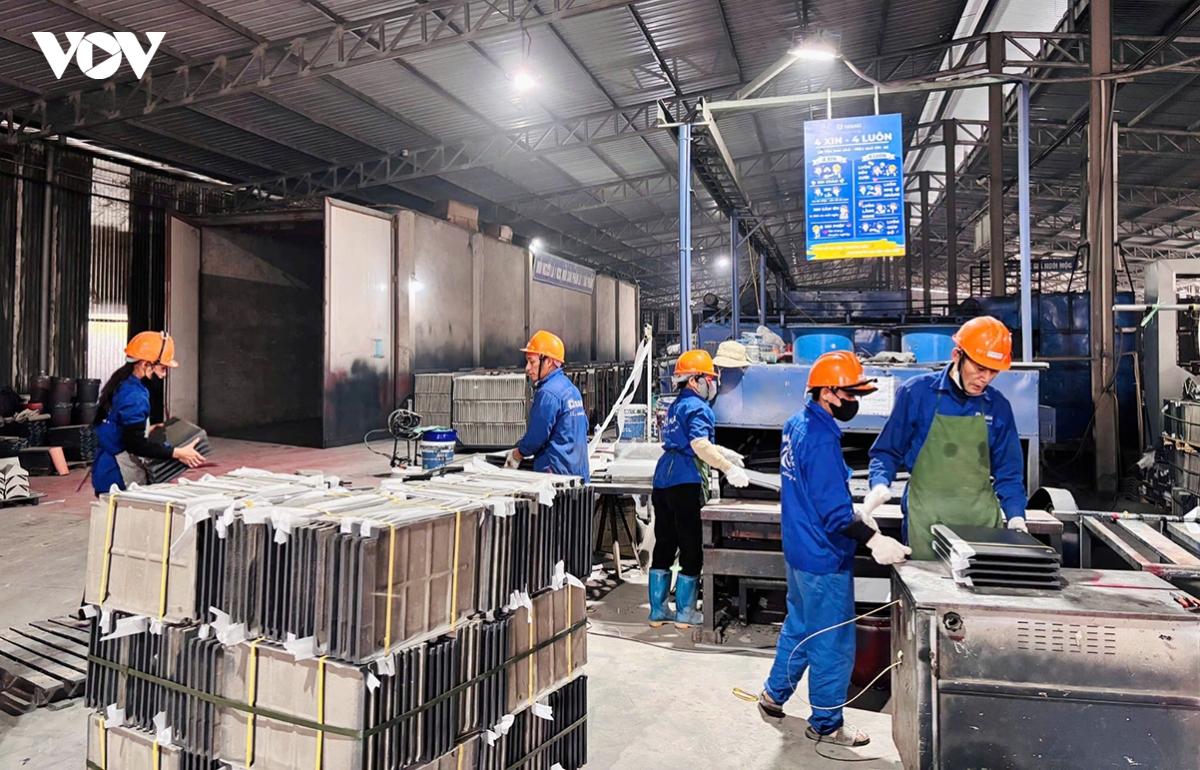
Workers at a manufacturing facility in Vietnam. SMEs account for around 98% of active businesses but continue to face barriers to finance, technology, land and market access.
Small and medium-sized enterprises account for around 98% of all active businesses in Vietnam, making them the dominant force in the country’s business community. However, their large numbers have yet to translate into commensurate competitiveness.
According to Nguyen Van Than, chairman of the Vietnam Association of Small and Medium Enterprises (VINASME), various policies on land, taxation and credit have been introduced, but businesses still face difficulties in accessing them in practice.
Notably, around 60-70% of SMEs have difficulty accessing formal credit, mainly because of collateral requirements and lending procedures.
“It is a paradox that while SMEs need support to reach larger markets, in many places they still face high land rental costs, complex technical barriers and cumbersome administrative procedures,” Than said.
He pointed to the fact that businesses need capital to invest and expand production, but the current credit system still places considerable emphasis on collateral rather than assessing a company’s actual financial health. He therefore called for a shift toward a system in which unsecured lending becomes the norm and collateral the exception for businesses with transparent operations and healthy cash flows.
Businesses are also facing pressure from the rising costs of raw materials, energy, logistics and labour, while requirements related to green standards, traceability, sustainability and social responsibility are becoming increasingly stringent.
Another worrying indicator is the declining participation of Vietnamese businesses in global value chains. The World Bank reported that the share of Vietnamese firms participating in global value chains fell from 35% in 2009 to 18% in 2023.
Without improvements in productivity and competitiveness among SMEs, the economy could lack a sufficiently broad base of businesses capable of generating wider spillovers and supporting ambitious growth targets.
From supporting businesses to helping them scale up
Givern the context, the Politburo’s Resolution 19 on renewing Vietnam’s development model sets a goal of building stronger Vietnamese businesses by 2035, with the capacity to master technology and play important roles in key industries, value chains and modern development ecosystems.
The resolution also identifies the private sector as one of the most important drivers of growth and calls for a multi-tier business ecosystem in which leading companies, anchor firms and SMEs are connected and mutually supportive.
The important shift is toward a policy approach that goes beyond helping businesses enter the market and instead creates conditions for them to survive, raise productivity and grow in scale.
According to Dr. Ta Thu Phuong of the National Economics University, the answer is not to add more individual incentives, but to develop a package of policies capable of addressing bottlenecks in finance, management, technology, markets and regulatory compliance at the same time.
“Simply adding a few individual incentives is not enough. What matters is designing a coordinated policy package that helps businesses address bottlenecks in finance, management, technology, markets and legal compliance at the same time,” Phuong said.
Data-driven finance and stronger market links
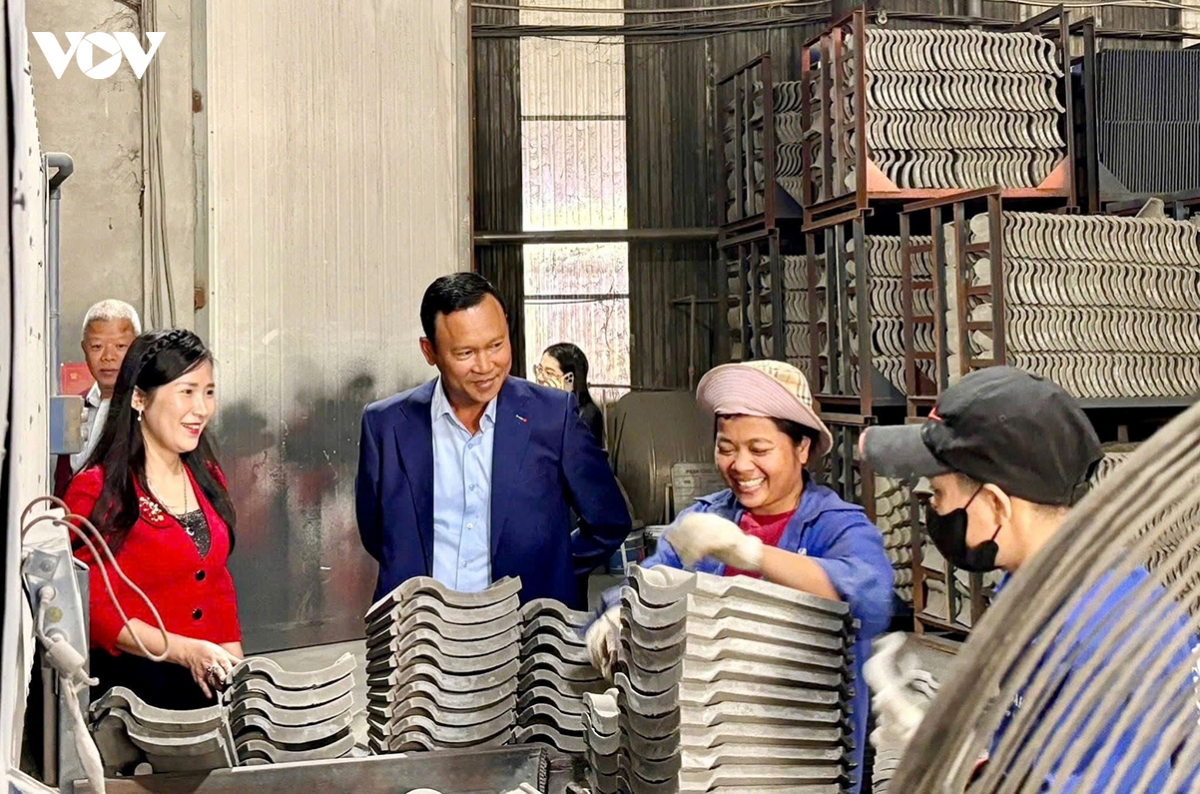
A business representative talks to workers at a manufacturing facility. Stronger links between SMEs and larger companies are seen as key to deeper participation in value chains
One notable proposal is to change the way SMEs’ access to credit is assessed. According to Dr. Ta Thu Phuong, lenders could make greater use of tax data, e-invoices, account cash flows, contracts, orders and payment histories, rather than relying too heavily on collateral.
Such an approach could give businesses with sound operations but limited real estate holdings greater access to finance.
Alongside credit, market access and value-chain linkages should also be placed at the centre of support policies. SMEs need stronger connections with large companies, foreign-invested enterprises, retail networks, e-commerce platforms, public procurement programmes and export promotion channels.
Capital alone cannot help a business expand without orders and markets. Conversely, having orders without sufficient financing can also prevent a company from increasing production capacity.
Meeting higher standards is key to entering supply chains
Another major bottleneck is SMEs’ ability to meet increasingly demanding standards.
Dr. Phuong argued, businesses seeking deeper participation in modern supply chains must meet growing requirements related to quality, the environment, labour, product safety, traceability and Environmental, Social, and Governance (ESG). Therefore, alongside financial support, policies need to help businesses upgrade their standards, improve management and strengthen technological capabilities.
Meeting these requirements would allow SMEs to become suppliers to large corporations and foreign-invested companies, while moving beyond lower-value segments. This would also help narrow the gap between Vietnam’s very large number of businesses and the relatively modest share participating in global value chains.
Building a stronger business ecosystem
From a broader perspective, Assoc. Prof. Dr. Tran Dinh Thien, former director of the Vietnam Institute of Economics, said the issue is not simply about individual support policies but about how the State builds the business environment.
“Institutional reform needs to be comprehensive, thorough and coordinated, particularly by changing the management mindset from a ‘give-and-take’ approach to empowering and working alongside businesses,” he analysed.
He held that the support ecosystem should include flexible banking services, strategic consulting organisations, high-quality workforce training centres and a consistent, stable legal framework.
Without these elements, businesses risk having to navigate market shocks largely on their own.
Meanwhile, a new tax policy is expected to create additional room for small and micro businesses. The National Assembly has approved a resolution providing a 30% reduction in personal income tax and corporate income tax for the 2026-2027 tax periods for individual businesses and companies with annual revenue of no more than VND10 billion.
The policy is expected to reduce costs, improve cash flows and provide additional resources for businesses to maintain operations, invest and expand.
If SMEs make up the largest part of Vietnam’s business community, making this sector stronger is about more than supporting one group of companies. It is essential to expand production capacity, strengthen competitiveness and build a broader foundation for double-digit economic growth.
The policy challenge in the next phase is therefore to move from “supporting businesses to survive” to “creating the conditions for them to grow” by giving them access to finance and markets, technology and higher standards, and helping them enter value chains with greater value added.
VOV.VN - The OPEC Fund for International Development (OPEC Fund) has extended a US$50-million loan to Southeast Asia Commercial Joint Stock Bank (SeABank) to expand financing for micro, small and medium-sized enterprises (MSMEs) and support climate-focused projects in Vietnam.
VOV.VN - Nearly a decade after Vietnam’s Law on Support for Small and Medium-Sized Enterprises (SMEs) took effect, proposed amendments are shifting the focus from expanding support policies to ensuring SMEs can more easily access finance, government assistance and other resources needed for sustainable growth.
SME Forum 2026, a leadership platform for founders and senior executives of Vietnamese enterprises, will take place on March 20, centering on how businesses can achieve sustainable growth in an increasingly volatile market.









.JPG&w=640&q=100)







Bình luận
Bình luận của bạn sẽ được xét duyệt trước khi đăng