
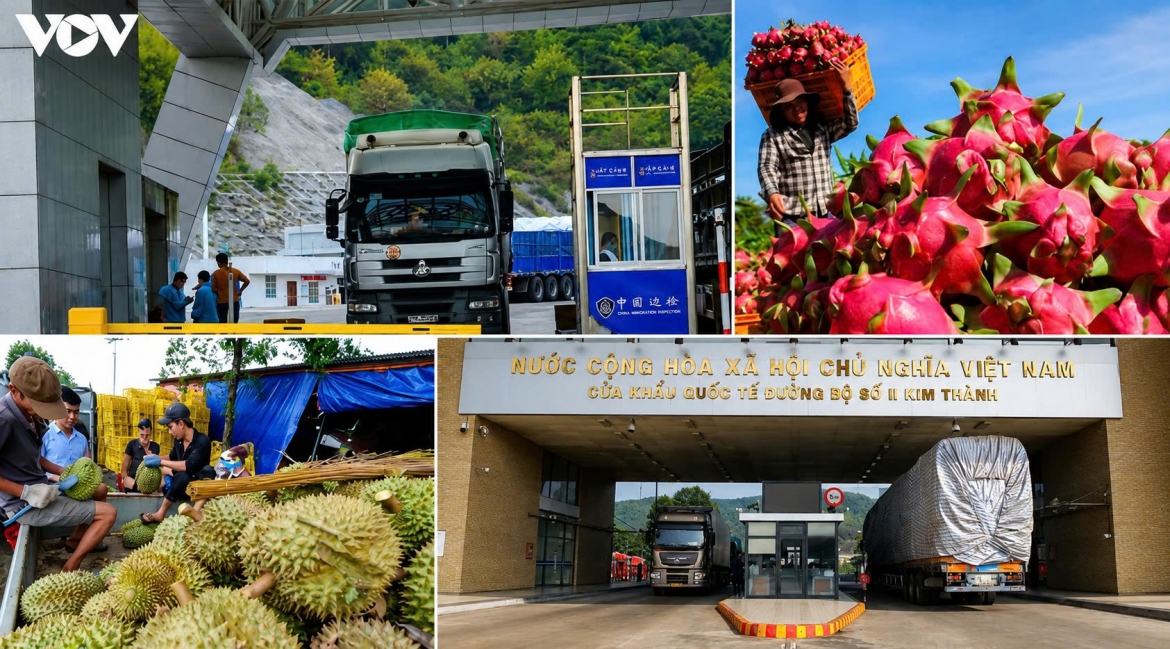

VOV.VN - Vietnam and China have significant room to expand agricultural trade, but long-term growth will depend on addressing bottlenecks related to quality standards, product traceability, logistics and cross-border payment systems, experts and business representatives said at a forum in Ho Chi Minh City on June 24.
Speaking at the first Vietnam–China Agricultural Trade Connectivity Forum, Vietnam’s Permanent Deputy Minister of Foreign Affairs Nguyen Minh Vu described agricultural trade as one of the most dynamic areas of economic cooperation between Vietnam and China.
He noted that growing consumer demand for safe, green and high-quality products in both countries presents opportunities to deepen cooperation. Rather than focusing solely on commodity trading, the two sides should work toward building sustainable production, processing, distribution and consumption value chains.
Chinese Ambassador to Vietnam He Wei shared a similar view, saying bilateral agricultural cooperation is evolving from traditional trade exchanges toward integrated supply chain development.
China is Vietnam’s largest export market for agricultural, forestry and fishery products and continues to maintain strong demand for tropical fruits and other agricultural commodities.
According to the Ambassador, an increasing number of Vietnamese agricultural products are now entering the Chinese market through official trade channels, creating more stable market access for farmers and businesses while opening opportunities in a market of more than 1.4 billion consumers.
Despite strong growth prospects, forum participants agreed that current obstacles are less related to market demand and more associated with increasingly stringent technical requirements.
A representative of the China Certification & Inspection Group (CCIC), said differences in testing standards, quality assessment methods, traceability systems and regulatory requirements continue to create challenges for exporters.
He noted that inconsistencies in laboratory testing results and the lack of mutual recognition mechanisms can lead to trade disruptions. Harmonising technical standards and improving data connectivity between regulatory agencies will therefore play a critical role in facilitating agricultural trade between the two countries.
Nguyen Quoc Manh, deputy director of Vietnam’s Department of Crop Production and Plant Protection, pointed out the fruit and vegetable sector is entering a new development phase.
While export growth in the past was largely driven by production volume, international markets now place greater emphasis on product quality, food safety, cultivation area codes, packing facilities, environmental compliance and traceability.
“The sector needs to shift from a production-oriented mindset to an agricultural economy approach, producing what the market demands rather than exporting only what is available,” he stressed.

Participants highlighted digital technology as one of the most effective solutions for improving supply chain efficiency.
According to the CCIC, the organisation is implementing an AI-powered traceability system for durian exports to China. The platform digitalises the entire supply chain, from cultivation and packaging to transportation and customs clearance, while connecting directly with customs management systems.
Initial results indicate that customs clearance times for some shipments have been reduced from several days to around 24 hours, and in certain cases to only a few hours.
Businesses also emphasised the importance of upgrading logistics infrastructure and cross-border payment systems.
Representatives of Agricultural Bank of China Limited - Hanoi Branch informed that the institution is developing direct settlement solutions using the Chinese yuan and Vietnamese dong, while expanding trade finance programmes to help agricultural exporters access capital more efficiently, reduce transaction costs and mitigate foreign exchange risks.
Experts noted that stronger integration between finance, logistics and e-commerce platforms will be essential for improving the competitiveness of Vietnamese agricultural products in the Chinese market.
Vu Ba Phu, director of the Vietnam Trade Promotion Agency under the Ministry of Industry and Trade, shared that the success of Vietnam’s durian exports demonstrates the vast potential of Vietnamese agricultural products in China.
However, he cautioned that such advantages may not be sustainable if businesses continue to rely primarily on price competition and raw commodity exports.
Looking ahead, he suggested that the priority should be building a sustainable export ecosystem through standardised production areas, greater investment in processing industries, stronger logistics and cold-chain infrastructure, expanded cross-border e-commerce and closer coordination between businesses and regulatory agencies.
Forum participants agreed that digital transformation, modern logistics infrastructure and harmonised technical standards will be the three key drivers for elevating Vietnam-China agricultural cooperation in the years ahead.
As bilateral economic relations continue to deepen, developing transparent, sustainable and fully traceable agricultural value chains is increasingly seen as the most effective pathway for Vietnamese products to expand market share, increase value-added production and strengthen their position in the Chinese market.
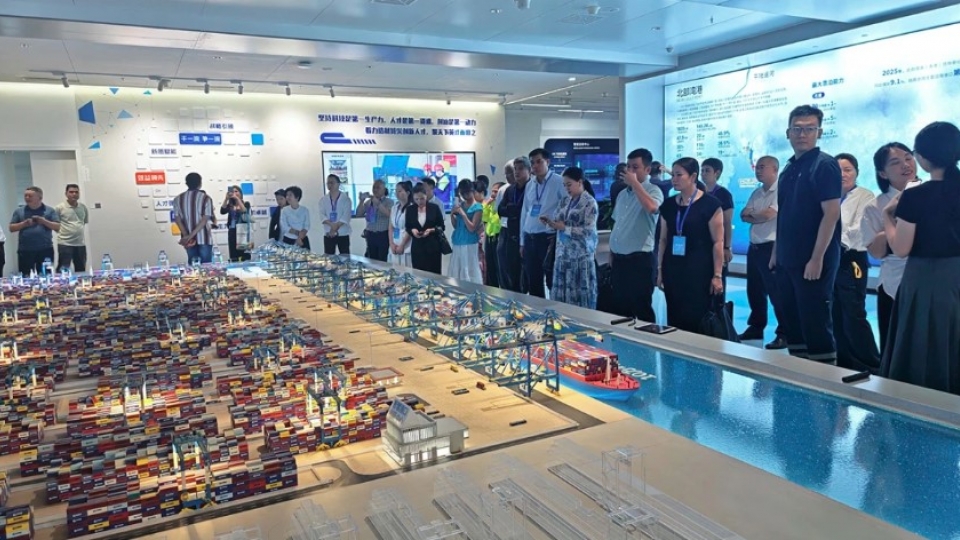
VOV.VN - As demand for tropical fruit continues to rise in China, trade promotion activities are becoming a key driver of efforts by Vietnamese businesses to expand fruit exports to the highly lucrative market.
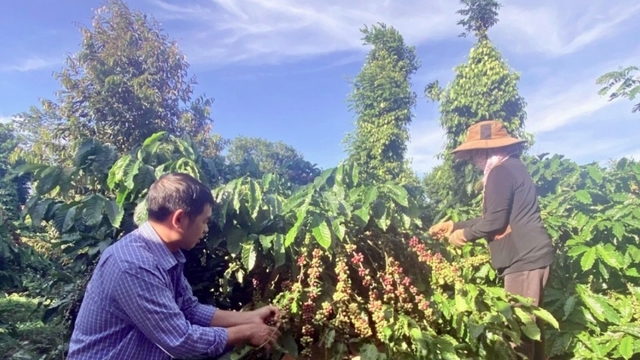
VOV.VN - Coffee enterprises from Vietnam and China gathered in Yunnan province, China, for the 2026 China-Vietnam Coffee Business Matching Conference, which created opportunities to strengthen supply chain linkages, expand market access and deepen cooperation in the coffee sector.

VOV.VN - Prime Minister Le Minh Hung held a phone conversation with Chinese Premier Li Qiang on June 15, during which both leaders agreed to strengthen development strategy connectivity, expand practical cooperation across various fields and continue realizing high-level common perceptions reached by the top leaders o
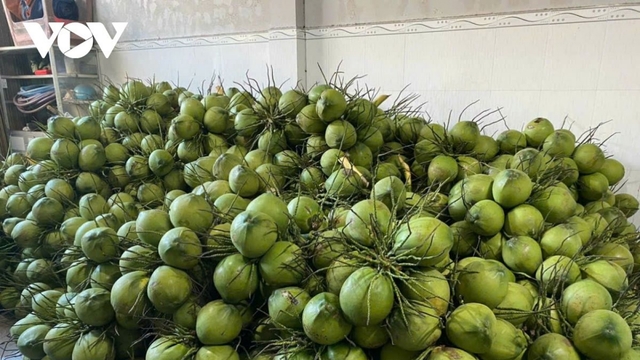
VOV.VN - A shipment of fresh coconuts from Vietnam’s Vinh Long province arrived at Nanning International Railway Port, China, on June 18 aboard a cross-border refrigerated freight train, marking another step forward in agricultural logistics connectivity between Vietnam and China.






.JPG&w=640&q=100)








Bình luận
Bình luận của bạn sẽ được xét duyệt trước khi đăng