Vietnam moves to tackle double challenge in FDI attraction in next phase
Vietnam is entering a new phase in attracting foreign direct investment (FDI) with a double challenge - securing larger capital inflows while ensuring that new projects deliver higher technological value.
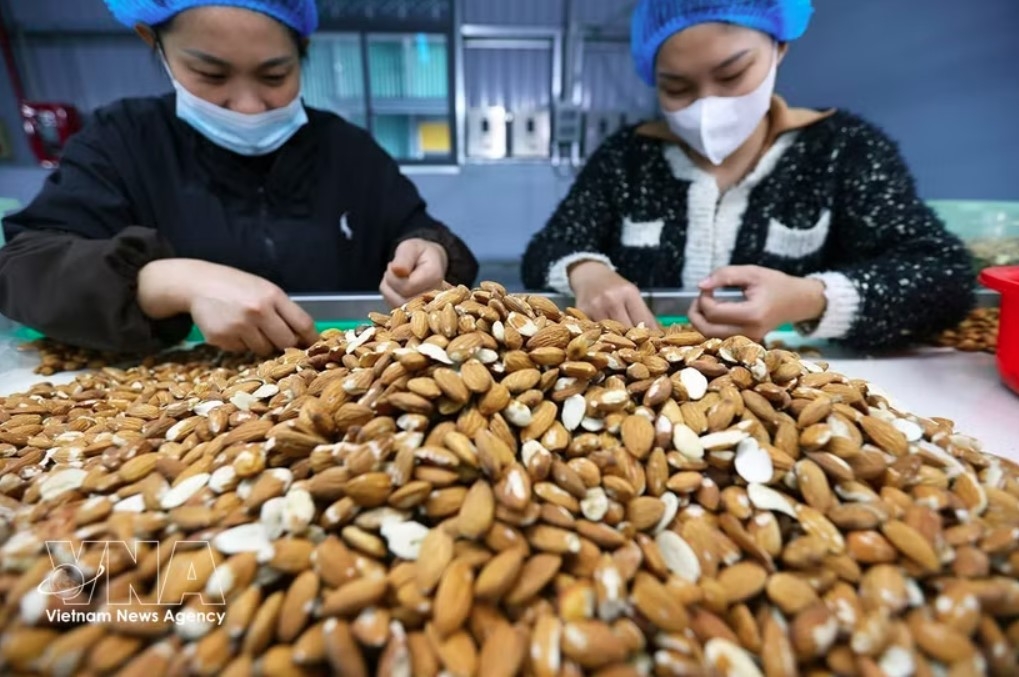
Workers sort and process almonds for export at the factory of Gold Tree Food Vietnam Co., Ltd., a wholly Chinese-owned company, in Tu Ha Industrial Park, Hue city. (Photo: VNA)
The challenge was seen in the Politburo's Resolution No. 10-NQ/TW on developing the foreign-invested sector, which sets ambitious targets for the 2026–2030 period. Vietnam aims to attract US$200–300 billion in registered FDI, equivalent to US$40–50 billion annually, while disbursed capital is expected to reach US$150–200 billion, or US$30–40 billion each year.
Vietnam has maintained solid FDI performance despite a volatile global investment environment.
According to the Foreign Investment Agency under the Ministry of Finance, the country attracted more than US$24.8 billion in registered FDI during the first five months of 2026, up 34.9% year-on-year. Disbursed FDI reached over US$9.7 billion, an increase of 9.6% from the same period last year.
The agency said the figures demonstrated that Vietnam remained an attractive destination for multinational companies seeking to diversify and restructure their global supply chains.
The country's recent performance also provides confidence that it can pursue more ambitious goals. During 2021–2025, Vietnam attracted approximately US$185 billion in registered FDI and disbursed more than US$118 billion, meeting the targets set under the Politburo's Resolution No. 50-NQ/TW issued in 2019.
Those achievements were particularly notable given the disruptions caused by the COVID-19 pandemic, geopolitical tensions and declining global investment flows.
However, maintaining annual inflows of US$40–50 billion in registered capital and US$30–40 billion in disbursed capital over the next five years will be considerably more challenging, especially as global FDI remains subdued and competition among investment destinations intensifies.
The targets are also closely tied to Vietnam's broader economic ambitions. Sustaining double-digit economic growth will require substantial investment capital, making FDI an increasingly important source of financing.
Nguyen Anh Tuan, Chairman of the Vietnam's Association of Foreign Invested Enterprises (VAFIE), described the new targets as highly ambitious, noting that Vietnam will need to consistently attract record levels of both registered and implemented capital.
From quantity to quality
Beyond the volume of investment, the Politburo's Resolution No. 10-NQ/TW places greater emphasis on the quality of incoming FDI.
The resolution prioritises investment in strategic sectors such as semiconductors, artificial intelligence, electronics, biotechnology, modern logistics, financial services and innovation. It also seeks to attract multinational corporations, research and development (R&D) centres and projects capable of transferring advanced technologies.
The shift reflects Vietnam's determination to move beyond its traditional role as a low-cost manufacturing base. Instead of focusing primarily on capital inflows and labour-intensive assembly operations, the country aims to attract projects that bring core technologies, strengthen domestic capabilities and help build a strategic national investment platform.
Vietnam has already made progress in this direction. Global technology companies including Intel, Samsung, LG, Goertek, Foxconn, Amkor and HanaMicron have expanded their manufacturing presence in the country. Samsung has also established a major R&D centre in Hanoi, reinforcing Vietnam's growing role in the company's regional innovation network.
During the first five months of this year alone, Vietnam licensed two billion-dollar high-tech projects. Other notable investments include Posco Future M Co., Ltd.'s US$282-million artificial graphite anode material project and an additional US$479.8 million investment by BYD.
Recent investment promotion efforts have also yielded encouraging results. During a recent working visit to the Republic of Korea, Chairman of the Hai Phong Municipal People's Committee signed new cooperation agreements with LG Group, which has already invested around US$10.6 billion in the northern port city, opening the door for further expansion.
Mickaël Driol, General Director of Mekong Partners, said many multinational corporations that have operated in Vietnam for years are continuing to expand their manufacturing and technology investments.
He said these expansion decisions serve as one of the strongest indicators of investor confidence, adding that Vietnam is increasingly viewed as a long-term strategic manufacturing and operational hub for global corporations.
As global uncertainties ease, investment plans that were previously postponed are gradually being revived, creating favourable conditions for additional capital inflows into Vietnam.
Turning policy into action
Property consultancy Savills Vietnam shares a similarly positive outlook. In a recent report, the company highlighted the ground-breaking ceremony for a new project by US-based technology group Coherent in southern Dong Nai province as further evidence of Vietnam's growing importance within global manufacturing and innovation networks.
According to Savills, Vietnam continues to attract leading technology manufacturers thanks to its competitive operating costs, stable investment climate and deep integration into international supply chains. The consultancy noted that recent expansion plans by high-tech manufacturers reflect a shift from short-term, opportunistic investments to long-term production commitments.
Even so, experts caution that positive investment trends alone will not be sufficient to achieve the ambitious goals outlined in Resolution No. 10-NQ/TW.
The resolution calls for comprehensive reforms, including improvements to the legal and policy framework, a gradual transition from traditional tax incentives to performance-based support mechanisms, the establishment of a dedicated framework for selecting and supporting strategic investors, and the introduction of special investment procedures and incentives for large-scale strategic technology projects.
These measures, however, remain policy directions. Their success will depend on detailed implementation plans, effective coordination among ministries and local authorities, and consistent execution in practice.
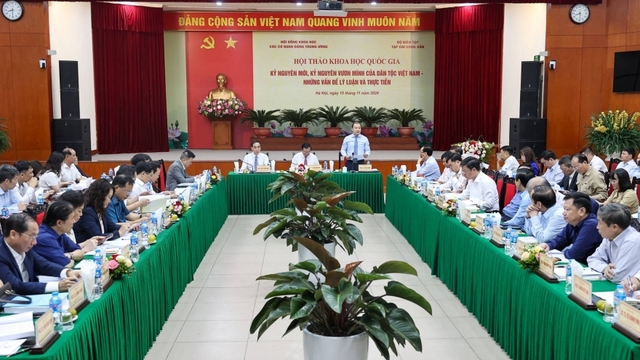
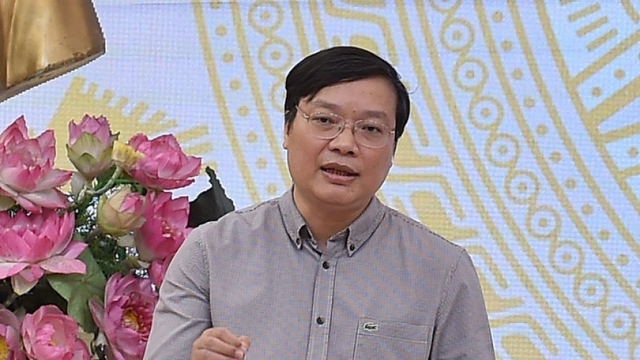
Representatives from localities and FDI firms on June 30 put forward measures to attract high-quality investment and develop Vietnam’s capital market at a national conference in Hanoi on studying, disseminating and implementing the Politburo’s Resolution No. 10-NQ/TW on developing the foreign-invested economic sector.
VOV.VN - Vietnam is shifting its foreign direct investment (FDI) strategy from prioritising the volume of inflows to attracting projects that deliver advanced technology, innovation, modern governance and stronger spillover effects for the domestic economy, Deputy Prime Minister Pham Gia Tuc said on June 30.








.JPG&w=640&q=100)







Bình luận
Bình luận của bạn sẽ được xét duyệt trước khi đăng