Foreign affairs becomes a key, regular mission in Vietnam’s new development era
VOV.VN - Vietnam elevates foreign affairs as a “key, regular mission” under the Politburo’s Resolution 06, marking a strategic shift toward proactive diplomacy, strategic autonomy, and development-driven international integration in a rapidly changing global environment.
Entering a new phase of national development, the requirements of national defence and rapid, sustainable growth are placing new demands on Vietnam’s foreign affairs. In this context, the Politburo’s Resolution No. 06 on implementing the foreign policy orientation of the 14th National Party Congress marks a significant milestone in strategic thinking, as foreign affairs is for the first time officially defined as a “key, regular mission,” playing a pioneering role in creating a peaceful and stable environment while expanding development space for the country.
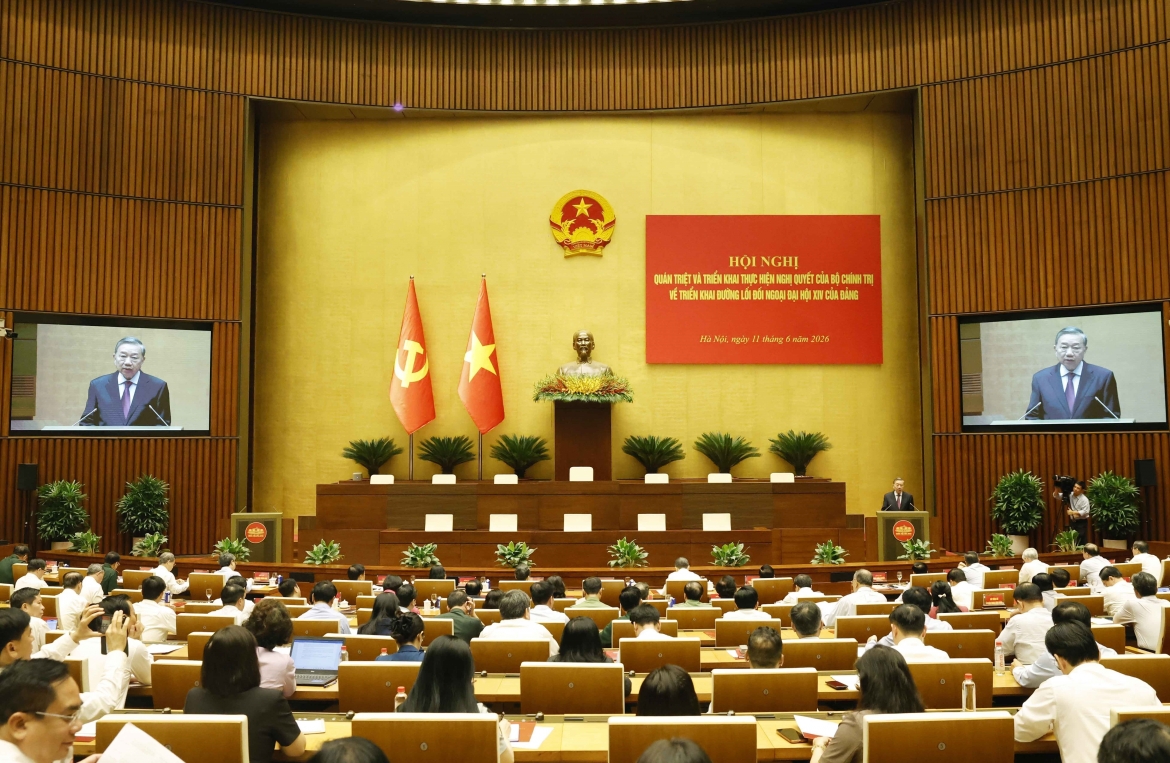
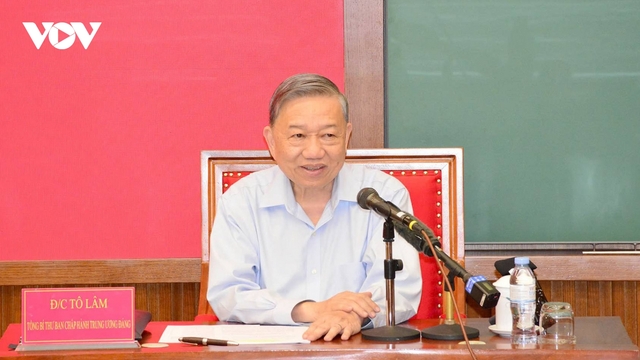
General Secretary and State President To Lam addresses a national conference on studying, disseminating, and implementing the Politburo's Resolution 06 regarding the foreign policy orientation of the 14th National Party Congress
Guidance from General Secretary and State President To Lam at a national conference on studying, disseminating, and implementing the Resolution on June 11, 2026 further clarifies the vision, orientation, and new requirements for Vietnam’s diplomacy in the new development era.
From nearly 40 years of Đổi Mới to new era requirements
Over nearly four decades of Đổi Mới (Renewal), foreign affairs has been one of Vietnam’s most outstanding achievements of historical significance. From a country once under blockade and embargo, Vietnam has established diplomatic relations with almost all countries worldwide, built an expanding network of partnerships, actively participated in multilateral mechanisms, and become a responsible and active member of the international community.
Foreign affairs has played a crucial role in maintaining peace and stability, safeguarding national interests, mobilising external resources for development, and continuously enhancing Vietnam’s international position and prestige.
These achievements are rooted in a consistent foreign policy of independence, self-reliance, peace, friendship, cooperation, and development, alongside the principle of multilateralisation, diversification of external relations, and proactive, comprehensive international integration.
However, the world is undergoing profound transformation. Strategic competition among major powers is intensifying, traditional and non-traditional security challenges are increasingly intertwined, and rapid advances in science and technology, digital transformation, artificial intelligence, green transition, and global supply chain restructuring are reshaping the global development landscape.
In this context, foreign affairs is no longer limited to maintaining a peaceful environment or managing international relations. It must proactively expand development space, create new growth drivers, and enhance national standing.
This reality requires continuous innovation in diplomatic thinking and stronger promotion of the role of foreign affairs in national construction and defense.
A strategic breakthrough in foreign policy thinking
Top Vietnamese leader To Lam (centre, back row) attends the opening session of the Gaza Board of Peace in Washington, D.C., United States, on February 19, 2026
On May 19, 2026, the Politburo issued Resolution No. 06 on implementing the foreign policy orientation of the 14th National Party Congress. A key highlight of the Resolution is a major advancement in awareness of the role, position, and mission of foreign affairs in the new period.
For the first time, foreign policy objectives are defined as being commensurate with Vietnam’s historical stature, cultural identity, and growing international position. Notably, the Resolution affirms that foreign affairs and international integration are the responsibility of the entire political system, the people, and the armed forces, and officially designates foreign affairs as a “key, regular mission.”
At the national conference, General Secretary and State President To Lam emphasised that recognising foreign affairs as a key and regular mission alongside national defence and security represents a major development in the Party’s leadership thinking.
Accordingly, foreign affairs is not only a tool for creating favourable conditions for development but also an essential method for building, defending, and advancing the nation, helping to detect, prevent, and neutralise risks early and from afar.
This lays the foundation for promoting the pioneering role of diplomacy in safeguarding the country from early and distant threats while shaping a favourable international environment for development.
Strategic autonomy and self-reliance as pillars of new diplomacy
Another key emphasis of Resolution 06 is the promotion of strategic autonomy and national self-reliance. In a rapidly changing and unpredictable global environment, safeguarding national interests is the highest principle in foreign policy implementation.
Strategic autonomy not only means maintaining an independent and self-reliant foreign policy, but also the ability to proactively choose development paths aligned with national conditions and interests, avoiding passivity in the face of external changes.
Alongside this is the requirement to strengthen internal capacity and build a strong foundation of national resilience to ensure deep and effective international integration.
As top leader To Lam emphasised, Vietnam’s development cannot be separated from regional and global development. Harmonising national strength with the strength of the times, and internal and external resources, is essential for rapid and sustainable development.
From protecting development space to creating development capacity
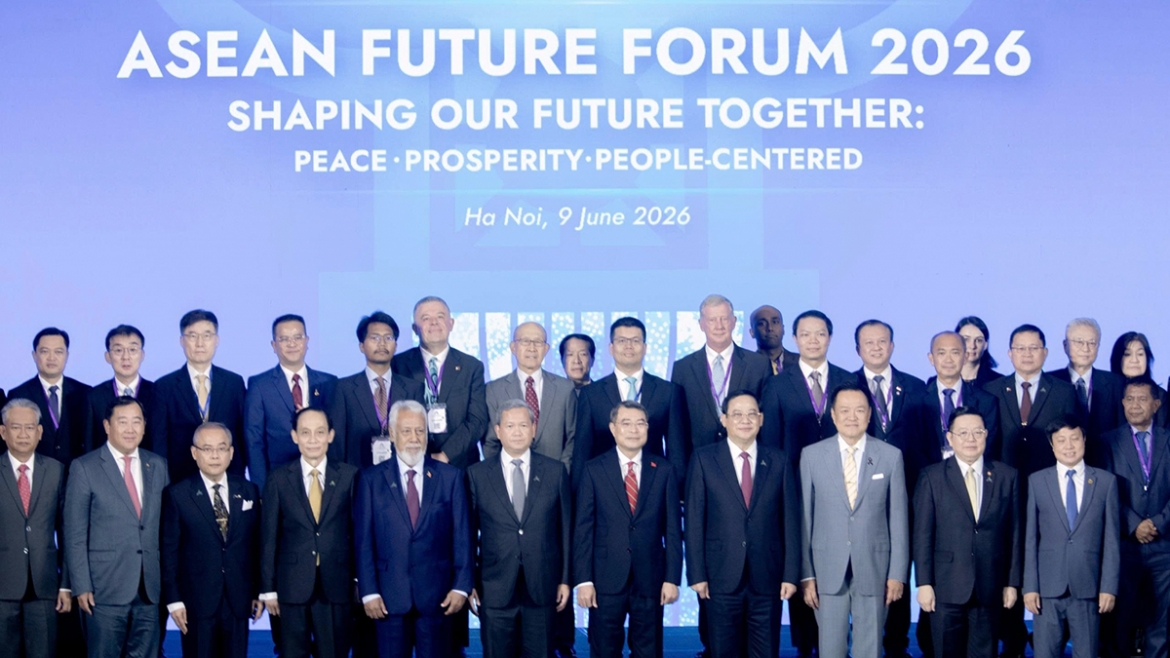
Foreign delegates pose for a group photo at the third ASEAN Future Forum (AFF 2026) in Hanoi
One of the most breakthrough elements of Resolution 06 is the requirement to transform foreign affairs into a driving force for expanding development space.
General Secretary and State President To Lam stressed the need to shift from a “diplomacy that protects development space” to a “diplomacy that creates national development capacity.” This shift reflects not only a change in approach but also a transformation in the role of diplomacy.
Previously, foreign affairs mainly focused on maintaining a peaceful environment and attracting external resources. In the new phase, diplomacy must actively generate new development drivers, especially in science and technology, innovation, digital transformation, artificial intelligence, digital economy, green transition, and other strategic sectors.
Foreign affairs must therefore be more closely aligned with socio-economic development goals, contributing to national competitiveness and economic resilience.
Five major orientations for Vietnam’s foreign affairs
Female Vietnamese peacekeeping officers take part in United Nations peacekeeping operations.
Based on new domestic and international requirements, General Secretary and State President To Lam outlined five key orientations for Vietnam’s foreign affairs in the coming period.
First, it is necessary to promote the pioneering role of diplomacy in maintaining peace and stability, safeguarding the country from early and distant threats, and shaping a favourable international environment for development.
Second, foreign affairs should be further strengthened as a driving force for expanding development space, while remaining closely aligned with socio-economic development strategies.
Third, Vietnam needs to proactively contribute to addressing global challenges, further enhance its role in multilateral mechanisms, and gradually improve its capacity to propose initiatives and shape international cooperation frameworks.
Fourth, it is vital to elevate Vietnam’s international standing in line with its historical stature and cultural identity, leveraging cultural soft power and effectively connecting overseas Vietnamese communities worldwide.
Finally, it is essential to build a comprehensive, modern, and professional diplomatic service with politically firm, strategically minded, and highly skilled personnel capable of adapting to a rapidly changing global environment.
Understanding deeply, implementing thoroughly
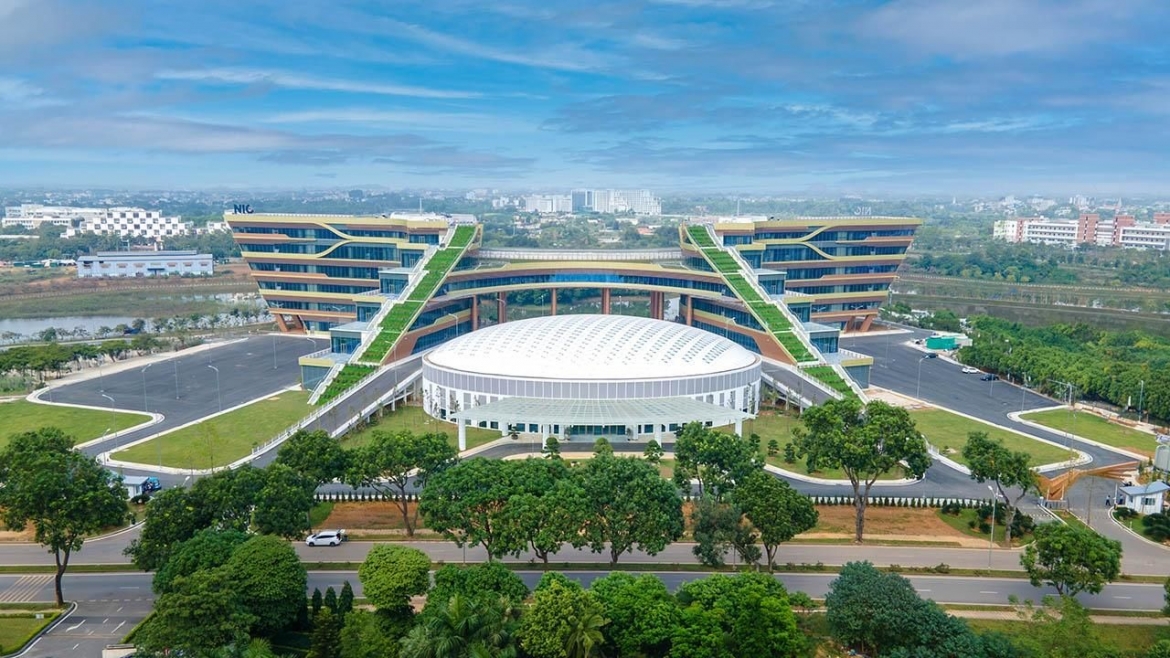
A panoramic view of the Vietnam National Innovation Centre in Hanoi
To translate Resolution 06 into practice, General Secretary and State President To Lam stressed the importance of deep understanding, correct and thorough implementation, and effective delivery. Party committees, organisations, and agencies must promptly translate the Resolution into action programmes suitable to their functions and responsibilities.
Coordination mechanisms between foreign affairs, national defence, security, economy, culture, and science and technology must be further strengthened, alongside building a high-quality diplomatic workforce.
As emphasised: “Studying resolutions is for action; action leads to transformation; and transformation delivers real results.”
The success of Resolution 06 will not be measured by the number of documents issued, but by tangible improvements in diplomatic effectiveness, the ability to mobilise international resources for development, and the enhanced prestige of Vietnam on the global stage.
With clear strategic orientation and strong political commitment across the entire political system, effective implementation of Resolution 06 will help build a Vietnamese diplomacy system that matches the country’s historical stature, cultural identity, and rising international position, contributing to the goal of a prosperous and powerful Vietnam in the new era.
VOV.VN - Prime Minister Le Minh Hung on May 11 called on the Ministry of Foreign Affairs to proactively develop a unified mechanism for managing external relations activities, particularly in economic diplomacy, investment attraction and technology diplomacy.
VOV.VN - The Politburo and the Secretariat of the Party Central Committee on June 11 held a national conference in Hanoi to study, disseminate and implement Resolution No. 06, issued by the Politburo on May 19, 2026, on implementing the foreign policy guideline set out at the 14th National Party Congress.
VOV.VN - The third ASEAN Future Forum (AFF 2026) concluded in Hanoi on June 10 with calls for Southeast Asian nations to translate policy consensus into practical and measurable actions as the region faces growing geopolitical competition and increasingly complex challenges.
VOV.VN - Party General Secretary To Lam has urged the country’s foreign service to continue strong reforms and effectively implement the resolution of the 14th National Party Congress, to help mobilise external resources and enhance Vietnam’s international standing.









.JPG&w=640&q=100)




Bình luận
Bình luận của bạn sẽ được xét duyệt trước khi đăng