

VOV.VN - Safeguarding ideological integrity requires firm principles, sound methods and constructive engagement to strengthen national unity and public trust, according to the Lieutenant General Nguyen Thanh Tuan from the General Political Department of the Vietnam People's Army.
As Vietnam continues efforts to strengthen Party building and counter hostile narratives, combining principled positions with persuasion, education and the rule of law is essential to reinforcing national unity and public trust, Lieut. Gen. Tuan, former director of the Communication Division, said in an article recently published on People’s Army newspaper.
According to the senior military officer, preventing ideological decline, moral deterioration and manifestations of ‘self-evolution’ and ‘self-transformation’ has long been regarded as an important task in Party building and national development. In today's digital era, where information spreads rapidly across online platforms, this responsibility has become increasingly complex.
Alongside strengthening political awareness and theoretical understanding, Vietnam emphasises the importance of applying sound and effective approaches in ideological work.
Drawing on Marxist-Leninist theory and Ho Chi Minh Thought, Party documents underline that revolutionary success depends not only on correct objectives but also on appropriate methods. Throughout Vietnam's revolutionary history, national solidarity, public consensus and broad participation have been viewed as key factors behind major achievements.
During his lifetime, President Ho Chi Minh consistently stressed the importance of unity, persuasion and constructive criticism. He believed criticism should help individuals recognise shortcomings, improve themselves and strengthen solidarity rather than undermine trust or divide organisations.
This principle continues to be reflected in the Party’s current approach to Party building and rectification. Recent Party documents emphasise the need to combine “building” with “combating”, identifying prevention, education and institutional strengthening as long-term priorities while maintaining firm action against violations.
In practice, many officials, Party members and citizens have actively participated in protecting the Party's ideological foundation and responding to distorted or misleading information.
At the same time, Lieut. Gen. Tuan argued, methods of engagement are important. Sharing unverified information, making premature conclusions or using confrontational language can weaken the credibility of public discourse and unintentionally create opportunities for misinformation to spread.
Effective ideological work, therefore, should be grounded in verified facts, sound reasoning, legal principles and responsible communication. Facts should take precedence over speculation, while conclusions should rely on evidence and the findings of competent authorities.
The senior military officer also argued that different situations require different approaches. Individuals who deliberately violate the law or seek to undermine national interests should be dealt with in accordance with legal regulations. However, those who lack accurate information or unintentionally share misleading content should be approached through dialogue, explanation and education.
Likewise, people who acknowledge mistakes and demonstrate a willingness to correct them should be encouraged to make positive contributions to society. Such an approach, he said, reflects both the humanitarian values promoted by President Ho Chi Minh and Vietnam's long-standing tradition of social unity.
As Vietnam continues strengthening Party building and protecting its ideological foundation, maintaining national unity is a central objective. Achieving that goal requires combining firm principles with constructive engagement, relying on facts, evidence and the rule of law while fostering understanding and consensus across society.
Safeguarding ideological integrity is ultimately not only about countering false information but also about reinforcing public trust, strengthening national solidarity and supporting the country's long-term development.
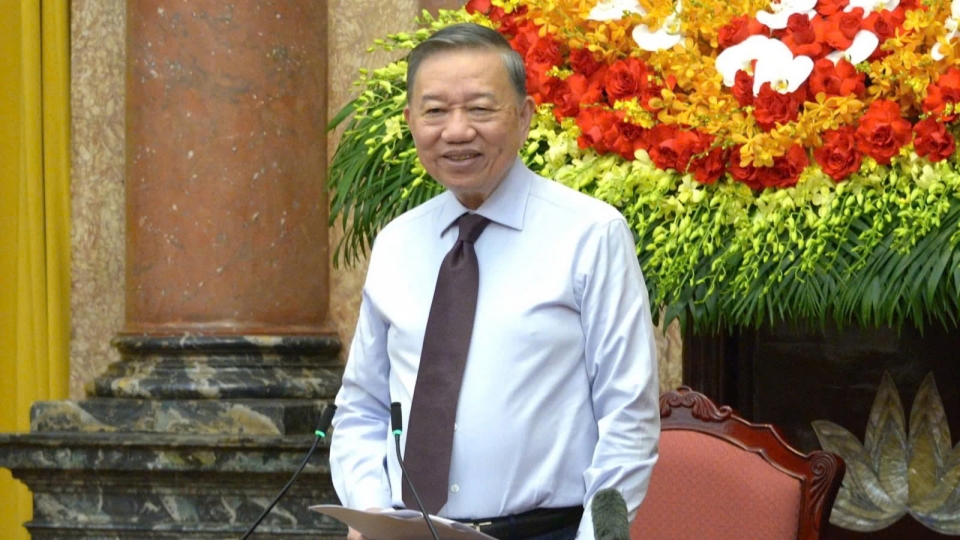
VOV.VN - Party General Secretary and State President To Lam has called on Vietnam’s revolutionary press to strengthen public trust, safeguard the Party’s ideological foundation and continue improving information quality as the country enters a new stage of development.

VOV.VN - As Vietnam is entering a new phase of development, often referred to as the “era of national rise”, efforts to safeguard the ideological foundation of the Communist Party of Vietnam are facing new requirements in terms of awareness, implementation methods, and adaptability to the digital environment.

VOV.VN - Vietnam is stepping up efforts to reform its ideological work in tandem with strengthening anti-corruption and waste prevention measures, as part of a broader push to improve governance efficiency and public trust.

VOV.VN - Political and ideological work must lead the way, while responsibilities of heads of organisations should be clearly defined and measurable to address the gap between words and actions.






.JPG&w=640&q=100)






Bình luận
Bình luận của bạn sẽ được xét duyệt trước khi đăng