National Assembly extraordinary session to focus on major legal reforms
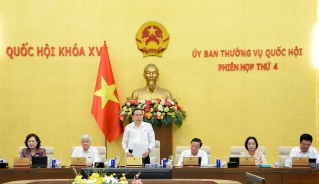
VOV.VN - Vietnam's 16th National Assembly will hold the first extraordinary session in August to deliberate a wide range of major legislative proposals, including amendments to the Land Law and the Criminal Code, as the country accelerates institutional reform to support long-term economic development.
The National Assembly Office announced on July 28 that the extraordinary session is scheduled to open on August 3 and close on August 24. The session will be divided into two phases, with the first phase to take place from August 3 to 13, and the second to run from August 19 to 24.
During the break, government agencies and National Assembly bodies will revise draft laws and resolutions based on lawmakers' comments before submitting them for approval in the second phase.
Largest legislative workload since the beginning of the term
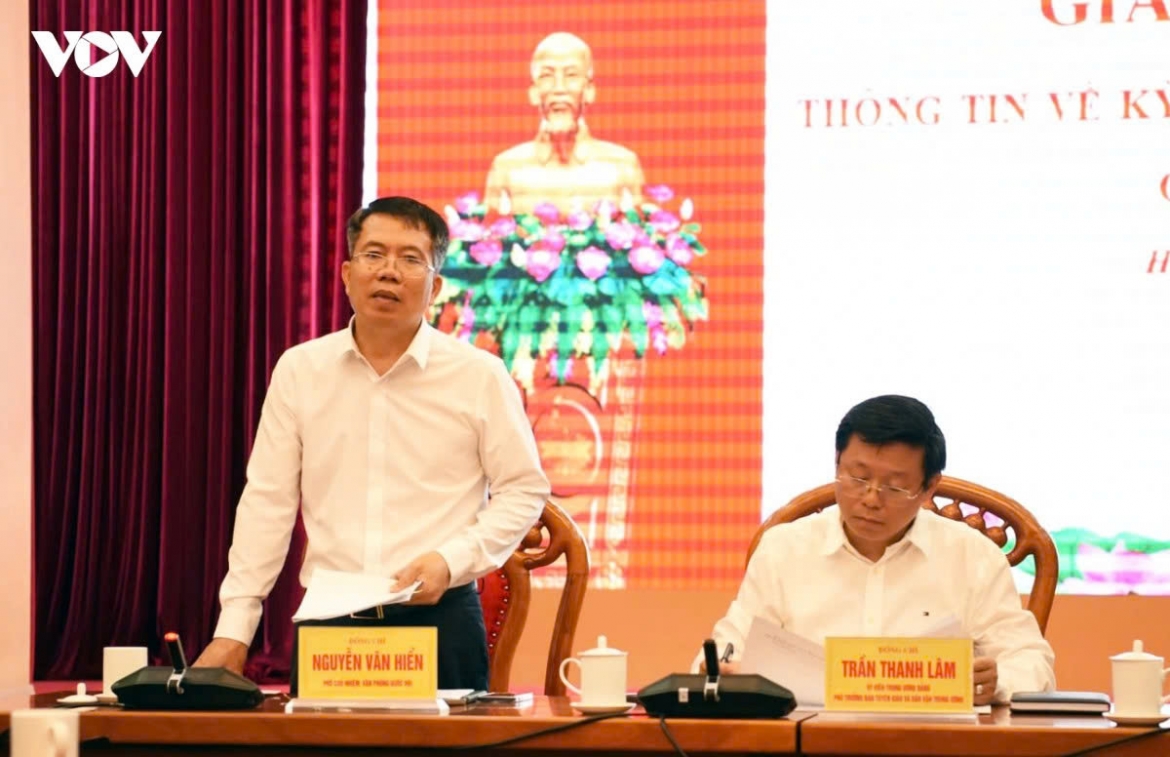
Nguyen Van Hien, vice chairman of the National Assembly Office, provides information about the first extraordinary session of the 16th National Assembly at the press briefing on July 28
According to the tentative agenda, lawmakers will consider and decide on 31 items, including the passage of 15 draft laws, four legally binding resolutions, five major national matters, and first readings of seven additional draft laws.
Nguyen Van Hien, vice chairman of the National Assembly Office, said the extraordinary session is necessary because of the unprecedented volume of legislative work facing the legislature.
While the National Assembly normally convenes two regular sessions each year, nearly 90 draft laws and resolutions are expected to be submitted between now and the end of 2026, with the number likely to increase further.
The decision to convene an extraordinary session reflects the country's determination to accelerate institutional reform while ensuring that legislative work progresses on schedule, he stressed.
Land Law amendment high on the agenda
Among the most closely watched items on the agenda is the draft revised Land Law.
According to the National Assembly Office, the legislation carries particular importance because it directly affects land users' rights as well as the legitimate interests of citizens and businesses.
The revised law will follow the two-session legislative process. Lawmakers will conduct the first reading during the extraordinary session in August before voting on the bill during the second regular session scheduled for October 2026.
The revision comes after the Party Central Committee's recent 3rd plenum called for further institutional reform to unlock development resources. Earlier, the Government approved seven major policy groups as the basis for drafting the revised law, aiming to reshape land governance by placing efficient land use, national interests, and the legitimate rights of citizens at the centre of policymaking.
Criminal Code amendment to receive first review
Hoang Lan Nhung, director of the Information Department under the National Assembly Office, says the revised Criminal Code will be also high on the agenda at the coming extraordinary session
Lawmakers will also conduct the first reading of the revised Criminal Code.
Hoang Lan Nhung, director of the Information Department under the National Assembly Office, said the Criminal Code serves as one of Vietnam's foundational legal instruments, governing a broad range of issues including criminal justice, judicial institutions, counterterrorism, drug-related crimes, human trafficking, money laundering, and the protection of human rights and lawful interests.
The draft revised Criminal Code consists of three parts, 25 chapters and 417 articles. It proposes removing six articles, adding 11 new provisions, amending 292 articles, and retaining 111 articles unchanged from the current code.
Given the law's broad impact on society, the National Assembly Office stressed that public communication surrounding the draft should be accurate, balanced and carefully managed.
Accelerating institutional reform
According to the director of the Information Department under the National Assembly Office, convening an extraordinary session demonstrates the strong political commitment of the Party, the National Assembly and the Government to promptly institutionalise major Party policies, address urgent issues without delay, remove institutional bottlenecks, and reduce pressure on the legislature's regular session later this year.
The National Assembly Office has also called on media agencies to strengthen public communication by producing more in-depth reports and analyses on legislative reforms, the modernisation of Vietnam's lawmaking process, and the legislature's role in deciding major national issues, while reflecting the legitimate concerns and aspirations of voters.
With nearly 90 draft laws expected to be considered before the end of the year, Vietnam’s legislative agenda is entering an intensive phase. The decision to convene the first extraordinary session of the 16th National Assembly at the beginning of its term underscores the country's determination to accelerate institutional reform and establish a stronger legal foundation for sustainable economic growth and national development.
VOV.VN - National Assembly Chairman Tran Thanh Man has warned that ministers, heads of drafting agencies and verification bodies will be held accountable if delays or poor-quality legislation stem from subjective causes, as Vietnam steps up efforts to accelerate institutional reform.
VOV.VN - National Assembly Chairman Tran Thanh Man has called for a more results-oriented approach to legislative work, urging lawmakers to strengthen institutional reform, tighten discipline and focus on the practical impact of laws and policies.
VOV.VN - Vietnam's first extraordinary session of the 16th National Assembly is expected to review 31 agenda items, with legislation and personnel work taking centre stage as lawmakers prepare the legal and institutional groundwork for the country's next stage of development.











.JPG&w=640&q=100)










Bình luận
Bình luận của bạn sẽ được xét duyệt trước khi đăng