
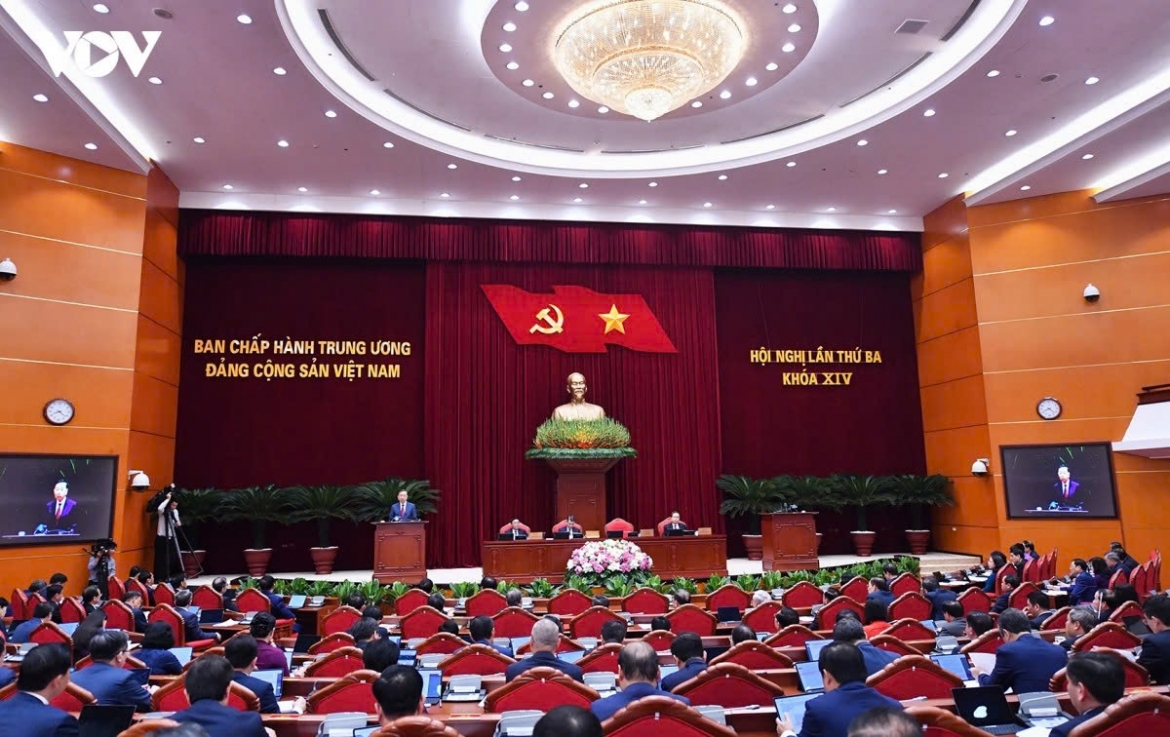

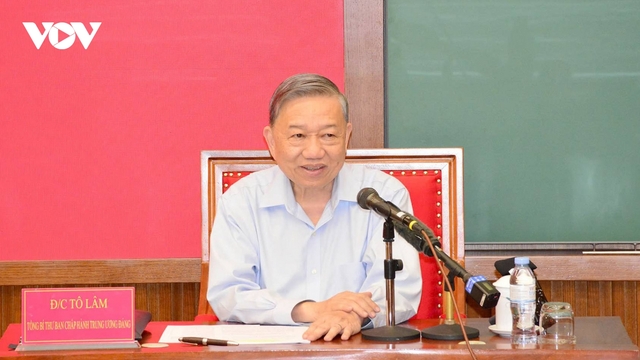
VOV.VN - Party General Secretary and State President To Lam called for four strategic shifts to reshape governance, unlock new growth drivers and strengthen the country's long-term resilience, in his opening remarks at the third plenum of the Party Central Committee in Hanoi on July 20.
The top leader highlighted the significance of the third plenum, describing it as a decisive step in translating the strategic vision of the 14th National Party Congress into concrete policies aimed at unlocking new drivers of national development.
He recalled that the National Party Congress, held in January 2026, has established the country's long-term vision and strategic orientation, while the second plenum, held in March 2026, has focused on organisational arrangements for the new term. The third plenum, he noted, carries a different mission, transforming those strategic directions into practical decisions capable of removing institutional bottlenecks, mobiliding national resources and strengthening Vietnam's development capacity in the years ahead.
Although the agenda covers 13 separate issues, all are aimed at enhancing the Party's leadership capacity, improving national governance and creating stronger foundations for sustainable development in a rapidly changing domestic and international environment.
According to the Party General Secretary and State President, every policy adopted at the meeting should clearly identify the bottlenecks it is intended to remove, the new development capacity it is expected to create and the conditions necessary for its effective implementation.
The centerpiece of the opening address was the proposal to pursue four strategic transformations, which the top leader viewed as the foundation for Vietnam's next stage of development.
The first shift focuses on moving from institutional restructuring to improving governance quality.
The top leader stressed that streamlining the political system is only the starting point. The ultimate objective is a Party that leads more effectively, a State that governs more efficiently, a public administration that operates faster and better, and public services that more directly improve people's living standards.
Achieving that goal, he said, requires stricter discipline, clearer organisational responsibilities, stronger accountability and effective control of power. Ultimately, the success of governance should be measured by policy effectiveness and public trust.
Within this framework, the Party Central Committee is reviewing amendments to regulations governing Party members' conduct, while refining the functions and responsibilities of Party organisations to eliminate overlapping mandates and institutional gaps.
Senior Party officials are also examining reports evaluating the first year of operation under Vietnam's newly streamlined political system and two-tier local government model, together with assessments of Party-building efforts during the first six months of 2026.
The meeting will also consider proposals to establish Quang Ninh and Bac Ninh as centrally governed cities, with discussions centering on whether such changes would strengthen regional growth, urban governance and interregional connectivity while ensuring adequate infrastructure and public resources.
The second strategic shift seeks to move from fragmented administration toward integrated governance of national development space and resources. This includes reviewing the implementation of Party resolutions on land management and maritime development, alongside considering amendments to the Land Law and related legislation.
According to the top leader, land should no longer be managed merely as individual plots but as an integrated development resource capable of supporting economic growth and improving people's livelihoods. At the same time, Vietnam's maritime strategy should evolve beyond sectoral management toward comprehensive governance connecting coastal development, seaports, logistics, economic corridors and international cooperation.
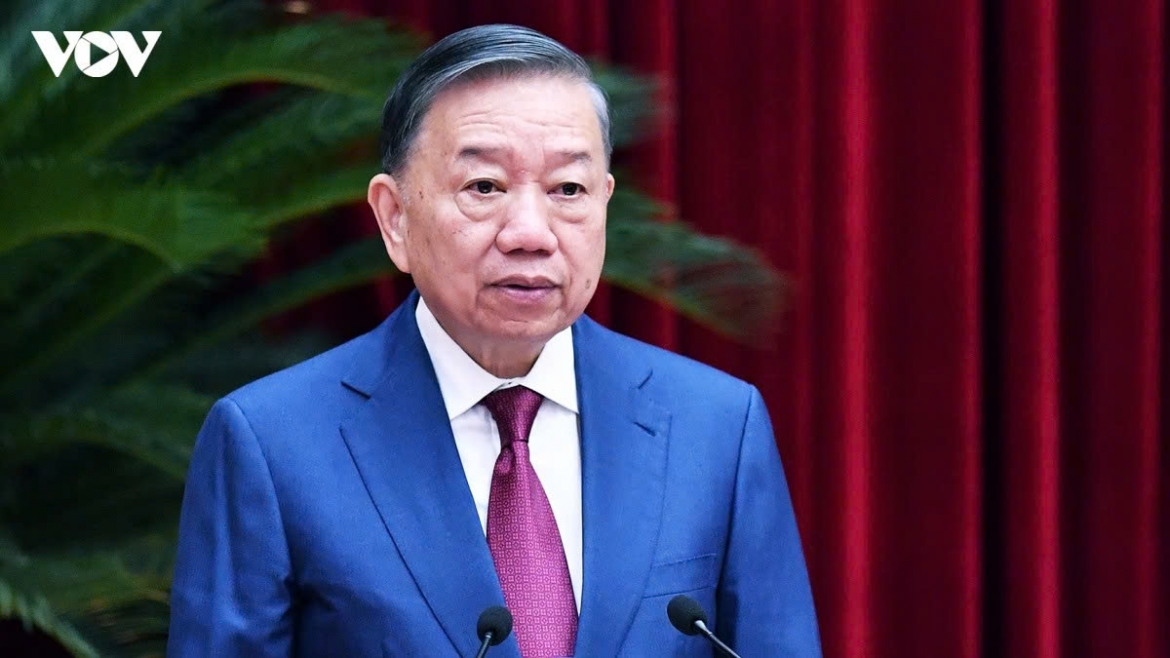
The third strategic shift outlined by General Secretary and State President To Lam is to transform Vietnam's development model, from one driven primarily by capital, labour and natural resources to one powered by productivity, knowledge, technology and human capital.
This transition reflects a broader recognition that sustaining high growth over the coming decades will depend less on expanding traditional production factors and more on improving innovation capacity and economic efficiency.
According to the top leader, the review of socio-economic performance in the first half of 2026 and the proposed new national development model should be viewed as complementary components of the same long-term strategy.
While the socio-economic development report identifies urgent short-term priorities, the development model seeks to answer a more fundamental question: how Vietnam will generate new sources of prosperity and competitiveness over the coming decades.
Rather than relying on rapid capital accumulation or inexpensive labour, the country's future growth strategy emphasises technological innovation, digital transformation, scientific research, productivity improvements and higher-quality human resources.
This direction is consistent with the goals established at the 14th National Party Congress, which identified science, technology, innovation and digital transformation as among the principal drivers of Vietnam's modernisation.
The Party General Secretary and State President stressed that future development scenarios should not remain broad policy aspirations. Instead, they should be translated into measurable objectives for each sector and locality, accompanied by clear implementation responsibilities and accountability mechanisms for government agencies and local leaders.
Closely linked to economic transformation is the proposal to build ‘a disciplined, safe, civilised, harmonious and developed society.’ In his process, the Party General Secretary and State President To Lam emphasised that people, not economic indicators, must be at the centre of national development.
Under this approach, culture serves as the foundation, the rule of law provides institutional support, and social discipline ensures effective governance. Legal institutions and ethical values are expected to complement one another rather than operate independently.
The ultimate measure of success, he noted, should be reflected not only in GDP growth but also in improvements in living standards, equal opportunities, public satisfaction and people's overall quality of life. This perspective signals an increasingly comprehensive understanding of development that integrates economic progress with social well-being and sustainable governance.
The fourth strategic shift focuses on strengthening Vietnam's ability to anticipate and withstand both traditional and emerging security challenges. Instead of responding to crises only after they occur, the Party leadership calls for a transition toward early warning, strategic forecasting and proactive prevention.
In his view, national resilience today extends well beyond conventional defence and security. It also encompasses the uninterrupted functioning of political institutions, economic systems, critical infrastructure, digital networks and essential public services.
As Vietnam becomes more deeply integrated into the global economy, new forms of risk, including cyberattacks, climate change, supply chain disruptions, financial volatility and pandemics, require a broader and more forward-looking approach to national security.
To this end, the Party Central Committee is expected to review the implementation of the Politburo’s Resolution 24 on climate change and environmental protection while considering updates to Vietnam's National Security Strategy. The top leader stressed that environmental protection, disaster resilience and sustainable resource management should no longer be viewed as separate policy areas but as integral components of national development and long-term security.
Party General Secretary and State President To Lam described the four strategic shifts as mutually reinforcing elements of a unified national development framework.
The first shift strengthens governance capacity and institutional effectiveness. The second unlocks development resources through better management of land, marine space and national assets. The third transforms those resources into productivity, innovation and higher living standards. The fourth safeguards these achievements by enhancing national resilience against future risks.
According to him, progress in one area depends on progress in all others. “If one link in the chain slows down, the entire development process will be affected,”he stressed.
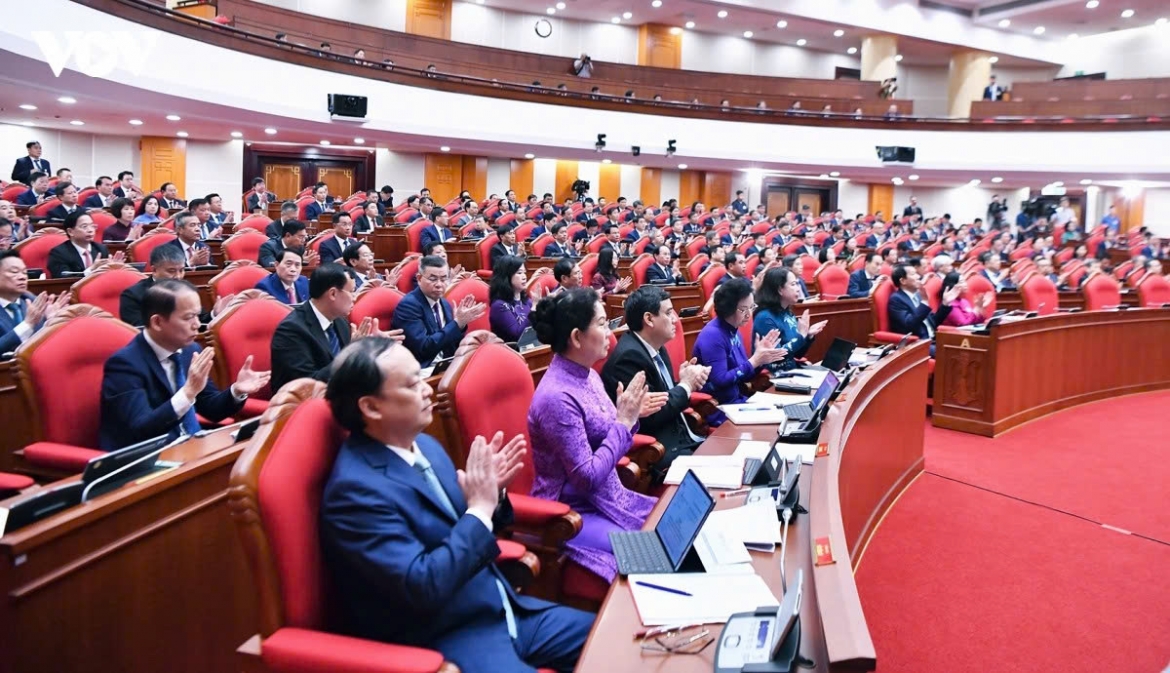
Concluding his opening address, Party General Secretary and State President To Lam urged members of the Party Central Committee to focus discussions on practical implementation rather than general policy statements.
He called for concise, solution-oriented contributions that clearly identify policy options, implementation mechanisms and expected outcomes, while placing national interests and the legitimate rights of the people above all else.
He also emphasised that every resolution and conclusion adopted at the conference must be translated immediately into concrete action plans, complete with specific objectives, responsibilities, implementation timelines, required resources and measurable results.
He stressed the need to overcome persistent weaknesses in policy execution, where sound policy decisions have often been followed by slow institutionalisation or inconsistent implementation.
The third plenum of the 14th Party Central Committee is scheduled to continue through July 24.
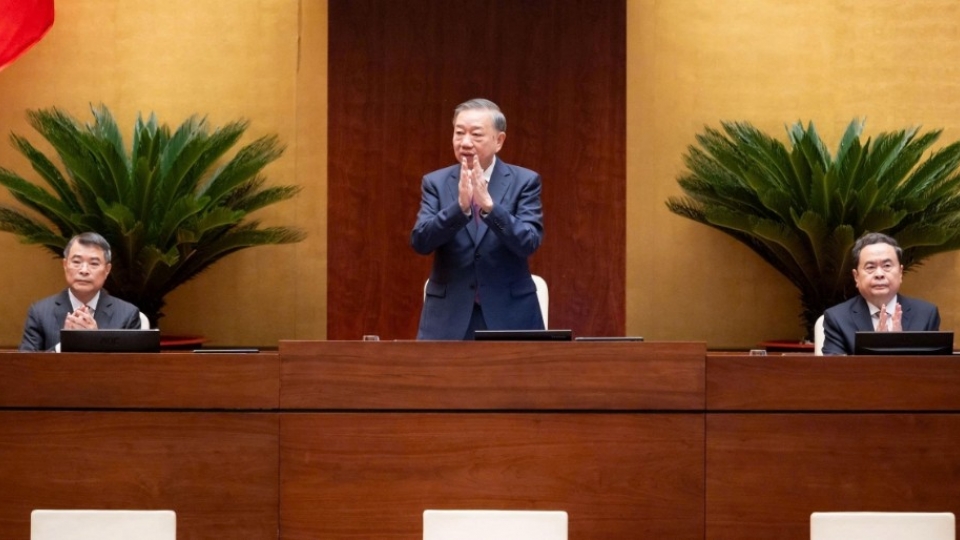
VOV.VN - Party General Secretary and State President To Lam chaired a national conference on July 1 to review one year of operations under the overall model of the political system and the three-tier government model.

VOV.VN - Vietnam is shifting its foreign direct investment (FDI) strategy from prioritising the volume of inflows to attracting projects that deliver advanced technology, innovation, modern governance and stronger spillover effects for the domestic economy, Deputy Prime Minister Pham Gia Tuc said on June 30.

VOV.VN - Vietnam's goal of achieving double-digit economic growth has sparked debate over its feasibility, but researchers maintain that decades of economic transformation, structural reforms and emerging growth drivers provide a strong scientific and practical basis for turning the ambition into reality.

VOV.VN - Eighteen months after its adoption, the Politburo’s Resolution 57 has moved beyond policy orientation to become a catalyst for institutional reform, digital transformation and innovation-led growth.




.JPG&w=640&q=100)





Bình luận
Bình luận của bạn sẽ được xét duyệt trước khi đăng