Vietnam pushes comprehensive Party-building reforms to modernise governance
VOV.VN - Vietnam is advancing a broad agenda of Party-building reforms aimed at modernising governance, improving policy implementation, strengthening accountability, and developing a high-quality cadre workforce to support the country’s next stage of development.
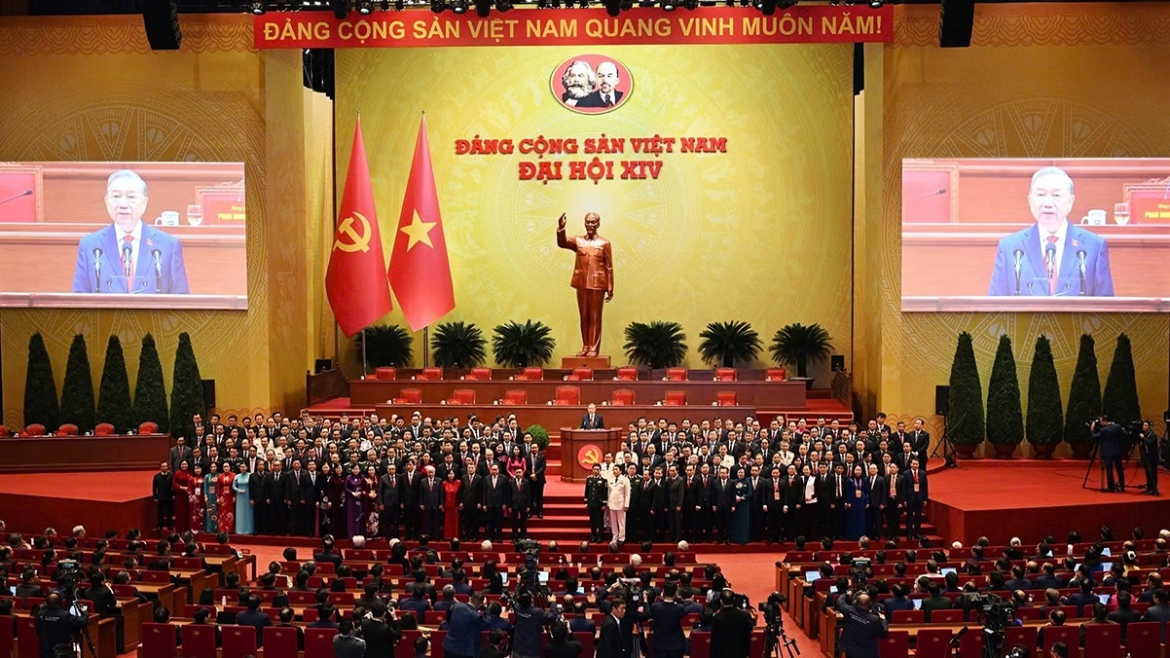
The newly-elected Party Central Committee makes debut at the 14th National Party Congress, held in Hanoi in January 2026
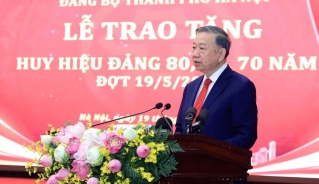
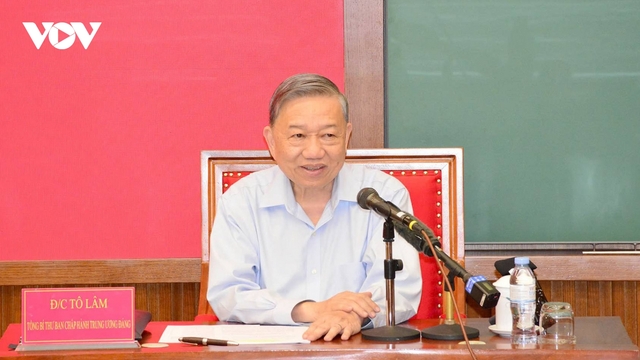
Recently, General Secretary and State President To Lam held a working session with the Party Central Committee’s Organisation Commission on organisational restructuring, personnel affairs, and Party-building work. The meeting underscored the need to modernise leadership methods, improve implementation capacity, and build a professional and capable cadre system aligned with the demands of rapid and sustainable development.
The orientations were later outlined in Notice No. 90-TB/VPTW by the Party Central Committee’s Office, which emphasises the necessity of enhancing the Party’s governing capacity through more effective institutions, modern management tools, and a stronger focus on measurable outcomes.
Modernising governance through institutional reform and digital transformation
A key priority is the shift from an administrative management approach toward a development-oriented governance model that places implementation effectiveness at the centre of policymaking and public administration.
The reforms call for stronger strategic forecasting capabilities, earlier identification of emerging challenges, and more proactive responses to complex issues. Authorities are also seeking to address inefficiencies caused by overlapping responsibilities, fragmented implementation, and formalistic approaches to public administration.
Efforts to streamline the organisational structure of the political system will continue, with greater emphasis on clearly defined functions, responsibilities, and accountability. The principle that each task should be assigned to a single lead agency is expected to reduce duplication while improving coordination and execution.
At the same time, Vietnam plans to expand decentralisation and delegation of authority, ensuring that responsibilities are matched with appropriate resources and decision-making powers at central, provincial, and local levels.
Digital transformation has also been identified as a central pillar of Party-building reforms. Plans include the development of integrated databases covering organisations, personnel, Party members, and staffing structures. Officials view these digital platforms as essential tools for improving management, oversight, evaluation, and evidence-based decision-making throughout the political system.
Strengthening cadre quality, grassroots organisations, and accountability
Personnel work remains a strategic breakthrough area, with performance-based evaluation identified as the cornerstone of future reforms.
The new approach emphasises the evaluation of officials based on concrete results, work performance, and public confidence rather than formal criteria alone. It aims to create a more dynamic personnel system in which promotion and retention are increasingly linked to demonstrated capability and effectiveness.
The reforms also stress the importance of replacing underperforming officials while encouraging innovation, initiative, and responsible decision-making. Greater attention will be given to identifying and developing young leaders, women, technical experts, and personnel working in emerging sectors.
At the grassroots level, efforts will continue to strengthen Party organisations and improve the quality of Party membership. Recruitment and development initiatives are expected to expand in areas where Party representation is limited, including the private sector, new industries, and remote communities.
The Notice further highlights the importance of strengthening power control mechanisms and intensifying efforts to prevent corruption and misconduct through earlier intervention, stronger oversight, and stricter accountability measures.
In parallel, Vietnam plans to modernise cadre training programmes by focusing on strategic thinking, governance skills, leadership capacity, and the ability to address increasingly complex policy challenges.
The overarching goal is to build a modern political and governance system that relies more heavily on data, evaluates performance through measurable outcomes, and delivers better services for citizens and businesses. The reforms are expected to support Vietnam’s long-term development ambitions, and to improve the effectiveness and responsiveness of public institutions.
VOV.VN - Party General Secretary and State President To Lam stated that the strength of the Communist Party of Vietnam does not come solely from its policies or organisational structure, but fundamentally from the morality, integrity, and exemplary conduct of each Party member.
VOV.VN - After a year of implementing the new organisational model of Vietnam’s political system and the two-tier local government structure, General Secretary and State President To Lam has called for a shift in focus from organisational restructuring to improving operational quality, governance capacity, and public service efficiency.
VOV.VN - Vietnam will carry out a nationwide assessment of the effectiveness of its two-tier local government model after one year of implementation, as the country continues pushing forward administrative reform and state apparatus restructuring.
VOV.VN - Prime Minister Le Minh Hung has requested sweeping institutional reform as a key driver for Vietnam’s next phase of economic growth, stressing that the legal system must become a strategic breakthrough rather than a bottleneck for development.
VOV.VN - Following the election of key state leadership positions for the 2026–2031 term by the National Assembly, including the election of Party General Secretary To Lam as State President, voters across Vietnam have expressed strong consensus and confidence in the country’s leadership consolidation.








.JPG&w=640&q=100)





Bình luận
Bình luận của bạn sẽ được xét duyệt trước khi đăng