
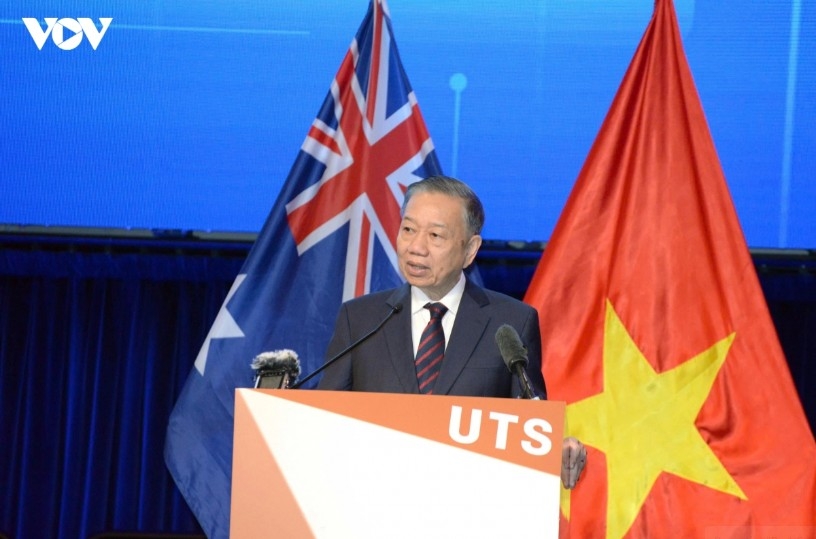

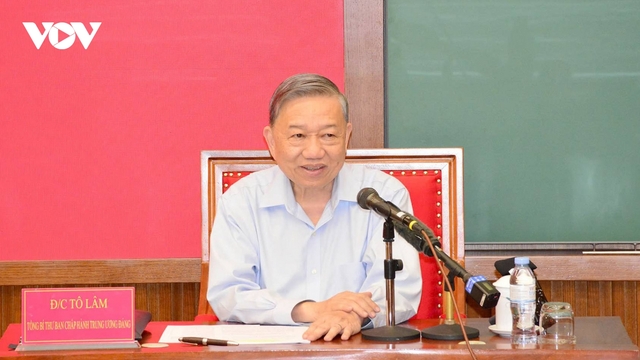
VOV.VN - Party General Secretary and President To Lam has suggested Vietnam and Australia build and implement a long-term strategy connecting science, technology, and innovation (STI), treating it as a new pillar of their Comprehensive Strategic Partnership.
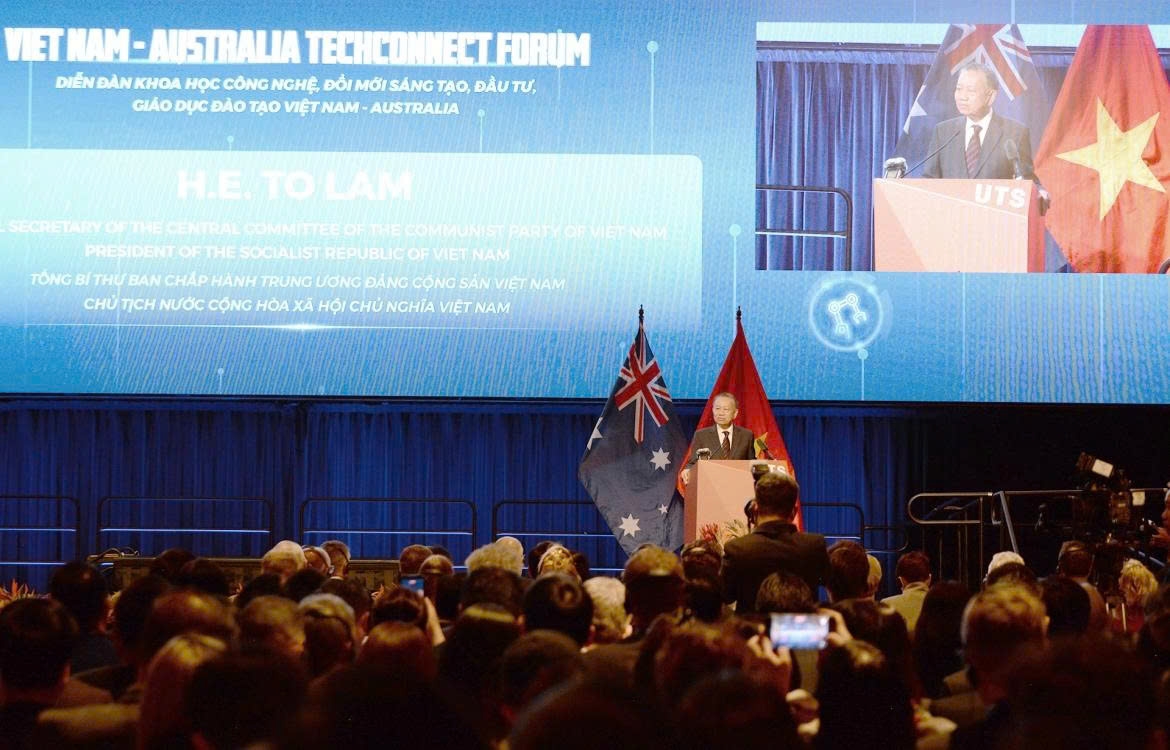
The proposal was made during the at the Vietnam- Australia Techconnet Forum on science, technology, innovation, investment, education, training, and human resource development, held at the University of Technology Sydney (UTS) on the morning of August 10 (local time) within the framework of his state visit to Australia.
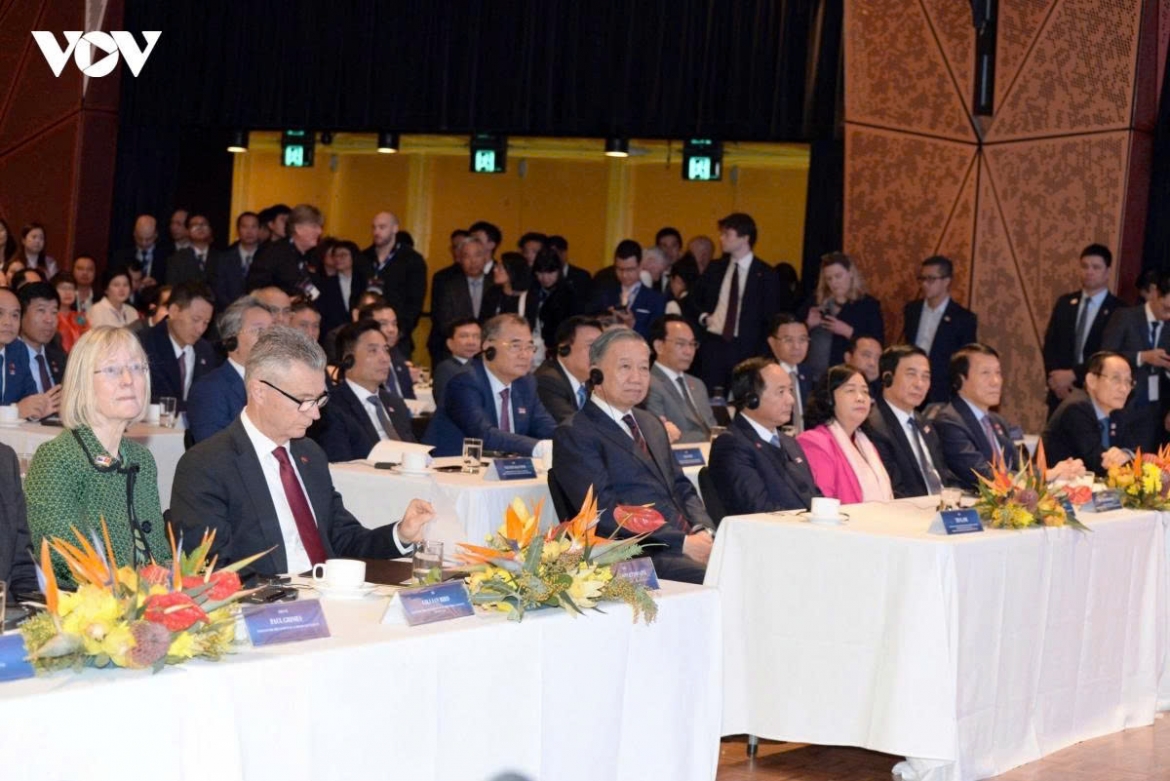
The forum, co-organized by Vietnam's Ministry of Foreign Affairs, Ministry of Science and Technology, and Ministry of Education and Training in collaboration with UTS, brought together Australian Assistant Minister for Foreign Affairs, Trade, and Immigration Matt Thistlethwaite, senior Vietnamese and Australian officials, and over 500 representatives from science, business, academia, research institutes, and policy makers from both countries.
In his keynote speech, Vietnamese Minister of Science and Technology Vu Hai Quan proposed that both sides focus resources on fields with existing strengths and strategic technologies such as artificial intelligence (AI), semiconductors, cybersecurity, quantum technology, biotechnology, clean energy, and especially marine technology. Crucially, each research effort must establish a seamless collaborative chain from market requirements and testing through to commercialization. He suggested further developing the Strategic Technology Center into a shared platform, while connecting venture capital funds and technology investment sources so that outstanding inventions can move directly from laboratories to the market.
He emphasized promoting digital economy cooperation and digital transformation linked with driving commercialization and market connectivity for businesses. Both sides should select specific sectors and enterprises to implement digital transformation and AI application projects, particularly for small and medium-sized enterprises (SMEs). Each project would both solve practical business challenges and provide data evidence for governments to formulate better policies.
Highlighting the advantageous foundation in education and people-to-people connections, Minister Vu Hai Quan noted that Australia possesses strong universities and research organizations, while Vietnam has a young engineering workforce, fast-growing tech enterprises, and a large Vietnamese intellectual community in Australia. The two sides can develop joint research groups, shared laboratories, and programs enabling scientists to work directly with businesses.
Addressing the forum, Australian Assistant Minister Matt Thistlethwaite emphasized that advances in science and technology sit at the heart of all human progress, economic growth, and improvements in quality of life. For Vietnam, science and technology will boost continuous economic development, with innovation placed at the center of national growth plans.
Highly appreciating Resolution No. 57 of the Politburo on breakthroughs in national science, technology, innovation, and digital transformation, he noted that scientific and technological progress helps propel nations forward over upcoming obstacles.
Within the framework of the bilateral Comprehensive Strategic Partnership and Australia’s Southeast Asia Economic Strategy to 2040, both countries are seeking more ways to cooperate and invest further in science, research, and innovation, prioritizing bilateral initiatives that boost economic outcomes, social inclusion, and sustainable environmental development.
In his address, the top leader emphasized that the forum is a deeply meaningful initiative as the Comprehensive Strategic Partnership between Vietnam and Australia develops fruitfully, substantively, and effectively, especially in areas that will dictate each nation's competitiveness and prosperity in the coming decades.
The Vietnamese leader stated that for Vietnam, developing science, technology, innovation, and high-quality human resources is no longer merely an option, but an imperative requirement to realize the aspiration of becoming a developed, high-income country by 2045. The Party and State of Vietnam have established a new development model in which knowledge, science, technology, innovation, digital transformation, and international integration are identified as the primary drivers of economic growth.
Major decisions recently adopted by the Central Committee of the Communist Party of Vietnam reaffirm the determination to innovate development thinking, refine institutions, and build an independent, self-reliant economy closely linked with deep international integration. This includes strongly leveraging the private economic sector and effectively attracting international resources, particularly high-quality capital, advanced technology, modern management expertise, and high-quality human resources.
Vietnam is shifting strongly from attracting investment to co-development, from technology reception to co-creation, and from participating in value chains to gradually holding higher value-added positions in global value chains. Australia is a key partner with strong capabilities that Vietnam particularly values and wishes to accompany during its development process, as both countries share natural strategic advantages and complementary factors.
General Secretary and President To Lam expressed his desire to share a vision for a stronger, deeper, and strategically elevated New Partnership between Vietnam and Australia in science, technology, innovation, and human resource development.
The two countries need to transition from cooperation to co-creation, from technology transfer to joint research and development, and from connections between individual organizations to linking the two innovation ecosystems. This aims to build a regional-level innovation ecosystem where businesses, universities, research institutes, and investment funds connect, create, and develop together.
He asked both nations to formulate and implement a long-term strategy connecting science, technology, and innovation, viewing it as a new pillar of the Vietnam-Australia Comprehensive Strategic Partnership.
The two countries should expand joint research programs, strengthen links among research centers, universities, businesses, and innovation investment funds, and form joint research networks in priority areas including AI, semiconductors, digital technology, biotechnology, quantum technology, clean energy, strategic minerals, and the maritime economy.
Vietnam and Australia need to promote two-way high-tech investment, establish joint research and development (R&D) centers, shared laboratories, business incubators, and commercializable innovation projects. Both sides should foster financial support mechanisms for joint research and risk-sharing, aiming toward co-development and co-investment.
Vietnam encourages high-quality investment from Australia into the Vietnamese market, the development of green financial products, digital infrastructure, data centers, and innovation centers, while boosting technical support and experience sharing in developing an International Financial Center in Vietnam.
"The two countries should expand cooperation in training high-quality human resources, particularly engineers, scientists, technology experts, and innovation managers; strongly encourage exchanges of students, postgraduates, and experts; closely link training and research with business needs; and promote bilateral mechanisms and annual policy dialogue forums to share experience, build partnerships, and connect the three key players: the state, academia, and business," To Lam stressed.
The top leader expressed confidence that with the determination of both governments and the partnership of businesses, universities, research institutes, and scientists, both sides will achieve new breakthroughs, helping turn Vietnam-Australia relations into a model for regional and global cooperation in science, technology, innovation, and human resource development.
At the forum, enterprises from both countries exchanged cooperation documents and announced new initiatives. On this occasion, Vietjet Aviation Joint Stock Company officially signed a cooperation agreement with Western Sydney International Airport, announcing the opening of a direct air route connecting Ho Chi Minh City to Western Sydney starting January 2027, contributing to economic, investment, trade, tourism, and people-to-people ties, and concrete-izing the Vietnam-Australia Comprehensive Strategic Partnership.
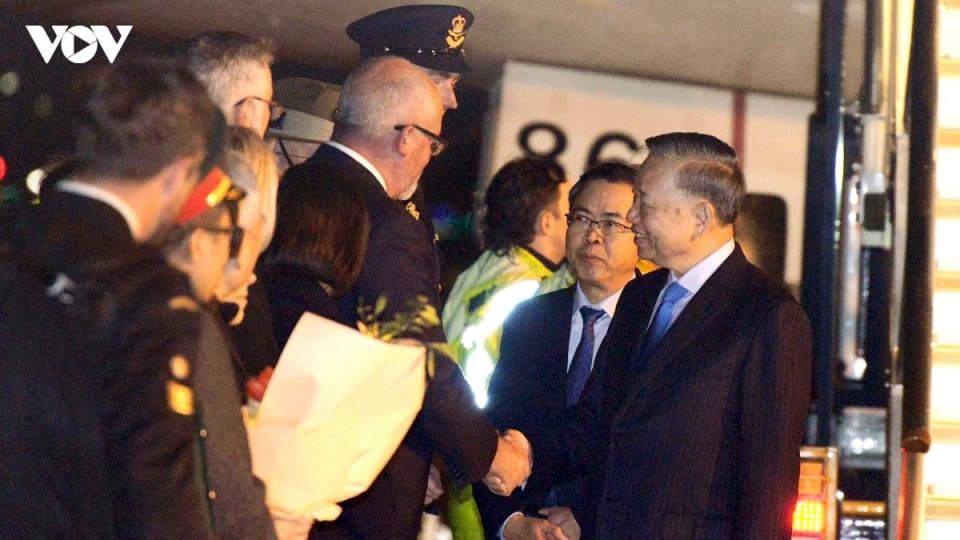
VOV.VN - A high-ranking Vietnamese delegation led by Party General Secretary and State President To Lam arrived in Sydney on August 9, beginning a State visit to Australia at the invitation of Governor-General Sam Mostyn.
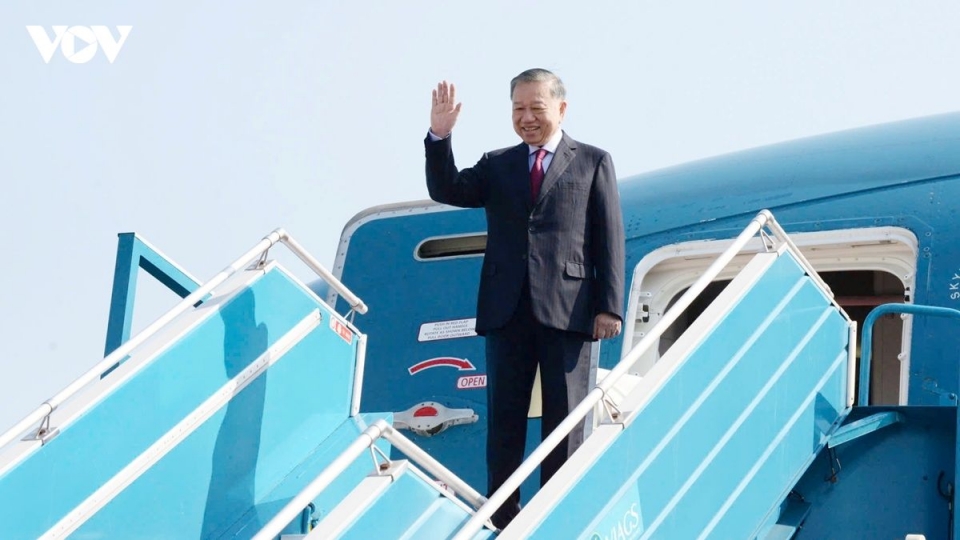
VOV.VN - General Secretary of the Communist Party of Vietnam and State President To Lam left Hanoi on August 9, beginning his state visit to Australia at the invitation of Australian Governor-General Sam Mostyn.
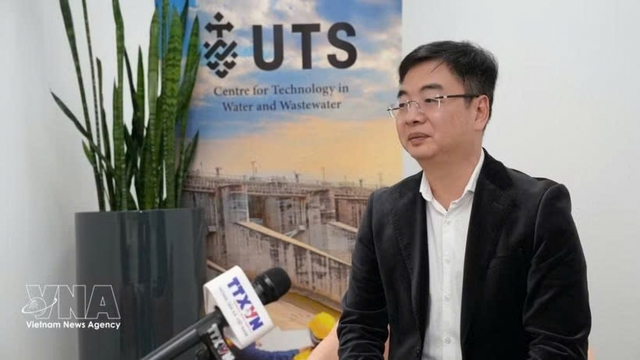
The visit to Australia by Party General Secretary and State President To Lam is not only of special significance to the Vietnam-Australia Comprehensive Strategic Partnership, but is also expected to provide fresh impetus to bilateral cooperation in science, technology and innovation.

VOV.VN - A high-ranking Vietnamese delegation led by Party General Secretary and State President To Lam arrived in Sydney on August 9, beginning a State visit to Australia at the invitation of Governor-General Sam Mostyn.




.JPG&w=640&q=100)





Bình luận
Bình luận của bạn sẽ được xét duyệt trước khi đăng