Economic diplomacy shifts from promotion to accompanying businesses
VOV.VN - Economic diplomacy needs to strongly shift from a promotion and connection role to actively accompanying businesses in resolving difficulties, expanding markets, attracting resources, and creating new growth engines.
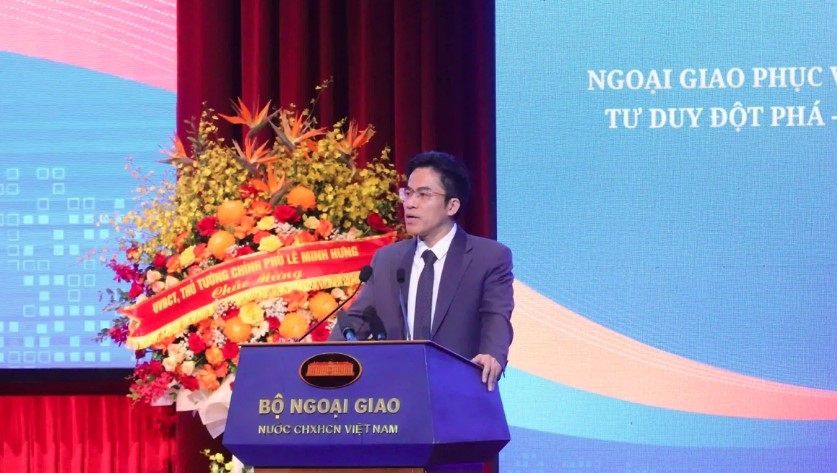
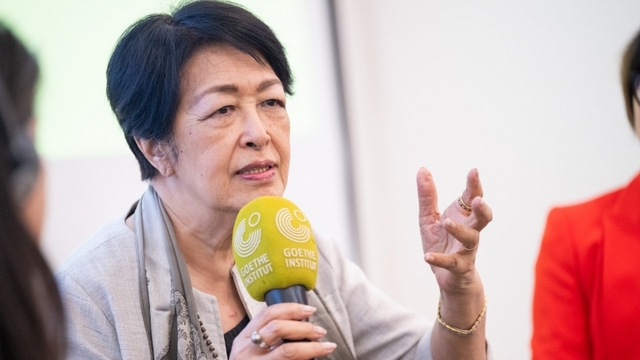
Vietnamese Ambassador to the United Arab Emirates (UAE) Nguyen Thanh Diep speaks at the Conference.
This core takeaway was emphasized by Heads of Vietnamese Diplomatic Missions abroad during the Plenary Session on "Diplomacy serving national development in the new era - Breakthrough mindset, decisive action, substantive results," organized by the Ministry of Foreign Affairs during the ongoing 33rd Diplomatic Conference on August 8 in Hanoi.
Removing bottlenecks to tap into new markets
A recurring theme throughout the presentations was the imperative to resolve bottlenecks hindering international economic cooperation. According to the Ambassadors, although new markets such as Latin America, Africa, and the Middle East hold huge potential for cooperation, Vietnamese enterprises still face numerous barriers regarding institutions, logistics, technical standards, and transport costs, as well as a lack of information and distribution networks on the ground.
Reflecting on practical experience in Brazil, Vietnamese Ambassador to Brazil Bui Van Nghi laid stress on the need to change the approach toward Latin America, viewing it not merely as an export market but as a strategic partner in economic, scientific-technological, and sustainable growth.
He emphasized, "It is necessary to define Brazil not only as an export market, but also as a strategic partner in economics, science and technology, and sustainable development, as well as a central hub for Vietnam to access MERCOSUR (Southern Common Market) and the broader Latin American market."
According to Ambassador Bui Van Nghi, to effectively utilize cooperation potential, both sides should accelerate negotiations for a Vietnam - MERCOSUR Preferential Trade Agreement while building focused cooperation programs that yield concrete results such as projects, contracts, and specific markets, rather than stopping at promotional activities.
Vietnamese Ambassador to the UAE Nguyen Thanh Diep pointed out that differences in institutions, Halal standards, and business practices, combined with high logistics costs and the lack of direct transport routes, are undermining the competitiveness of Vietnamese goods. Therefore, along with refining the legal framework and promoting trade agreements, stronger investments must be made in logistics infrastructure, distribution centers, and supporting businesses to establish a direct presence on the ground.
"To create substantive breakthroughs, synchronized implementation is required under the motto: taking institutions as the foundation; taking investment, trade, and logistics as the driver; and taking innovation and new fields of cooperation as the growth engine," Diep shared.
From local practical realities, the Ambassadors agreed that amid increasingly fierce competition, economic diplomacy must not only expand markets but also proactively resolve institutional, logistical, and business connectivity barriers, creating conditions to translate diplomatic relations into cooperation opportunities and resources for national development.
Creating growth engines through technological cooperation and innovation
Going beyond resolving traditional barriers, the Ambassadors also advocated that diplomacy for development must focus more heavily on creating new growth engines. Accordingly, instead of merely promoting trade, diplomatic missions should serve as bridges connecting high-value-added sectors such as science and technology, innovation, digital transformation, green energy, and artificial intelligence, thereby deepening bilateral relations and directly serving national development targets.
Vietnamese Ambassador to South Africa Hoang Sy Cuong observed that the region is undergoing a powerful transformation, serving both as a growing consumer market and also as a territory with immense potential in natural resources, digital transformation, and innovation. According to the Ambassador, this is the opportune time for Vietnam to expand its presence and build long-term cooperation chains rather than focusing solely on commodity import and export.
"Africa needs to be viewed not merely as a potential market, but as a new development space that contributes to diversifying Vietnam's markets, supply chains, and growth drivers; we must take a long-term view," Cuong stressed.
Ambassador Hoang Sy Cuong suggested expanding cooperation into areas such as telecommunications, digital infrastructure, artificial intelligence, cybersecurity, e-government, smart agriculture, and energy.
At the same time, gateway nations should be selected to establish logistics networks and distribution centers for Vietnamese goods, thereby improving the connectivity between Vietnamese enterprises and the African market.
Sharing this perspective, Vietnamese Ambassador to the UAE Nguyen Thanh Diep noted that in addition to being a potential export market, the Middle East is a vital source of capital, technology, and partnerships in emerging sectors such as renewable energy, green hydrogen, green finance, Islamic finance, the circular economy, and data centers.
The implementation of a large-scale data center project in Ho Chi Minh City by the UAE's G42 Group alongside Vietnamese partners serves as evidence of a cooperation trend shifting from trade to high-tech and innovation fields.
Vietnamese Ambassador to Brazil Bui Van Nghi also proposed focusing on sectors with breakthrough potential, including high-tech agriculture, biotechnology, semiconductors, artificial intelligence, renewable energy, and innovation. According to him, the effectiveness of economic diplomacy should be measured by investment projects, technology transfer contracts, or new markets opened for Vietnamese enterprises.
Through proposals grounded in the realities of Brazil, South Africa, and the UAE, economic diplomacy is clearly required to shift strongly from promotion and connection to accompanying businesses.
Apart from expanding diplomatic ties, diplomatic missions must assist enterprises in accessing markets, connecting resources, removing barriers, and boosting new fields of cooperation. Consequently, the effectiveness of economic diplomacy is measured not merely by the number of promotional activities or signed documents, but by concrete projects, markets, capital sources, and technologies materialized from foreign relations to directly serve national development goals.
VOV.VN - Economic diplomacy is poised to become a driving force for Vietnamese enterprises amid a rapidly fluctuating global economy. Turning opportunities into growth requires an ecosystem with tight coordination among the State, overseas diplomatic missions, and the business community.
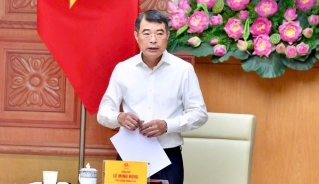
VOV.VN - Prime Minister Le Minh Hung on May 11 called on the Ministry of Foreign Affairs to proactively develop a unified mechanism for managing external relations activities, particularly in economic diplomacy, investment attraction and technology diplomacy.
VOV.VN - Economic diplomacy is poised to become a driving force for Vietnamese enterprises amid a rapidly fluctuating global economy. Turning opportunities into growth requires an ecosystem with tight coordination among the State, overseas diplomatic missions, and the business community.
VOV.VN - Prime Minister Le Minh Hung on May 11 called on the Ministry of Foreign Affairs to proactively develop a unified mechanism for managing external relations activities, particularly in economic diplomacy, investment attraction and technology diplomacy.






.JPG&w=640&q=100)




Bình luận
Bình luận của bạn sẽ được xét duyệt trước khi đăng