
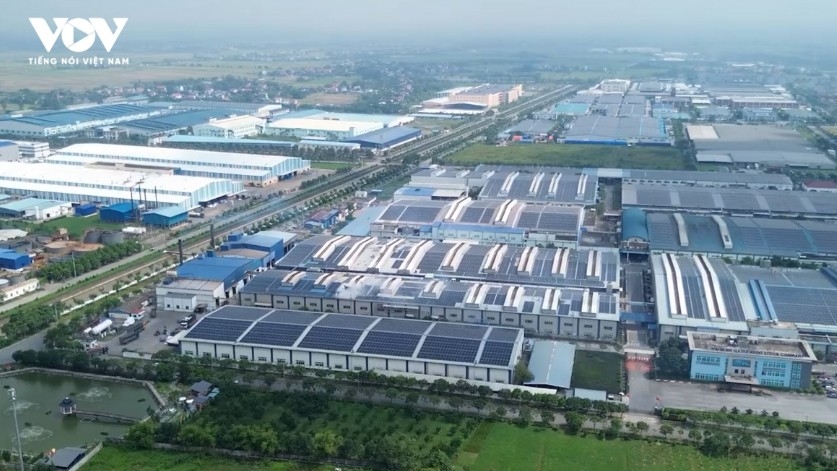

VOV.VN - Foreign direct investment (FDI) remains an important economic component. However, Vietnam does not pursue FDI at all costs; instead, it aims to turn this resource into the economy's internal capacity, thereby laying the foundation for national investment.
Upgrading enterprise capacity
According to the General Statistics Office (Ministry of Finance), the contribution of the FDI sector to Vietnam's economy has risen steadily, accounting for 6% during 1988-1996, 13.5% during 1997-2005, 18.6% during 2006-2015, and 21.3% during 2016-2020.
In recent years, the country’s total export turnover has consistently reached high levels. For instance, in 2025, total export turnover surpassed US$475 billion, with the FDI sector contributing approximately US$367.09 billion, equivalent to 77.3%, while the domestic economic sector accounted for just US$107.95 billion, or 22.7%.
Nguyen Duc Hien, Deputy Head of the Party Central Committee’s’ Policy and Strategy Commission, notes that Vietnam’s economy relies heavily on the foreign-invested sector.
"The proportion of Vietnamese enterprises participating in global value chains is very low, at only 18%, primarily concentrated among large enterprises, while the quality of domestic suppliers is assessed as low," Hien says.
Vietnam ranks 105th out of 137 countries in the quantity of domestic suppliers and 116th out of 137 in supplier quality. This indicates that the supporting industry remains weak, meeting only 10% to 15% of domestic demand. Localization rates across sectors remain low, with domestic enterprises largely confined to intermediate stages, trailing behind countries such as Indonesia, Thailand, and India.
The internal capacity of the economy has not improved commensurately. More than one million domestic enterprises, predominantly small and medium-sized enterprises, face limitations in scale, capacity, management expertise, and workforce quality, making it difficult for them to participate in high-value-added supply chain segments.
Meanwhile, multinational corporations typically possess pre-existing supplier ecosystems to optimize costs and mitigate risks. Pham Xuan Hoe, former Deputy Director of the Banking Strategy Institute, says that domestic enterprises must become partners of FDI corporations and enterprises, representing the most effective translation of foreign resources into internal strength.
"It is essential to upgrade production and technological capacities for domestic enterprises, which requires strong support from the Government and funds dedicated to investment, science, technology, innovation, and R&D," Hoe analyzes. "If Vietnamese enterprises fail to upgrade their capabilities, supporting industries will struggle to develop and integrate deeply into global value chains in high-value-added segments."
Despite low localization rates, limited linkages between the FDI sector and domestic enterprises, and underperforming technology transfer, research, and high-skilled training, with many foreign projects still focused on assembly, labor-intensive or land-intensive operations, low environmental standards, or reliance on incentives without generating new economic capacity, foreign direct investment constitutes a vital economic component.
This dynamic poses a critical challenge for Vietnam: selecting foreign capital inflows selectively and utilizing these resources effectively to bolster internal strength, enhance self-reliance, technological capability, and competitiveness.
Building a foreign investment ecosystem
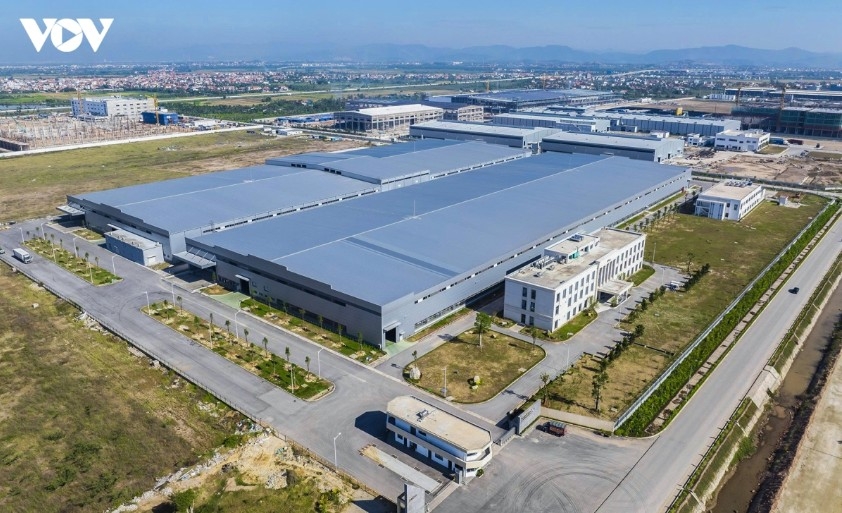
Resolution 10 on the development of the foreign-invested economy stipulates that the foreign-invested economic sector is an inseparable component of the economy and an important driver of economic development and international integration, requiring the synchronized and unified development of a foreign investment ecosystem aligned with domestic enterprise development strategies.
According to Nguyen Van Toan, Vice Chairman of the Vietnam Association of Foreign Invested Enterprises (VAFIE), foreign investment is currently seen as a tool to stimulate internal strength.
"To translate foreign capital into endogenous capacity, it is necessary to build a robust foreign investment ecosystem based on core pillars: transparent, stable, predictable, and enforceable policies and institutions that build investors' long-term confidence," Toan says.
"Alongside developing transport and logistics infrastructure, Vietnam must synchronously invest in digital and social infrastructure such as living environments, education, healthcare, and housing to meet the requirements of international experts. Specific criteria must be established to define high technology, strategic investors, and high-quality projects. Furthermore, Vietnam must rethink its approach to technology; rather than relying solely on transfers, since technology will not transfer itself, the country must proactively acquire technology, cooperate on technology development, and boldly implement controlled sandbox mechanisms."
The journey ahead presents a monumental challenge: transforming four decades of foreign capital into resources that, combined with internal strengths, propel the economy toward high-income status.
Vietnam does not compete by lowering standards or trading away the environment, resources, welfare, and economic security for short-term growth. Instead, it competes through institutional quality, modern infrastructure, high-quality human resources, low compliance costs, professional public services, and a stable, predictable business environment.
VOV.VN - Vietnam is shifting its foreign direct investment (FDI) strategy from attracting more foreign capital to maximising its impact on technology, production capacity, value added and linkages with domestic businesses.
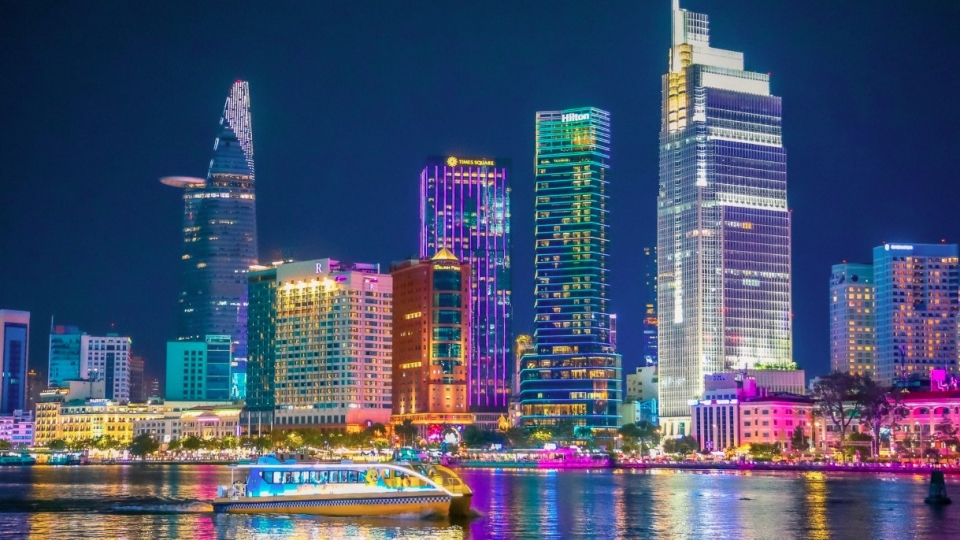
VOV.VN - Ho Chi Minh City emerged as Vietnam’s top destination for foreign direct investment in the first seven months of 2026, as foreign investors continued to funnel capital into major economic and industrial hubs.
VOV.VN - Vietnam is shifting its foreign direct investment (FDI) strategy from attracting more foreign capital to maximising its impact on technology, production capacity, value added and linkages with domestic businesses.
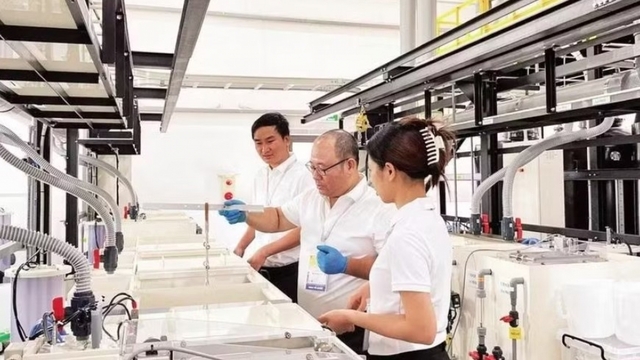
Hanoi is seeking to sustain its appeal to foreign investors while shifting FDI towards higher-quality projects, mainly into technology, information and communications, services, and innovation.



.JPG&w=640&q=100)






Bình luận
Bình luận của bạn sẽ được xét duyệt trước khi đăng