How can Vietnam turn surging FDI into broader economic spillovers?
VOV.VN - Vietnam is shifting its foreign direct investment (FDI) strategy from attracting more foreign capital to maximising its impact on technology, production capacity, value added and linkages with domestic businesses.
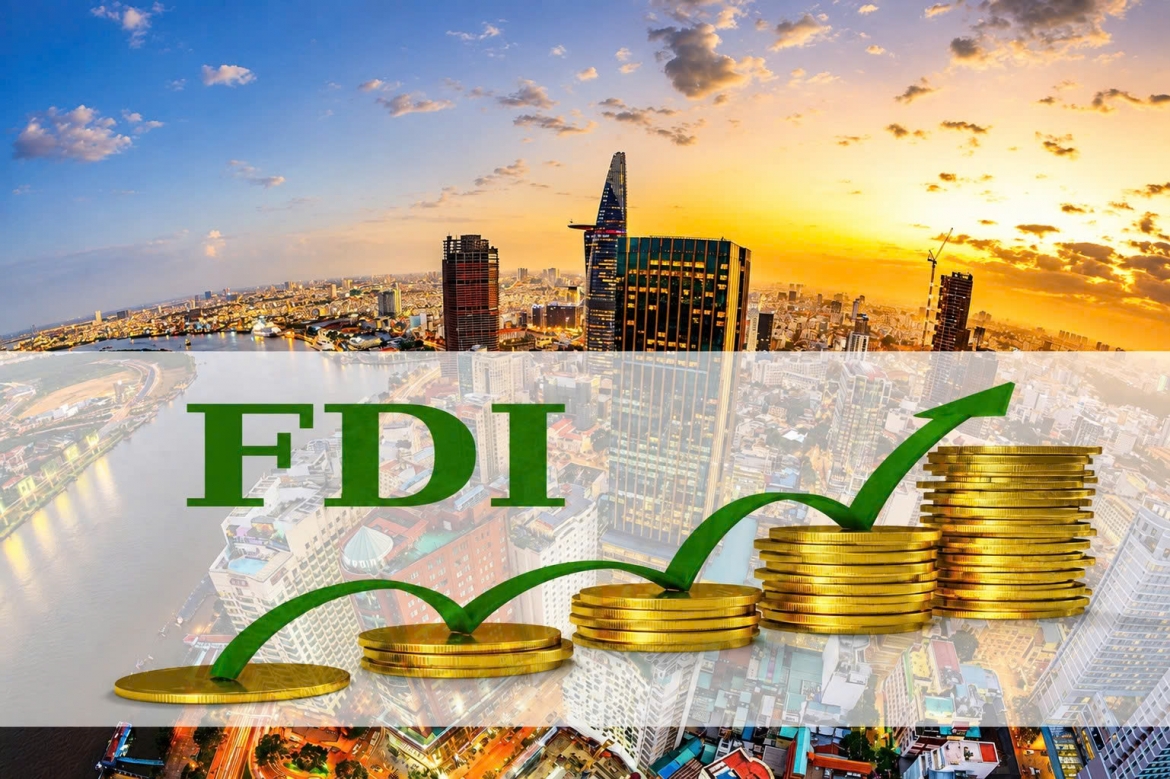
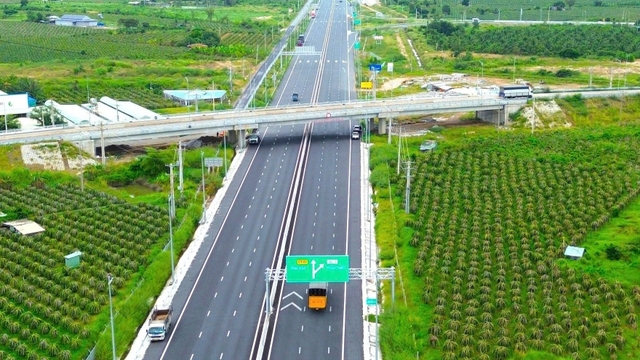
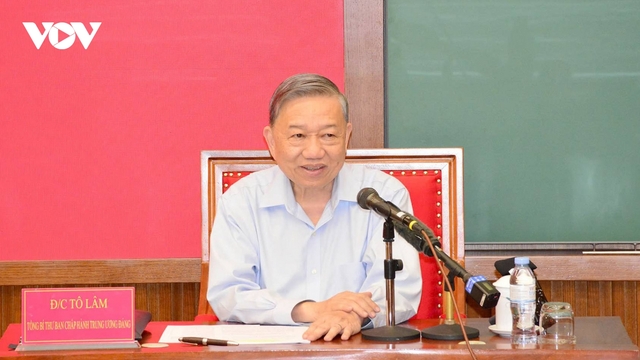
Vietnam attracted US$38 billion in registered FDI in the first seven months of 2026, up 58%, raising the question of how foreign capital can generate technology, value added and stronger domestic businesses. (Illustrative image)
In the first seven months, Vietnam attracted US$38 billion in registered FDI, up 58% from the same period in 2025. The figure included 2,429 newly registered projects with total capital of US$21 billion, up 7.8% in project numbers and more than double in registered capital.
Notably, the increase was not limited to investment commitments on paper, as realised FDI also hit its highest level for the same period in five years. Disbursed FDI was estimated at US$15.2 billion in seven months, up 11.8%, with manufacturing and processing accounting for more than 82.6%, or US$12.55 billion.
The figures show that Vietnam is attractive to international investors, particularly as multinational corporations continue to restructure global supply chains.
However, a large inflow of capital does not necessarily translate into a large impact on the economy.
From attracting capital to attracting value
Manufacturing and processing remained the largest recipient of newly registered FDI, attracting US$11.58 billion, or 55% of the total. Singapore led in newly registered investment with US$7.5 billion, followed by the Republic of Korea, Hong Kong (China), China, Japan and the Netherlands.
According to Dr. Nguyen Quoc Viet, head of the Macroeconomic Research Group at the University of Economics under Vietnam National University, Hanoi, the increase in FDI reflects continued investor confidence in Vietnam’s growth prospects and business environment.
But Viet said attracting capital is only the starting point. The gap between registered and realised FDI highlights the more important task of turning investment commitments into factories, production lines, jobs and actual value added.
“Investor confidence has been established. The next challenge is to turn that confidence into factories, production lines, jobs and value added for the economy,” Viet said.
This also shows that competition for FDI is changing. Vietnam is no longer competing simply on how much capital it can attract, but increasingly on how much value it can create from that capital.
According to Bruno Jaspaert, chairman of the European Chamber of Commerce in Vietnam (EuroCham) and CEO of DEEP C Industrial Zones, European investors typically make investment decisions with a time horizon of decades. Policy stability, transparency and the government’s ability to support investors throughout a project’s lifecycle are therefore becoming increasingly important.
EuroCham’s Business Confidence Index (BCI) reached 79.7 points in the second quarter of 2026, close to its seven-year high. More than half of EuroCham member companies regard Vietnam as a strategic market, while 69% expect the business environment to continue improving.
Against this backdrop, the Politburo’s Resolution 10 on the development of the foreign-invested economy reflects a shift in Vietnam’s approach to FDI, from prioritising investment volume toward giving greater weight to quality and the sector’s contribution to the economy. The resolution explicitly calls for a shift from primarily attracting capital to building a strategic national investment foundation, with quality, efficiency, technology transfer, supply-chain participation and value added serving as key criteria.
The global minimum tax further reinforces this trend. As tax incentives become less decisive as a competitive advantage, institutional quality, infrastructure, human resources, implementation capacity and the ability to connect with domestic production ecosystems will become more important.
How can FDI generate broader economic spillovers?
This is the bigger challenge once investment has been attracted. According to Nguyen Van Toan, deputy chairman of the Vietnam Association of Foreign Invested Enterprises (VAFIE), Vietnam needs to better prepare its digital, energy and social infrastructure to accommodate a new generation of foreign investment.
For sectors such as semiconductors, artificial intelligence and data centres, reliable power, clean energy and high-quality human resources are no longer additional advantages but essential conditions for investors when choosing a location.
However, even with strong infrastructure and high-tech projects, the ultimate impact will depend on how closely foreign-invested companies are connected with the domestic economy.
If an FDI project operates as a closed ecosystem, with technology, raw materials, components and markets all remaining within the parent group’s network, the value retained in Vietnam will be limited.
By contrast, when Vietnamese companies can become suppliers of components, services, logistics and technology, or participate in higher-value stages of production, each FDI project can generate an impact far greater than the initial investment itself.
FDI performance should therefore be assessed through more concrete indicators: how many Vietnamese companies join supply chains, how much technology is transferred, how much labor productivity improves, how many high-quality jobs are created and how much domestic production capacity is strengthened.
Vietnamese businesses need to become part of the value chain
Under this approach, the goal of FDI policy is not to replace domestic businesses, but to enable foreign-invested companies and Vietnamese firms to upgrade together.
Foreign investors bring capital, technology, markets and management expertise, while Vietnamese businesses need the capacity to become partners and suppliers and gradually move deeper into global value chains.
This requires FDI policy to go hand in hand with policies supporting domestic businesses. If Vietnamese companies are constrained by limited access to capital, technology, talent and modern management standards, opportunities to connect with multinational corporations will be difficult to turn into real capabilities.
The FDI challenge in the new phase is therefore no longer simply how much investment Vietnam can attract, but how much value can be retained and how much new capacity can be created for the economy.
When FDI projects develop substantive links with Vietnamese businesses, promote technology transfer, train human resources and raise productivity, foreign capital can become more than an additional source of growth. It can serve as a lever for strengthening domestic capabilities, improving competitiveness and laying the foundation for long-term growth.
VOV.VN - Ho Chi Minh City emerged as Vietnam’s top destination for foreign direct investment in the first seven months of 2026, as foreign investors continued to funnel capital into major economic and industrial hubs.
VOV.VN - Moving beyond mere GDP growth, global capital now demands Environmental, Social, and Governance (ESG) standards for high-quality FDI in Vietnam. Yet, a clear gap persists between the country's ESG commitments and its actual implementation.
VOV.VN - Vietnam is shifting its foreign direct investment strategy from quantitative metrics to high-value growth under Resolution No. 10, issued by the Politburo on June 8, 2026.
VOV.VN - Digital technology is fast emerging as a magnet for high-quality foreign direct investment (FDI) into Vietnam, prompting fresh structural demands as the economy pivots from low-cost advantages toward innovation-led growth.








.JPG&w=640&q=100)







Bình luận
Bình luận của bạn sẽ được xét duyệt trước khi đăng