Vietnam promotes overseas workers as ambassadors of skills and national image
VOV.VN - Vietnam’s overseas employment programmes are increasingly being viewed not only as a solution for job creation and income generation, but also as a strategic channel for developing high-quality human resources and promoting the image of Vietnamese workers worldwide.
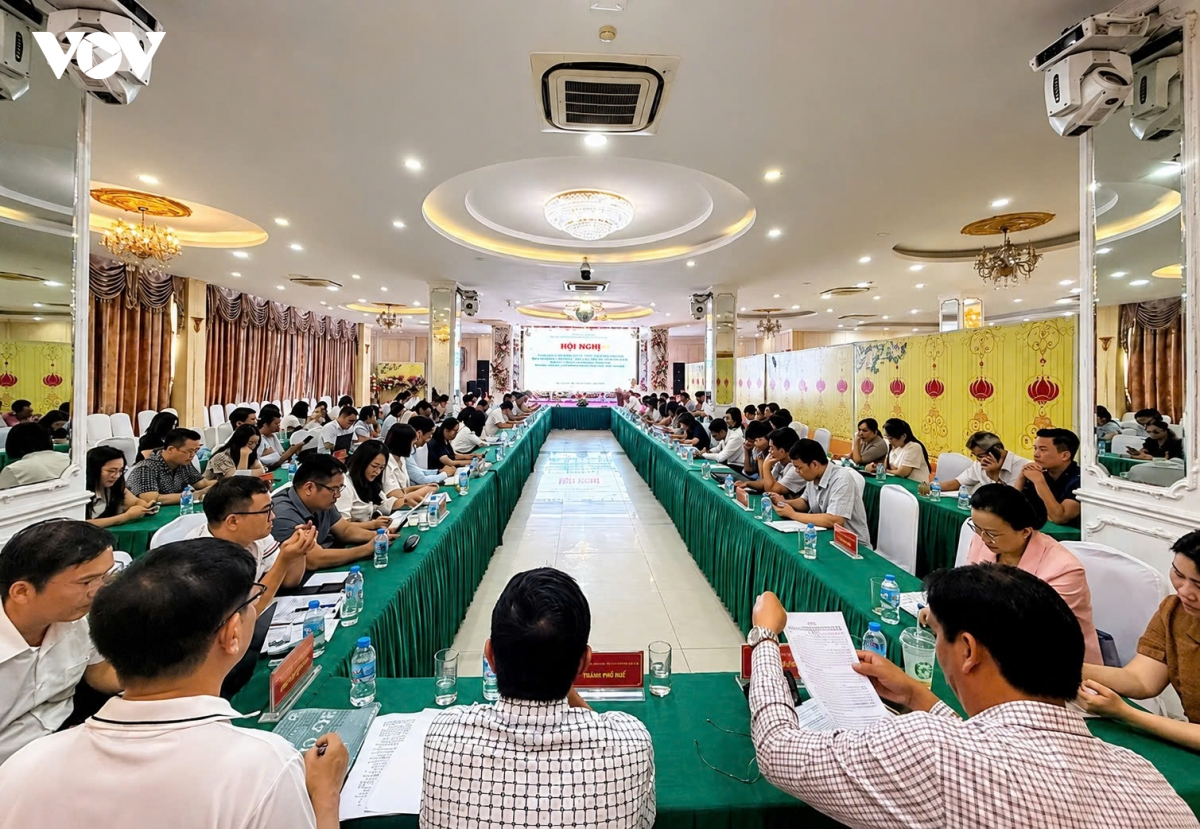
The message was highlighted at a training conference on overseas employment programmes implemented under international agreements, held in Hanoi on June 22 by the Centre for Overseas Labour (COLAB) under the Ministry of Home Affairs.
The event brought together representatives from Departments of Home Affairs and Employment Service Centres from 20 northern and north-central provinces and cities.
Overseas employment contributes to workforce development
Vietnam is enhancing overseas employment programmes under international agreements, viewing workers abroad as “human resource ambassadors” who contribute to workforce development, economic diplomacy and the country's global image
Speaking at the conference, Dang Huy Hong, director of the Centre for Overseas Labour, noted overseas employment programmes have played an important role in job creation, income improvement, vocational skills development and sustainable poverty reduction over the years.
According to him, as Vietnam deepens its international integration, overseas employment has evolved beyond a labour market solution to become an important tool for implementing major national policies on human resource development, international integration, economic diplomacy and social security.
“Each Vietnamese worker who goes abroad through low-cost, non-profit programmes and receives proper recruitment and training not only gains income, skills and professional experience but also becomes a ‘human resource ambassador’, helping promote the image of Vietnam and its people as hardworking, disciplined, responsible and ambitious,” he said.
Building a competitive workforce for global labour markets
To develop a skilled and internationally competitive workforce, the Centre for Overseas Labour is working to strengthen support mechanisms throughout the entire process, from information dissemination, career counseling and recruitment to language training, vocational preparation, deployment, rights protection during overseas employment and reintegration support upon return.
Hong emphasised that local authorities, employment service centres and specialised agencies play a crucial role in this process as they are often the first point of contact for workers seeking information about official, safe and affordable overseas employment opportunities.
Currently, the Centre for Overseas Labour manages eight overseas employment programmes covering five major destinations, namely the Republic of Korea, Japan, Germany, Australia and Taiwan (China).
All programmes operate on a non-profit basis and follow principles of transparency and equal access. Several programmes provide full support for training expenses and international airfare.
Workers participating in these programmes receive wages, working conditions, insurance coverage and welfare benefits comparable to those enjoyed by local workers in host countries, making them among the most attractive overseas employment opportunities available to Vietnamese citizens.
Digital transformation and policy support remain priorities
Delegates at the conference discuss support mechanisms throughout the entire process, from information dissemination, career counseling and recruitment to language training, vocational preparation, deployment, rights protection during overseas employment and reintegration support upon return
Delegates at the conference stressed the need to further improve communication efforts so workers can easily identify and access legitimate overseas employment programmes while avoiding fraudulent recruitment schemes.
They also highlighted the importance of expanding access to credit and financial support to ensure workers can benefit from government-backed labour mobility programmes.
Digital transformation was identified as a key priority in the coming years. The development of integrated databases and online platforms for recruitment and labour management is expected to improve information accessibility for workers while enhancing the efficiency of programme implementation and oversight.
Experts at the conference agreed that when implemented in a coordinated and professional manner, non-profit overseas employment programmes can deliver benefits far beyond job creation. They can help cultivate a generation of highly skilled Vietnamese workers with international experience, supporting the country's long-term economic development and global competitiveness.
VOV.VN - The Ministry of Home Affairs on April 14 launched the National Employment Exchange, a digital platform connecting job seekers, employers, employment service providers and state agencies nationwide, aiming to build a modern, transparent, flexible and efficient labour market.
VOV.VN - Improving labour productivity and the quality of human resources is essential to achieving Vietnam’s double-digit growth target, Prime Minister Le Minh Hung said during discussions with delegates at the 14th Vietnam Trade Union Congress on June 5.
VOV.VN - Artificial intelligence (AI) is bringing profound changes to the global labour market as it becomes increasingly integrated into manufacturing, finance, media and business management.
VOV.VN - Vietnamese Ambassador to Greece Pham Thi Thu Huong met with Greek Minister for Migration and Asylum Athanasios Plevris on March 30 to discuss labour cooperation between the two countries.












.JPG&w=640&q=100)











Bình luận
Bình luận của bạn sẽ được xét duyệt trước khi đăng