Vietnam positions diplomacy as a driver of growth in new development era
VOV.VN - Vietnam's 14th National Party Congress has for the first time designated diplomacy and international integration as a core, long-term responsibility of the entire Party, people and armed forces, marking a significant evolution in the Party's foreign policy thinking, Foreign Minister Le Hoai Trung has said.
Speaking ahead of the 33rd Diplomatic Conference and the 22nd National Conference on Foreign Affairs slated for August 1-7, Trung emphasised that Vietnam's foreign affairs sector would continue to modernise its thinking and working methods so that diplomacy can serve as a stronger driver of national development in the country’s new era of growth.
A new stage in Vietnam's diplomatic thinking
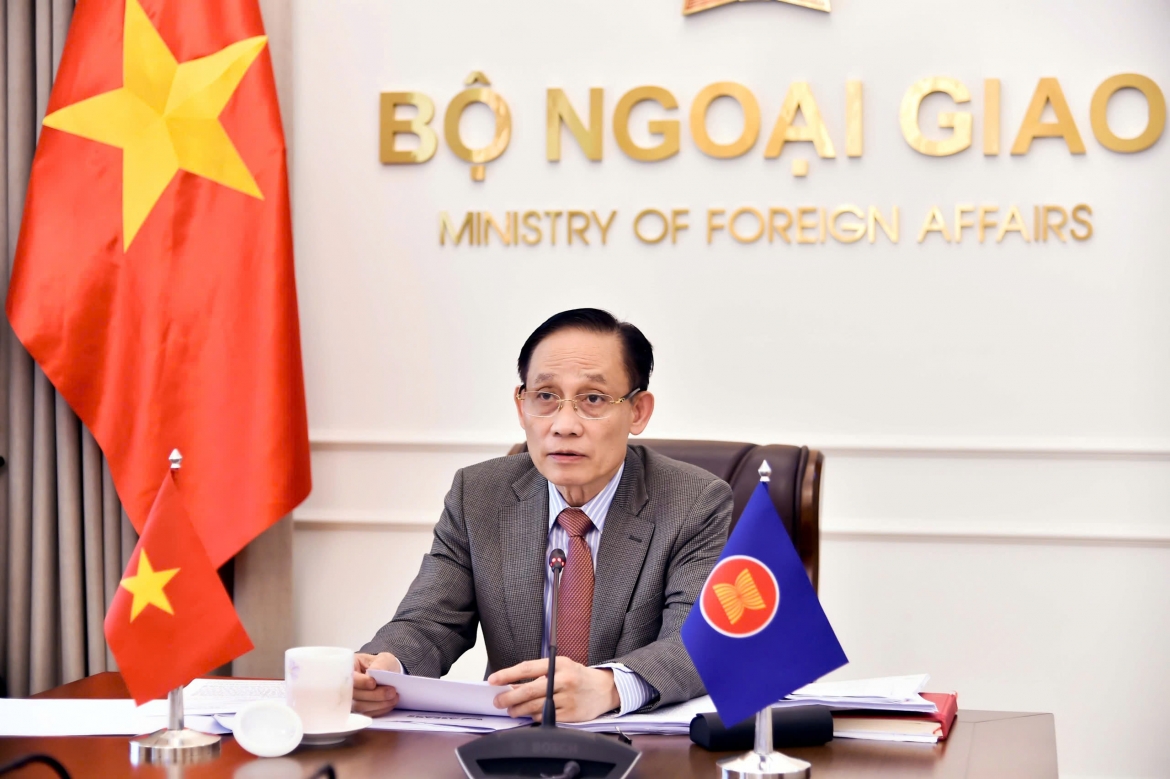
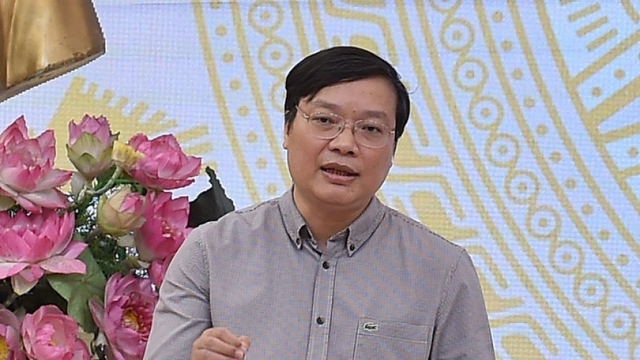
Politburo member and Minister of Foreign Affairs Le Hoai Trung. (Photo: MOFA)
The 33rd Diplomatic Conference and the 22nd National Conference on Foreign Affairs come at a pivotal moment as Vietnam begins a new development phase following the successful conclusion of the 14th National Party Congress aimed at achieving its development goals for 2030 and its long-term vision for 2045.
At the same time, the international environment continues to evolve rapidly, presenting both new opportunities and increasingly complex challenges for Vietnam's foreign affairs and international integration.
According to the Foreign Minister, this is the first Diplomatic Conference to be held after the 14th National Party Congress and following the completion of the country's new leadership structure.
More importantly, it marks the first conference of Vietnam's new development phase.
The conference is not only an opportunity to review recent developments, but also to ensure the entire diplomatic sector fully understands and consistently implements the foreign policy set out by the 14th Party Congress, he told the press.
In his view, the most significant change introduced by the Congress is that diplomacy and international integration have, for the first time, been defined as a core and long-term responsibility of the entire Party, people and armed forces.
The new positioning builds on Vietnam's longstanding foreign policy and reflects the country’s evolving development needs in an increasingly interconnected world.
“This is the first time the Party Congress has defined diplomacy and international integration as a core and enduring responsibility of the entire Party, people and armed forces,” the minister stressed.
He highlighted that Vietnam’s diplomatic thinking has continued to evolve from President Ho Chi Minh's concept of diplomacy as ‘a front’ to the foreign policy directions adopted through successive Party Congresses.
Where diplomacy was previously viewed primarily as a pioneering force in safeguarding national sovereignty, maintaining a peaceful environment, mobilising external resources and enhancing Vietnam's international standing, it is now expected to assume an even broader role by becoming a central pillar supporting national development. This evolving approach also reflects Vietnam’s new development priorities.
The Third Plenum of the 14th Party Central Committee recently adopted a resolution on the country's new growth model, identifying science, technology and innovation as the primary drivers of economic growth.
According to the minister, this means diplomacy must do more than preserve peace and stability. It must also proactively expand Vietnam’s development space by attracting international resources, technology and partnerships needed to support faster and more sustainable growth.
Against this backdrop, the 33rd Diplomatic Conference is expected to translate the Party Congress' foreign policy into concrete action plans, ensuring greater consistency in strategic thinking, policy implementation and coordination across the diplomatic sector.
Trung held that the conference's primary objective is to deepen understanding of the Party's foreign policy, build consensus on international developments and equip the diplomatic sector to respond more effectively to the country's new development requirements.
It also aims to strengthen coordination between the Ministry of Foreign Affairs and other ministries, agencies and local authorities under the unified leadership of the Party and the centralised management of the State.
The overarching message of the conference, he said, is that Vietnam's diplomatic sector will continue to play its pioneering role while fulfilling the broader responsibilities entrusted by the Party and the State in advancing the country's development agenda through the 14th Party Congress term and toward its 2045 vision.
Modernising diplomacy to support national development
If the 14th Party Congress redefined the role of diplomacy, the next challenge is ensuring that Vietnam's diplomatic sector adapts its thinking and methods to meet the demands of the country's next stage of development.
According to the Foreign Minister, one of the conference's priorities is to fully translate the Party's strategic vision on national development, Party building, political system reform and foreign affairs into concrete and coordinated actions across the diplomatic service.
He argued it is not enough for officials to understand the Party's policies, they must also be able to implement them effectively and deliver tangible results.
Following guidance from Party General Secretary and State President To Lam, Trung affirmed diplomacy must focus not only on understanding the Party's strategic direction but also on executing it thoroughly and effectively.
Another major priority is strengthening strategic research, forecasting and policy advisory capabilities as global developments become increasingly volatile and unpredictable.
The challenge today is no longer simply responding to events as they occur, the minister said, adding that diplomacy must be able to anticipate emerging trends, identify opportunities and risks at an early stage, and help shape strategic responses rather than merely react to them.
He therefore agreed that stronger research and forecasting capabilities would enable Vietnam's diplomatic service to identify emerging international trends earlier and provide more timely strategic advice to the Party and the Government.
The minister devoted particular attention to the Party's new expectation that diplomacy should become a direct driver of socio-economic development.
Where diplomacy was previously viewed primarily as a tool for maintaining peace, expanding international relations and enhancing Vietnam's global standing, it is now expected to make a more direct contribution to achieving the country's development objectives, including its ambition of sustaining double-digit economic growth.
Accordingly, Vietnamese diplomatic missions overseas are expected to move beyond their traditional representative role by taking a more proactive approach to opening new markets, promoting cooperation in science and technology, innovation, attracting high-quality investment, connecting Vietnam with global knowledge networks and supporting domestic enterprises in integrating more deeply into international value chains.
Diplomacy must also align closely with the Party's new growth drivers, particularly science and technology, innovation and digital transformation, he affirmed.
That requires Vietnam's diplomatic network to strengthen engagement with leading innovation hubs, global technology companies and international partners in order to mobilise external resources that support the country's long-term development.
The minister stressed that modernisation must extend beyond policy formulation. Implementation capacity, he said, will increasingly determine whether strategic objectives can be achieved.
Digital transformation, therefore, should not be viewed simply as the adoption of new technologies to improve administrative procedures or public services.
Instead, it should serve as a catalyst for transforming organisational structures, modernising diplomatic practices and improving the overall effectiveness of Vietnam's diplomatic sector.
Alongside digital transformation, the Foreign Minister emphasised the importance of closer coordination between the Ministry of Foreign Affairs and other ministries, agencies and local authorities to maximise the combined strength of Vietnam's political system in implementing foreign affairs and international integration policies.
He said the newly expanded coordination mechanisms established under the Central Steering Committee for Foreign Affairs and International Integration will help ensure that diplomatic activities are implemented in a more coherent, coordinated and effective manner.
Turning strategy into results
According to the Foreign Minister, as Vietnam's diplomatic responsibilities continue to expand, success will depend not only on sound policy but also on the ability to implement it effectively.
For that reason, developing a highly capable diplomatic workforce is one of the sector's highest priorities. Officials throughout the diplomatic service must first develop a deep understanding of the Party's guidelines and State policies.
Only with a shared understanding can implementation be consistent and effective, he stressed.
However, understanding alone is not enough. Delivering concrete outcomes also requires professional commitment, a strong sense of responsibility and sustained dedication from every diplomat.
Trung noted that Vietnam's diplomatic service has a distinctive historical legacy, with President Ho Chi Minh serving as the country's first foreign minister after independence. His diplomatic philosophy, political vision and commitment to serving the nation continue to shape Vietnam's diplomacy today.
To meet the demands of a new development era, the minister said the diplomatic sector must continue modernising its operations, improving the quality of its personnel and accelerating the application of science, technology and digital transformation across all areas of diplomatic work.
These efforts, he argued, are essential not only for improving productivity and institutional effectiveness but also for enabling Vietnam's diplomacy to keep pace with rapid changes in the international environment.
He also underscored the need to build a diplomatic corps with modern thinking, strong political commitment, professional expertise and the flexibility needed to respond to an increasingly complex world.
As technology, knowledge and global challenges continue to evolve rapidly, diplomats must embrace lifelong learning, independent research and continuous professional development.
The minister added that Vietnam's foreign policy objectives can only be achieved through the combined efforts of the entire political system, under the unified leadership of the Party, the centralised management of the State and close coordination among ministries, agencies and local authorities.
In conclusion, he affirmed that the successful implementation of the foreign policy adopted at the 14th National Party Congress will require continued innovation in thinking, more effective implementation and stronger institutional capacity.
The 33rd Diplomatic Conference is intended to advance that goal by fostering a diplomatic service that is modern, professional, proactive, innovative and effective, fully capable of fulfilling the broader responsibilities assigned to it during Vietnam's new stage of development.
Deputy Minister of Foreign Affairs Dang Hoang Giang has highlighted the significant role of multilateral diplomacy in Vietnam’s development in the new era in an article released ahead of the 33rd Diplomatic Conference and the 22nd National Conference on External Affairs, slated for August 1–8 in Hanoi.
VOV.VN - As Vietnam’s foreign affairs continue to chart new paths, its expanding bilateral and multilateral relations actively contribute to maintaining a peaceful environment, broadening market access, attracting development resources, and elevating the nation’s global standing.
VOV.VN - Science diplomacy is emerging as a key pillar of Vietnam's international integration strategy, helping connect scientific research with policymaking while strengthening global partnerships for sustainable development.
VOV.VN - Parliamentary diplomacy is emerging as an increasingly important pillar of Vietnam-Cambodia relations, with Cambodian National Assembly President Samdech Khuon Sudary's upcoming official visit to Vietnam expected to reinforce political trust and open new avenues for legislative cooperation.







.JPG&w=640&q=100)




Bình luận
Bình luận của bạn sẽ được xét duyệt trước khi đăng