
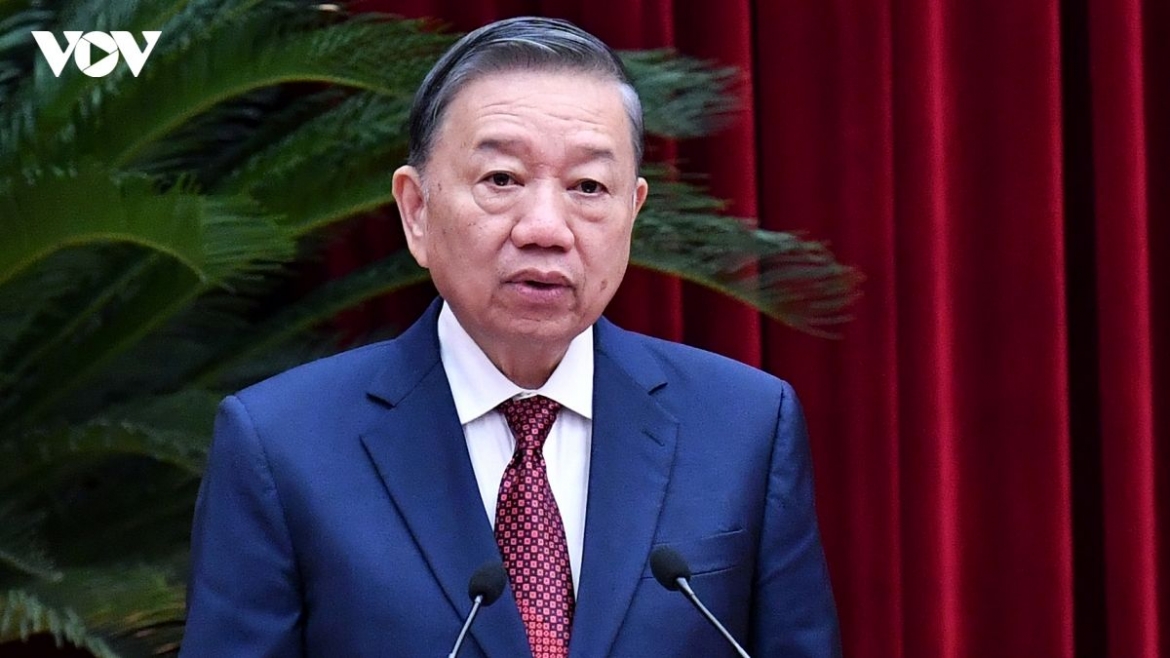

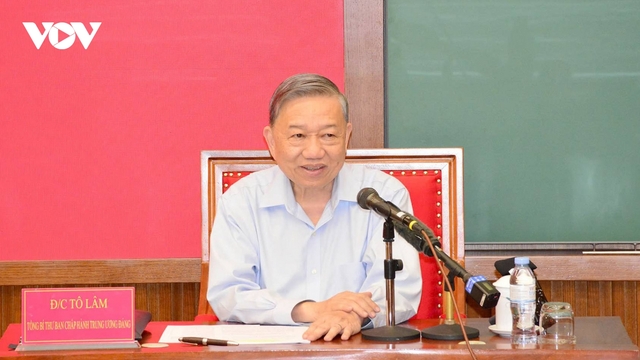
VOV.VN - The greatest challenge facing Vietnam today no longer lies in formulating policies, but in ensuring they are effectively implemented, Party General Secretary and State President To Lam stressed at the closing session of the third plenum of the 14th Party Central Committee in Hanoi on July 24.
In his closing remarks, he called on the entire Party and political system to shift from consensus on policy to unity in action, making effective implementation the ultimate measure of every Party decision.
Summarising the outcomes of the plenum, General Secretary and State President To Lam said the implementation of the Resolution of the 14th National Party Congress and other strategic Party resolutions during the first half of 2026 has been carried out with determination and urgency.
He noted that leadership, governance, inspection and supervision have continued to improve, while the reorganised political system has largely stabilised and begun operating more effectively.
However, he held, these achievements primarily reflected efforts to roll out policies rather than their actual impact.
"The biggest bottleneck remains implementation," the top leader emphasised.
According to him, the problem stems from systemic shortcomings, including weak accountability, fragmented resources, and governance mechanisms that have yet to keep pace with the country's development needs.
Rather than merely identifying shortcomings, he pointed to their root causes, saying overcoming implementation bottlenecks requires comprehensive reforms covering institutions, organisational structures, human resources and governance methods, while closely integrating Party building with national governance, socio-economic development and national defence.
Based on that assessment, he said, the Party Central Committee focused not only on adopting new policies but also on establishing mechanisms to ensure they can be effectively carried out.
The committee approved 13 major policy documents covering Party building, political system reform, development model transformation, territorial planning, land policy, marine economic development, national security, and the building of a disciplined, safe and civilised society.
In his view, the significance of these decisions lies not only in their content but also in the leadership approach behind them.
Every policy, he said, must be considered as part of an integrated strategy that combines development with national protection, political objectives with implementation capacity, and short-term priorities with long-term national interests.
"The innovation lies both in each policy decision and in the leadership approach itself that means addressing root causes, mobilising resources toward common objectives, linking decision-making with implementation, and placing the long-term interests of the country and the well-being of the people above all else," he stated.
This philosophy underpins the resolutions adopted at the meeting, from improving the two-tier local government model and revising Party regulations to reforming the national development model, promoting the marine economy and strengthening social governance.
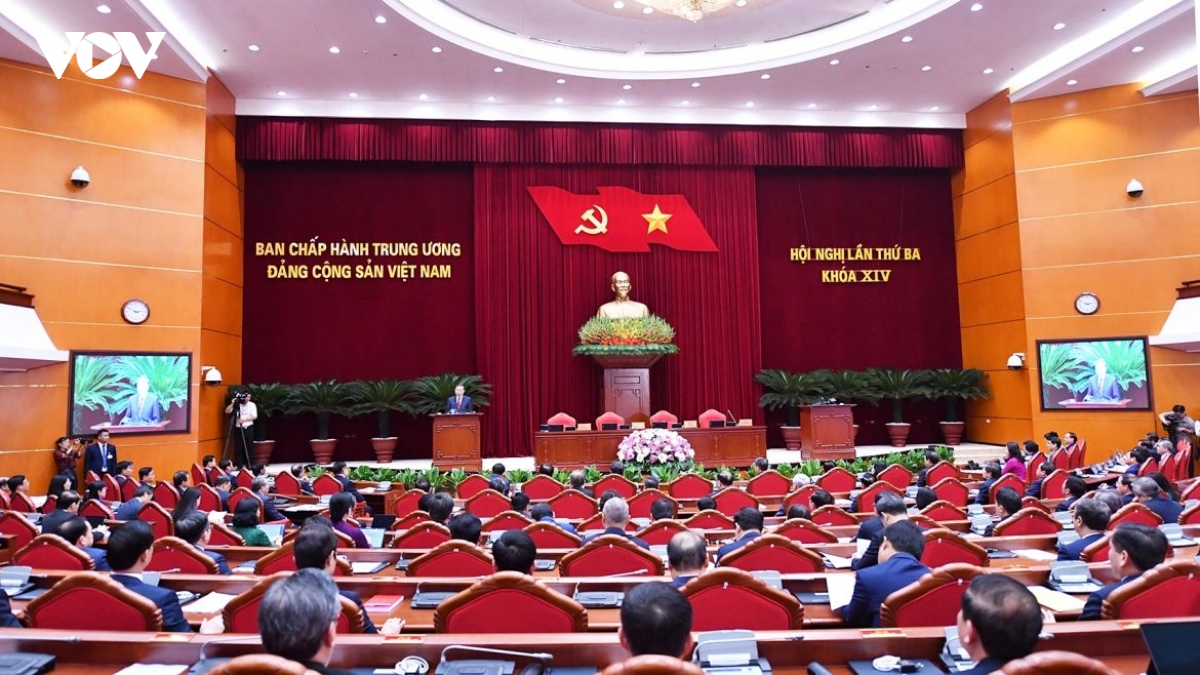
After identifying implementation as the primary bottleneck, General Secretary and State President To Lam devoted considerable attention to explaining how it should be addressed. He argued that reforms should not only accelerate policymaking but fundamentally redesign the implementation process from the moment policies are formulated.
Accordingly, every task should clearly specify the lead agency, responsible authority, implementation conditions, completion timeline and expected outputs.
Regular inspection and supervision should be built into the process to promptly identify obstacles and make necessary adjustments.
He stressed that no task should be assigned without clearly defining implementation conditions, no decentralisation should occur without effective oversight, and no responsibility should be diluted through vague coordination mechanisms.
This represents one of the most notable changes in the Party's governance approach.
Where previous resolutions often focused primarily on policy objectives and general solutions, the new approach emphasises implementation mechanisms from the outset as an essential condition for translating policy into practical results.
The General Secretary and State President also noted that every policy should ultimately be assessed based on measurable outcomes rather than the number of legal documents issued or administrative procedures completed.
The true test, he said, is whether bottlenecks have been removed, resources have been mobilised more effectively, governance has improved, productivity and competitiveness have increased, and most importantly, whether people have benefited from development.
In his remarks, General Secretary and State President To Lam called on Party committees, government agencies and local authorities to immediately translate the Party Central Committee's resolutions into concrete action plans tailored to their respective responsibilities.
Implementation, he said, must be coordinated, consistent and free from delays or symbolic execution. He placed particular emphasis on leadership accountability, saying every task should have clearly designated lead agencies, defined responsibilities, implementation schedules and measurable deliverables, ensuring that authority is matched by responsibility and responsibility is evaluated through actual results.
The top leader also called for deeper decentralisation, emphasising that delegated authority must be accompanied by sufficient resources, qualified personnel, reliable data and appropriate supervisory mechanisms.
Granting authority without providing the necessary implementation capacity, he warned, would not produce meaningful change. Inspection and supervision should likewise shift from monitoring procedural compliance toward evaluating practical outcomes.
Instead of focusing on the number of plans, meetings or administrative documents, oversight should examine whether bottlenecks have been removed, resources have been utilised more efficiently and whether people's lives and business activities have genuinely improved.
Concluding his address, he stressed that the value of Party resolutions would ultimately be judged not by the text of the documents themselves but by the tangible improvements they bring to national development and people's lives.
"The actual results and the satisfaction of the people and businesses are the ultimate measure of the Party's leadership capacity and the effectiveness of the political system," he stated.

VOV.VN - Party General Secretary and State President To Lam has called for a fundamental shift in implementing Resolution 57 on science, technology, innovation and digital transformation, urging authorities to focus on delivering tangible products, measurable outcomes and practical value that can directly contribute to Vietnam’s ambition of achieving double-digit economic growth.

VOV.VN - Nearly 2.1 million delegates joined a nationwide conference on June 30 to study and implement Politburo Resolution No.10 on developing the foreign-invested sector, underscoring the country’s renewed strategy to attract higher-quality foreign investment and strengthen its position in global value chains.

VOV.VN - Eighteen months after its adoption, the Politburo’s Resolution 57 has moved beyond policy orientation to become a catalyst for institutional reform, digital transformation and innovation-led growth.

VOV.VN - For the first time, Vietnam's supporting industries have been positioned as a central pillar in the country's strategy to attract high-quality foreign direct investment (FDI).






.JPG&w=640&q=100)





Bình luận
Bình luận của bạn sẽ được xét duyệt trước khi đăng