


VOV.VN - Party General Secretary and State President To Lam has called for a fundamental shift in implementing Resolution 57 on science, technology, innovation and digital transformation, urging authorities to focus on delivering tangible products, measurable outcomes and practical value that can directly contribute to Vietnam’s ambition of achieving double-digit economic growth.
After one and a half years of implementing the Politburo’s Resolution on breakthroughs in science, technology, innovation and digital transformation, Vietnam has made notable progress in raising awareness across the political system and laying the foundation for a more innovation-driven development model.
According to the conclusion of the Central Steering Committee for Science, Technology, Innovation and Digital Transformation following its 18-month review conference in Hanoi, science and technology, innovation and digital transformation are increasingly being recognised as key drivers of economic restructuring, competitiveness and national self-reliance.
Institutional bottlenecks have gradually been addressed through legal and policy reforms, while investment in digital infrastructure has continued to expand. The National Public Service Portal, the National Population Database and the VNeID digital identity platform have become more interconnected, helping reduce administrative procedures, lower compliance costs and improve the delivery of public services.
The country has also witnessed continued growth in e-commerce, cashless payments and the application of artificial intelligence across various sectors. Collaboration among government agencies, universities, research institutes and businesses has strengthened, enabling more research outcomes to be translated into practical applications.
Vietnam has identified 10 strategic technologies, 30 strategic technology products and 20 major national challenges to guide future innovation efforts. Many enterprises have gradually mastered core technologies, while provinces and cities have developed innovative models supporting production, governance, tourism, supply chains and product traceability.
Despite these encouraging developments, the top leader stressed that implementation has yet to live up to the Party’s expectations, available resources and political determination.
The weakest link remains implementation, he said, noting that agencies where leaders directly oversee implementation have produced concrete results, while others have made only limited progress.
One of the strongest messages delivered by the top Party and State leader was that implementation should no longer be assessed through administrative processes alone.
Tasks, he said, should only be considered completed when they result in operational products, verifiable data, real users and measurable socio-economic benefits.
Issuing documents, adopting action plans, organising conferences or establishing new organisational structures should no longer be treated as indicators of successful implementation.
Instead, success should be reflected in domestically mastered technologies, interoperable digital data, streamlined administrative procedures, higher labour productivity, stronger businesses and tangible benefits for citizens.
Party General Secretary and State President To Lam also requested accelerating digital transformation throughout the political system and expanding digital transformation across businesses and society as a whole.
He emphasised the development of the digital economy and data economy alongside new governance models designed to improve productivity and efficiency.
Data, he said, must be ‘accurate, sufficient, clean and live’, while digital platforms should be interoperable and shared across agencies. Administrative procedures should be redesigned around digital processes, supported by a workforce equipped with digital skills and a digital-first working culture.

The top Party and State leader instructed ministries and agencies responsible for strategic technology programmes to take full responsibility for delivering final products rather than merely completing administrative procedures.
For each of Vietnam’s 10 strategic technologies, authorities are required to establish clear one-year, three-year, five-year and ten-year roadmaps covering technological mastery, commercialisation, export potential and contributions to economic growth, national defence, security and national self-reliance.
Priority sectors include artificial intelligence, big data, robotics and automation, biotechnology and biomedicine, advanced materials and energy technologies, semiconductor chips, cybersecurity, quantum technologies, unmanned aerial systems, and marine and underground technologies.
Alongside technological development, the top leader stressed that cybersecurity, information security, data security and national digital sovereignty must remain top priorities.
Vietnam, he said, should never sacrifice security for development, but neither should concerns over potential risks become an excuse for delaying innovation.
All digital systems, databases and digital platforms must therefore be designed, developed and operated with security built in from the outset.
Turning Resolution 57 into tangible outcomes will require more than policy commitments, Party General Secretary and State President To Lam, calling for stronger leadership, clearer accountability and closer coordination across the political system.
He requested that Party committees and authorities at all levels integrate implementation of Resolution 57 with the Resolution of the 14th National Party Congress, reaffirming science, technology, innovation and digital transformation as the strategic pathway toward Vietnam's long-term development goals.
He stressed that success would depend on mobilising the combined strengths of businesses, universities, research institutes and the country's scientific community. At the same time, Vietnam must accelerate the development of high-quality human resources, particularly in strategic technology fields, beginning with the 2026-2027 academic year, to ensure the country has the talent needed to sustain innovation-led growth.
Leadership accountability, he said, would be a decisive factor in determining whether the resolution delivers meaningful results. Agency heads are expected to take direct responsibility for implementation, while ministries, sectors and localities should work more proactively instead of relying on specialised agencies alone.
According to the top leader, implementing Resolution 57 should become a regular political responsibility shared across the entire political system rather than being viewed as the task of science and technology authorities alone. Progress in carrying out the resolution will also become an important criterion in evaluating officials, Party organisations and agency leaders.
Stronger supervision and more rigorous performance evaluation will help ensure that implementation stays focused on measurable outcomes instead of procedural compliance, reinforcing the broader shift from process-oriented governance to results-oriented administration.
Party General Secretary and State President To Lam warned that intensifying global competition in advanced technologies leaves little room for delay. He urged ministries, sectors and localities to immediately review their assigned tasks, identify obstacles, define clear outputs and establish concrete implementation timelines.
Central agencies were instructed to continue improving legal frameworks, standards, technical regulations and digital architecture while providing stronger guidance and support for local authorities.
Meanwhile, local governments were encouraged to prioritise practical problems that could be solved through science, technology and digital transformation and to proactively propose innovative mechanisms based on local realities.
The top leader also called on businesses to increase investment in research and development, technological innovation and workforce training. He encouraged major corporations to lead efforts to master core technologies and develop Vietnamese technology products.
Universities and research institutes were urged to strengthen their role in generating new knowledge, developing breakthrough technologies and training high-quality human resources, with greater emphasis placed on technology transfer and commercialization of research outcomes.
He further stressed the need for stronger policies to attract and retain talented scientists, experts and overseas Vietnamese intellectuals, while building globally connected research networks.
International cooperation, he added, should increasingly focus on attracting knowledge, advanced technologies and highly skilled professionals rather than capital alone.
Regarding proposals submitted by Hanoi University of Science and Technology and Vingroup, Party General Secretary and State President To Lam assigned the Ministry of Science and Technology and the Ministry of Education and Training to study and resolve the recommendations within their authority, or report them to higher authorities where necessary.
He concluded that leaders must take the initiative in resolving issues within their authority and promptly report matters beyond their competence, stressing that delays, buck-passing and avoidance of responsibility would not be tolerated.
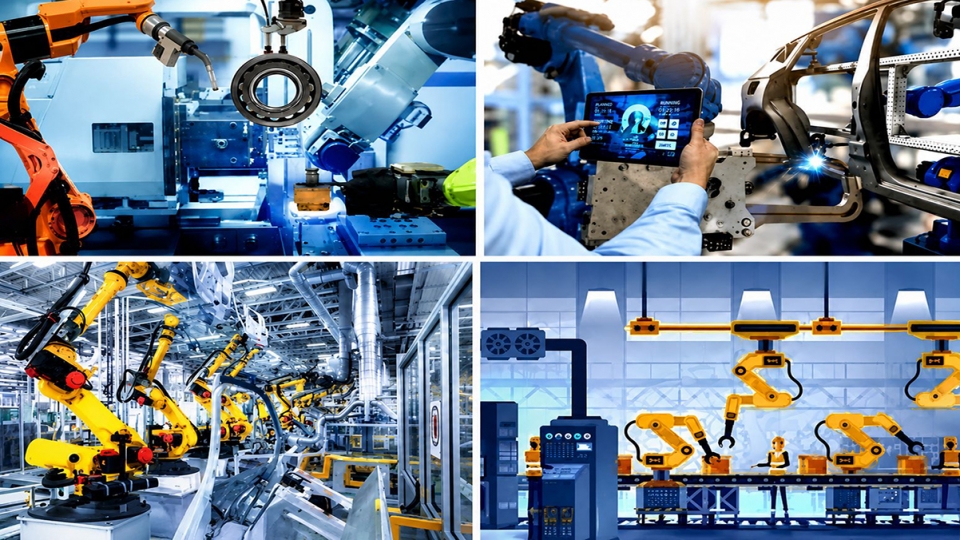
VOV.VN - Eighteen months after its adoption, the Politburo’s Resolution 57 has moved beyond policy orientation to become a catalyst for institutional reform, digital transformation and innovation-led growth.

VOV.VN - Smart energy infrastructure will play a pivotal role in Vietnam’s green transition, digital transformation and long-term sustainable development, experts, policymakers and business leaders said at the Smart Energy Infrastructure Development Forum held in Hanoi on June 24.

VOV.VN - Party General Secretary and State President To Lam has called for a new national development model centred on science, technology, innovation, digital transformation and data, describing them as the fundamental pillars of Vietnam’s next stage of development.

VOV.VN - General Secretary and State President To Lam has stressed that tasks under Resolution 57 will only be considered complete when they deliver products already in operation, verifiable data and practical results, rather than being reported solely through documents, meetings or plans.






.JPG&w=640&q=100)









Bình luận
Bình luận của bạn sẽ được xét duyệt trước khi đăng