Politburo Resolution 20 links Vietnam’s maritime economy to maritime mastery
VOV.VN - Resolution No. 20-NQ/TW adopted recently by the Party Central Committee charts a new course for Vietnam’s maritime economy, linking growth with ecosystem protection, national security and the ability to master the country’s maritime space.
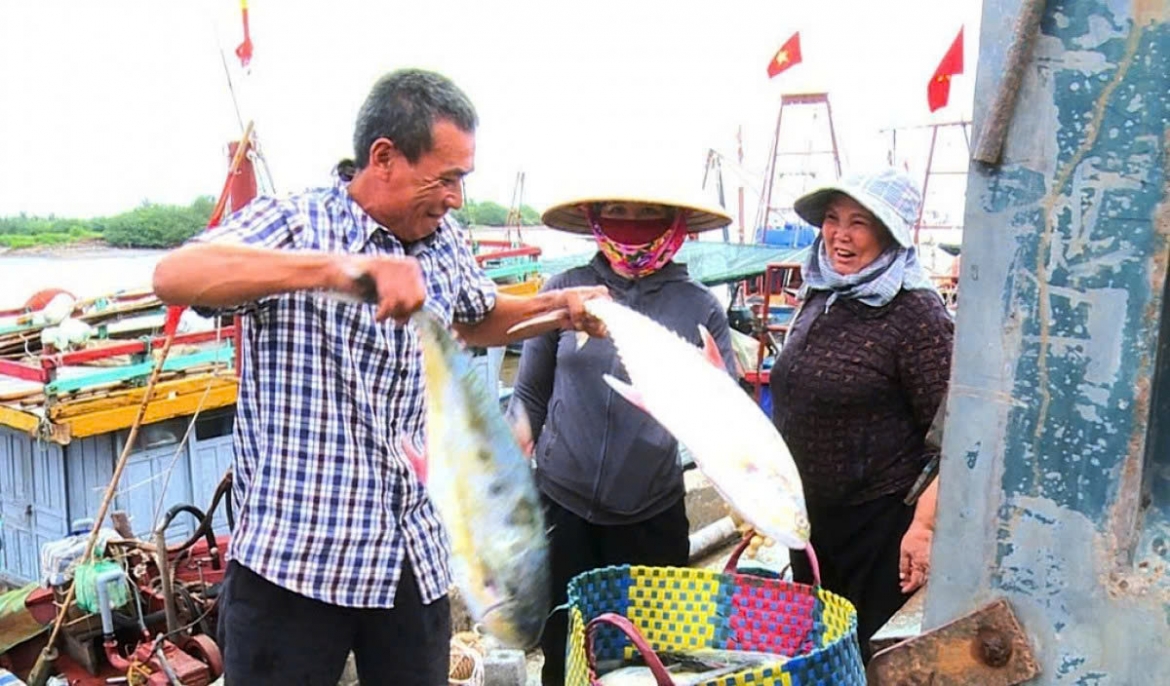
Fishermen in Nam Cuong commune, Hung Yen province, celebrate a big catch after returning from a fishing trip
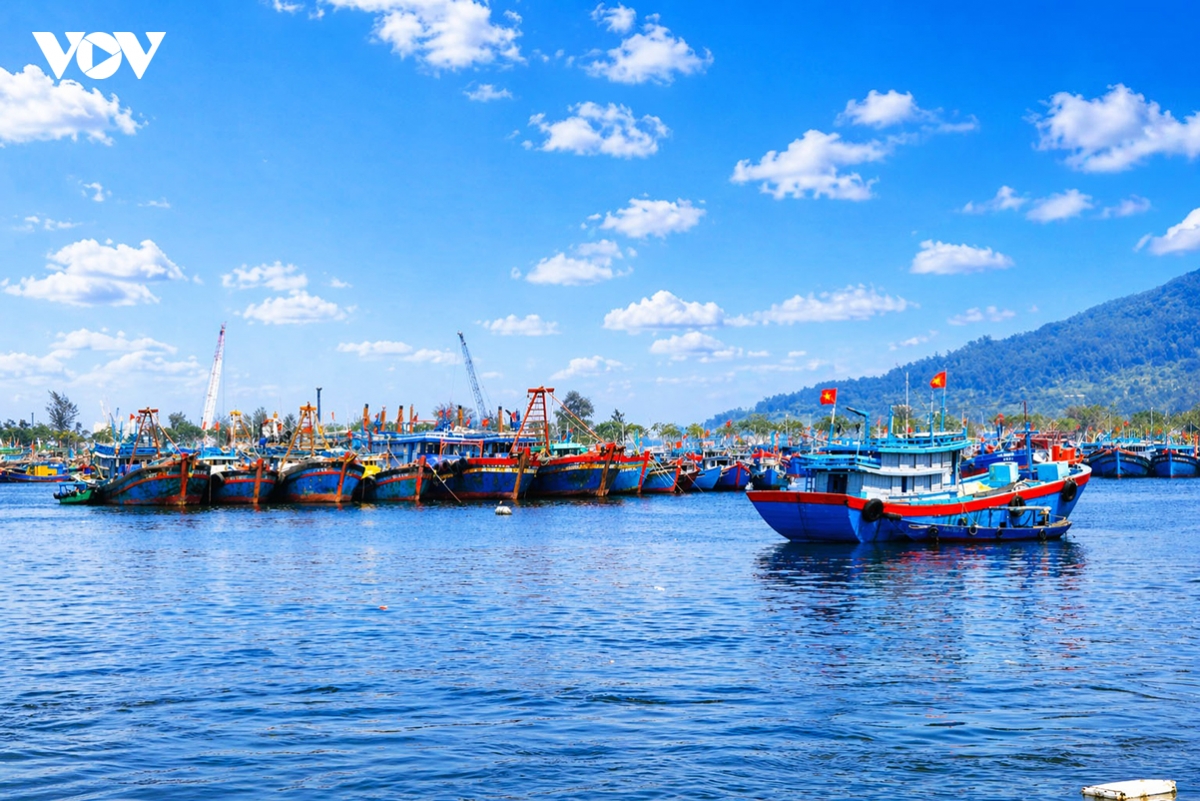
At Cua Lan fishing port in Nam Cuong commune, Hung Yen province, fishing vessels are constantly coming and going. As boats return to unload their catch, fishermen are busy preparing nets and equipment for their next trips offshore.
For Bui Van Cu, a resident of Quang Thinh hamlet in Nam Cuong commune, the sea has been part of his life for decades. His livelihood has enabled his family to invest in two fishing vessels with a combined capacity of nearly 500 horsepower, worth billions of Vietnamese dong, while providing jobs for eight workers, each earning around VND150 million (US$5,700) a year.
“I think I will stay with the sea for the rest of my life. It is not only about earning a living and developing the economy, but also about the pride of contributing to the protection of our country’s seas and islands,” Cu said.
For the experienced fisherman, staying connected to the sea is first and foremost a livelihood, but it also carries a sense of responsibility for the waters around his home. In addition to fishing, he serves as head of a self-managed fishing fleet group operating in the Nam Thinh sea area, with more than 30 vessel owners from Quang Thinh hamlet.
Established in 2014, the self-managed fleet group has boosted cooperation and mutual support among its members during offshore operations. It also coordinates efforts to maintain security and order at sea, becoming a supporting force for the Border Guard in managing and protecting local waters.
Lieutenant Colonel Le Xuan Hoa, political commissar of Cua Lan Border Guard Station under the Hung Yen Border Guard Command, noted that the self-managed fleet model has strengthened solidarity among fishermen, supported their livelihoods and contributed to maintaining security and order in local waters.
The story of fishermen in Nam Cuong reflects a broader reality across Vietnam’s coastal areas, that the sea is both a space for livelihoods and a space for development and national defence.
From fishing vessels to other maritime economic activities, the challenge is not simply to make effective use of marine resources. It also involves safeguarding security, protecting marine ecosystems and upholding national sovereignty.
This broader perspective lies at the heart of Resolution 20 on building and developing Vietnam into a strong maritime nation.
From maritime potential to mastery of maritime space
Developing the maritime economy goes hand in hand with safeguarding national sovereignty over seas and islands
According to Assoc. Prof. Dr. Nguyen Chu Hoi, former deputy director general of the Vietnam Administration of Seas and Islands and standing vice chairman of the Vietnam Fisheries Society, Vietnam is a maritime nation with a sea area roughly three times the size of its land territory and more than 3,000 islands.
With a coastline of more than 3,260km and a strategic position facing the East Sea and major shipping routes in the Indo-Pacific and beyond, Vietnam has significant advantages for developing a strong maritime economy.
The country’s maritime potential has also gained a new dimension following the territorial reorganisation that took effect on July 1, 2025. Vietnam now has 21 of its 34 provincial/municipal-level administrative units with a coastline, compared with 28 out of 63 previously.
According to Hoi, the maritime space of coastal provinces and cities has either been maintained or expanded, opening up new possibilities for growth models based on stronger links between coastal areas and inland regions.
“After the merger, 21 of the 34 provinces and cities have a coastline. The maritime space of coastal provinces and cities has either been maintained or expanded, creating opportunities to develop new growth models, with coastal provinces and cities expected to contribute around 70% of the country’s GDP by 2030, alongside average GRDP growth of more than 11% annually and other cultural, social and science-technology targets,” Hoi analysed.
Vietnam’s geographical position, resources and maritime space provide a strong foundation for its ambition to become a strong maritime nation. Turning these advantages into sustainable development, however, requires a fundamental shift in the way the sea is viewed and managed.
Do Thanh Hung, vice chairman of the Vietnam Shipbuilding Industry Technology Association (VISIA), shares the view, stressing that the sea represents far more than an economic advantage for Vietnam.
“For Vietnam, the sea is also a space for survival, development, national security and defence, and international integration,” Hung noted.
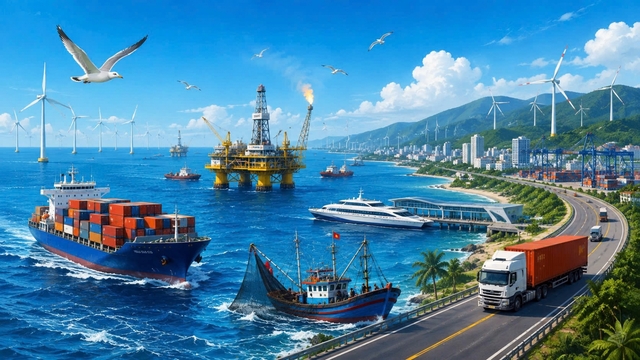
He pointed to maritime transport, logistics, deep-water ports, oil and gas, offshore wind power, industrial-scale marine aquaculture, maritime services, ocean research and the marine circular economy as areas with substantial room for growth.
The next step, he argued, is to move beyond a resource-extraction mindset and develop the capacity to master maritime space.
Hoi believed Vietnam needs to move out to sea on “the two pillars of institutions and technology.”
Mastering offshore and deep-sea areas, he said, requires greater investment in advanced marine technologies, supported by digital transformation and artificial intelligence (AI).
Marine spatial planning and functional zoning also need to be implemented effectively to reduce and ultimately eliminate competing interests and conflicts among sectors and economic activities.
A rational allocation of activities at sea should balance the interests of different sectors, creating room for growth while preserving the natural and economic linkages that underpin the marine environment.
Another priority is to continue strengthening the legal and policy framework, including the early revision of the 2015 Law on Marine Resources and Environment and Islands to meet the requirements of Resolution 20.
The legal framework should support a decisive shift from sector-based marine management towards integrated and unified governance of maritime space, Hoi said.
That shift calls for a new development mindset that economic activities should be viewed within a shared spatial framework, assessed through their inter-sectoral relationships and organised according to clear functional zones. Cross-sector coordination and integrated impact assessments should also be built into the planning process from the outset.
Under such an approach, the same marine area could accommodate multiple sectors and objectives, including renewable energy, marine aquaculture, ecotourism, ports and shipping, marine health care and pharmaceuticals, and nature conservation, with the overall goal of balancing and optimising shared interests.
A maritime industry capable of mastering the sea
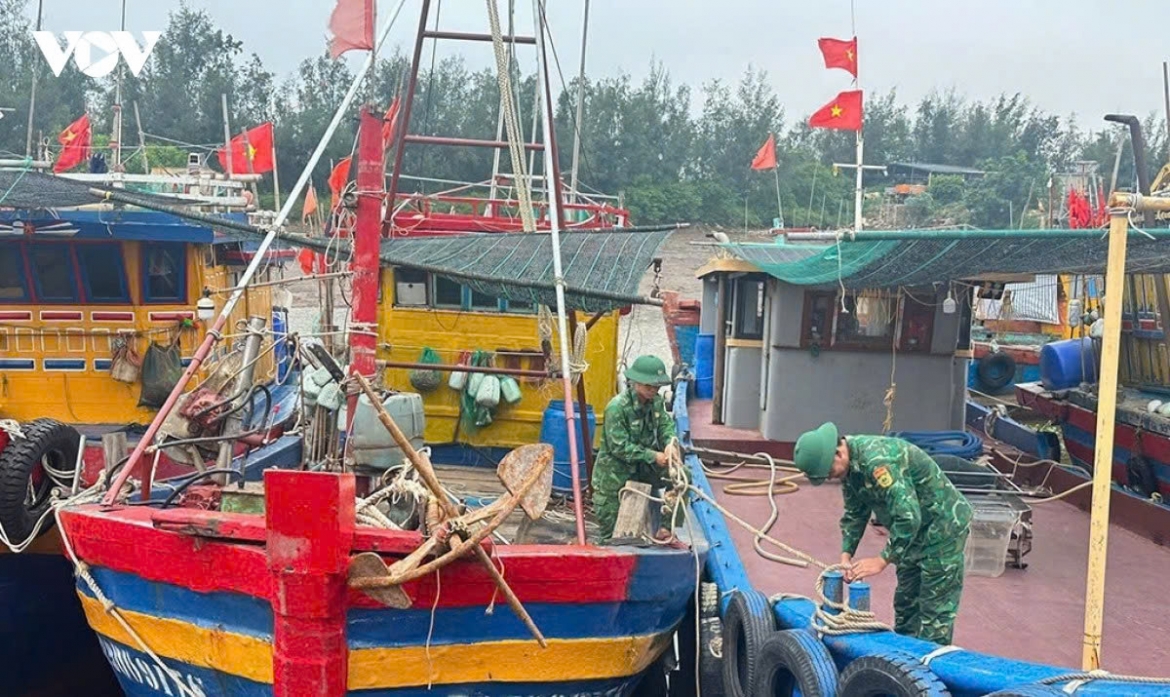
Cua Lan Border Guard soldiers help fishermen secure their boats at a storm shelter anchorage
If planning, institutions and technology provide the framework for organising maritime space, industrial capacity determines how effectively that framework can be translated into concrete activities at sea.
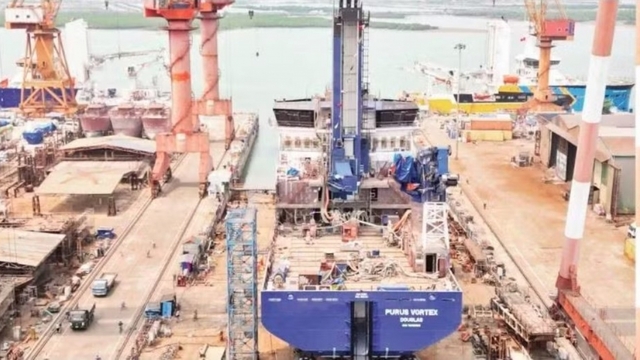
For Hung, a strong maritime nation is not simply a country with numerous ports or vessels. It must have the industrial capacity to design, build, operate, manage and protect the infrastructure and equipment needed across its maritime domain.
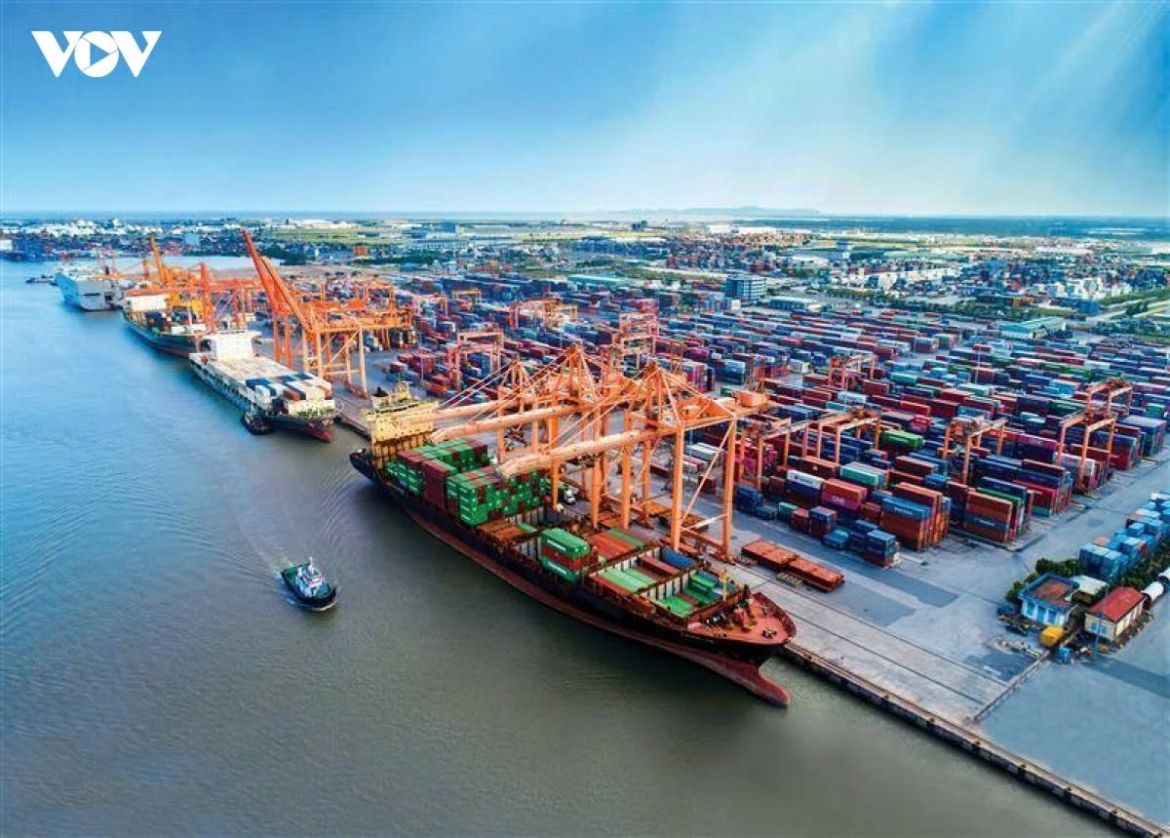
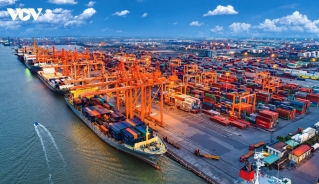
That includes modern seaports, logistics hubs, fishing logistics centres, offshore oil and gas facilities, wind farms, land-reclamation projects, island airports, marine research facilities, search-and-rescue systems and vessels and equipment used for law enforcement at sea.
Building and operating such infrastructure requires a sufficiently strong maritime industrial base.
“In this context, General Secretary of the Communist Party of Vietnam Central Committee and State President To Lam’s direction on July 14, 2026, that the national maritime industry must be given its proper place in the strategy to build Vietnam into a strong maritime nation represents a further refinement of the country’s strategic thinking,” Hung affirmed.
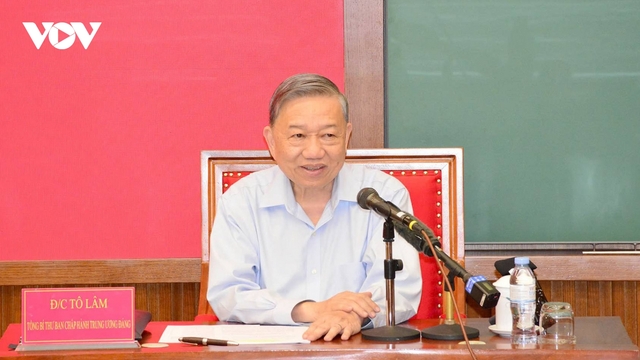
At a working session on July 14, the top leader chaired discussions on the national maritime industry development strategy, highlighting the need to position the sector appropriately within the broader strategy of building Vietnam into a strong maritime nation.
According to Hung, Resolution 20 sets out major orientations for Vietnam’s maritime economy in a new phase of development. The focus is no longer on developing individual maritime sectors in isolation, but on building a Vietnamese maritime industrial ecosystem as a foundation for the broader maritime economy.
The development experience of the Netherlands, Japan, the Republic of Korea and Norway points to a common pattern. Before emerging as countries with strong maritime economies, they invested in comprehensive maritime industrial ecosystems covering ship design and building, supporting industries, equipment manufacturing, scientific research, human-resource development, innovation and digital transformation.
Vietnam needs to follow a similar path, Hung suggested. If the country merely exploits the sea without mastering the technologies, vessels and infrastructure needed for maritime activities, much of the higher value added will continue to accrue to other countries.
“Only by mastering the maritime industry can Vietnam proactively develop its maritime economy, reduce external dependence, strengthen strategic autonomy and participate more deeply in global value chains,” Hung analysed.
From livelihoods to national maritime capacity
A strong maritime nation must be capable of mastering its maritime space, not simply have more ports and vessels
The journey from fishing vessels at Cua Lan port to a modern maritime industrial ecosystem may seem like a leap. In policy terms, however, the two are closely connected.
A fishing vessel represents a livelihood. A fleet represents an economic activity. Ports, logistics systems, offshore energy facilities, marine research infrastructure and other maritime assets form the physical foundation of a wider maritime economy.
Taken together, they point to a broader conception of maritime development - creating livelihoods and new engines of growth, protecting ecosystems, strengthening national security and defence, and safeguarding sovereignty.
This is the strategic direction underpinning Resolution 20 as Vietnam works towards becoming a strong maritime nation, one with not only the resources and geographical advantages of a maritime country, but also the institutions, technology and industrial capacity needed to master its maritime space.
VOV.VN - The Politburo’s Resolution 20 sets out a new direction for coastal urban development, promoting modern, smart and climate-resilient cities and opening up new growth potential in ports, logistics, tourism, industry and technology.
VOV.VN - Ho Chi Minh City has decided to establish a nearly 2,000ha free trade zone (FTZ) linked to the Cai Mep Ha Port area, aiming to create a new growth engine centred on international trade, logistics and advanced manufacturing, thereby strengthening Vietnam's position in global supply chains.
In an era of deeper global integration, the shipbuilding industry is regarded as a strategic pillar in Vietnam's long-term vision of becoming a strong maritime nation.
VOV.VN - Resolution 20 adopted recently by the Politburo marks a major shift in Vietnam’s development strategy, moving beyond marine economic growth to build a strong maritime nation, with the sea positioned as a strategic space, a key growth driver and a pillar of national strength in a new era of development.






.JPG&w=640&q=100)




Bình luận
Bình luận của bạn sẽ được xét duyệt trước khi đăng