Vietnam looks to global talent to drive its 2045 development ambitions
VOV.VN - Vietnam needs to move beyond simply attracting talented people towards connecting, empowering and harnessing Vietnamese expertise worldwide, with talent nurturing the next generation, to help the country achieve its goal of becoming a developed, high-income economy by 2045.
The Politburo’s Conclusion No. 105, issued on October 15, 2026, following the fourth plenum of the 14th Party Central Committee, underscores the need to attract and make effective use of talent in key sectors to support Vietnam’s rapid and sustainable development. A central challenge is how to translate this policy direction into meaningful opportunities for contribution and mobilise the intellectual resources of Vietnamese people around the world.
In an interview recently granted to VOV, Assoc. Prof. Dr. Bui Hoai Son, deputy head of the Party Central Committee’s Commission for Publicity, argued that national development depends not only on identifying outstanding individuals, but also on giving them opportunities to tackle major challenges, connect expertise and build the next generation of talent.
Giving talent the opportunity to tackle major challenges
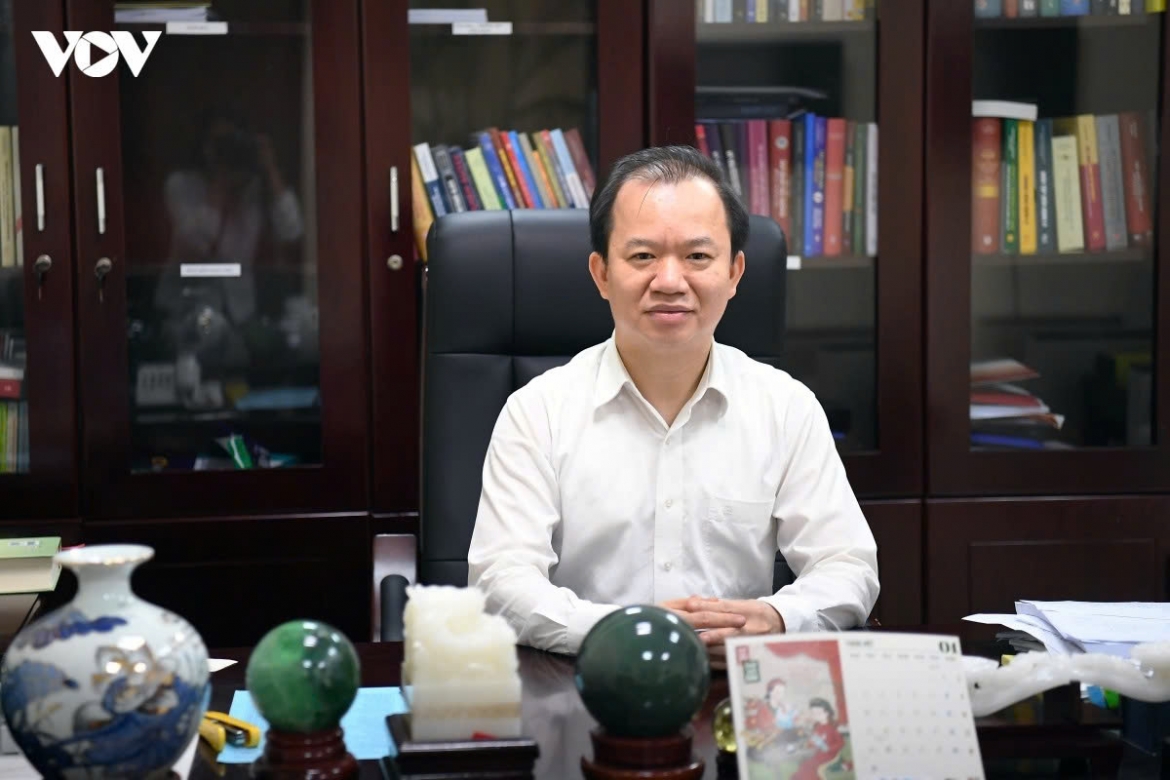
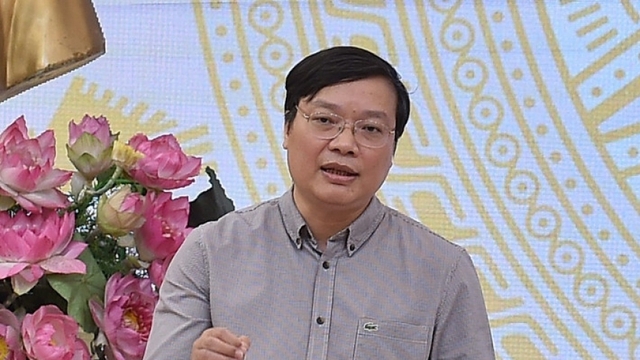
Assoc. Prof. Dr. Bui Hoai Son, deputy head of the Party Central Committee’s Commission for Publicity, in his office
As Vietnam enters a new stage of development, its competitive advantages will increasingly depend not only on capital, natural resources and labour, but also on the intellectual capacity, creativity and aspirations of its people.
Long-term development goals require talented individuals who can master technology, turn plans into action and lead transformative change. Effective talent policies, therefore, should go beyond attracting skilled professionals to work in Vietnam. They must also connect individual capabilities with strategic national priorities and tangible results.
“To go far, we need vision; but to reach our destination, we need talented people who are trusted with major responsibilities,” Son emphasised.
He identified this as a key shift in the approach to talent development that is moving away from an overriding focus on recruitment towards the effective management and development of talent in line with the country’s strategic tasks.
This requires an environment in which talented people can fully apply their abilities, take on responsibilities commensurate with their expertise and turn ideas into products, knowledge into technology, and initiatives into improvements in people’s quality of life.
Ultimately, talent becomes a genuine driver of development only when individual capabilities translate into concrete outcomes. An effective policy should not simply increase the number of talented people available to the country; it should enable them to solve the challenges that matter most to Vietnam’s future.
Another priority is to broaden the approach to the Vietnamese community overseas. Rather than focusing primarily on encouraging talented people to return and settle in Vietnam, the country needs mechanisms that enable Vietnamese professionals, wherever they live, to participate in national development programmes and projects.
Politburo Resolution No. 23, dated August 2, 2026, on work relating to Vietnamese people overseas, identifies the overseas Vietnamese community as an important strategic resource for national construction, development and defence. According to the resolution, more than 6.5 million Vietnamese people live in over 130 countries and territories.
From Son’s perspective, the key change lies in how this resource is connected with Vietnam’s development needs.
“We are moving from the idea of attracting Vietnamese people back home to a broader approach, by connecting and harnessing Vietnamese expertise wherever it is found,” he explained.
This approach creates opportunities for Vietnamese scientists, researchers, entrepreneurs and other professionals overseas to help address domestic challenges without necessarily having to relocate or leave their existing jobs.
In his view, a Vietnamese expert working in Tokyo or Silicon Valley, for example, can contribute through joint research, technology transfer, international partnerships, mentoring young professionals or providing advice on major development programmes.
However, turning this potential into meaningful contributions requires more than general appeals. As Son’s analysis suggests, professionals need clearly defined opportunities to contribute, with their expertise matched to specific tasks, programmes and projects.
The key question is not simply how many people are willing to help, but how their knowledge and experience can be connected with domestic needs, applied effectively and translated into value for the country.
Talent nurturing talent to build lasting national capacity
“The greatest strength of a talented person lies not only in what they create themselves, but also in their ability to help others grow,” according to Assoc. Prof. Dr. Bui Hoai Son, deputy head of the Party Central Committee’s Commission for Publicity
Attracting and connecting expertise can expand the pool of available resources. The principle of “talent nurturing talent”, however, offers a way to build lasting capacity by developing future generations.
According to the official, the value of a talented individual should not be measured solely by personal achievements, but also by their ability to help others grow, develop and contribute.
“The greatest strength of a talented person lies not only in what they create themselves, but also in their ability to help others grow,” he observed.
To put this principle into practice, Vietnam needs concrete programmes and forms of cooperation that can be sustained over time. Leading experts could mentor young talent; Vietnamese scientists overseas could jointly supervise doctoral researchers with domestic institutions; technology entrepreneurs could guide start-up teams; and experienced managers could advise and support emerging leaders.
Under this model, experienced professionals would pass on not only technical knowledge, but also practical experience, working methods and the judgement needed to tackle difficult problems. Younger generations, in turn, could contribute fresh perspectives, new technologies and questions that open up different avenues for research and innovation.
Such arrangements can extend the impact of an individual’s contribution beyond a single project or term of office. An expert may complete an important research project, for instance, but the lasting value would be greater if that person also built a strong research team, trained young scientists and established a sustainable network of collaboration.
The expert argued that the success of talent policy should not be judged simply by the number of outstanding individuals recruited. It should also be measured by whether they help create a stronger, larger and more sustainable pool of talent.
“That is how the return of an individual can be transformed into national capacity,” he stressed.
Creating an environment where every contribution matters
To realise the goal of harnessing Vietnamese expertise worldwide, Vietnam must provide specific opportunities to contribute and ensure that talent policies are implemented consistently, fairly and effectively, Son noted.
This involves more than recruitment and remuneration. It also requires a working environment that values knowledge, encourages innovation, upholds integrity and enables people with strong capabilities to make the most of their expertise.
Talented professionals need clarity about where they can contribute, what authority and resources they will receive, and how their results will be assessed. When opportunities are clearly defined and contributions are recognised fairly, connections between domestic and overseas expertise are more likely to develop into substantive, long-term partnerships.
Talent development should also be treated as a continuous process: identifying and nurturing potential, assigning appropriate responsibilities, supporting professional growth and enabling experienced individuals to mentor the next generation. This approach combines immediate development needs with the long-term task of building national capacity.
“Our centenary aspirations will come closer to reality when every talented person has a pathway to contribute and every genuine contribution is valued by the country,” Son remarked.
As Vietnam looks towards 2045 to become an developed economy, the effectiveness of its talent policies should therefore be assessed not only by the number of people recruited or experts involved in projects. More important indicators include the conversion of knowledge into tangible achievements, the continuity of collaborative networks and the steady development of future generations.
When Vietnamese people around the world have meaningful opportunities to contribute, when talented individuals are trusted with major responsibilities and when they help nurture others in turn, intellectual resources can become more than isolated individual contributions. They can form a growing source of national strength, accumulated and multiplied across generations.
VOV.VN - Ho Chi Minh City has proposed an incentive package offering monthly income of up to VND 265.5 million (US$10,200) for contracted experts, alongside initial allowances, housing support, healthcare benefits, and performance-based bonuses tied to research outputs.
VOV.VN - Renewing personnel work requires more than selecting and training officials, with experts calling for capable people to be tested through major and difficult tasks, given sufficient authority and resources, and assessed through their contributions and results.
VOV.VN - Vietnamese Deputy Prime Minister Nguyen Van Thang has called for stronger Japanese business and academic engagement with Vietnam Japan University to develop high-quality human resources in semiconductors, digital transformation, green transition and artificial intelligence.
VOV.VN - Vietnam National University Ho Chi Minh City (VNU-HCM) must become a primary hub for identifying, training, and attracting top national talent, striving to rank among Asia's top 100 educational institutions by 2030, Prime Minister Le Minh Hung instructed on October 13.
The Ministry of Home Affairs is seeking feedback on a draft National Assembly resolution establishing special mechanisms and policies for talent recruitment and development to support strategic tasks, key programmes and projects, and address major challenges facing the country, sectors and localities.


















Bình luận
Bình luận của bạn sẽ được xét duyệt trước khi đăng