Revolutionary press must master digital space and uphold public trust: top leader
VOV.VN - General Secretary and State President To Lam has called on Vietnam’s revolutionary press to master the digital space, accelerate comprehensive digital transformation and uphold public trust amid growing challenges from AI, social media, misinformation and cross-border digital platforms.
As digital technologies continue to reshape the way information is created, distributed and consumed, Vietnam’s revolutionary press is entering a new phase of development. In an article titled Vietnam’s Revolutionary Press in the Digital Era, General Secretary and State President To Lam stressed that journalism must not only embrace digital transformation but also strengthen its role as a trusted source of information and a pillar of public trust.
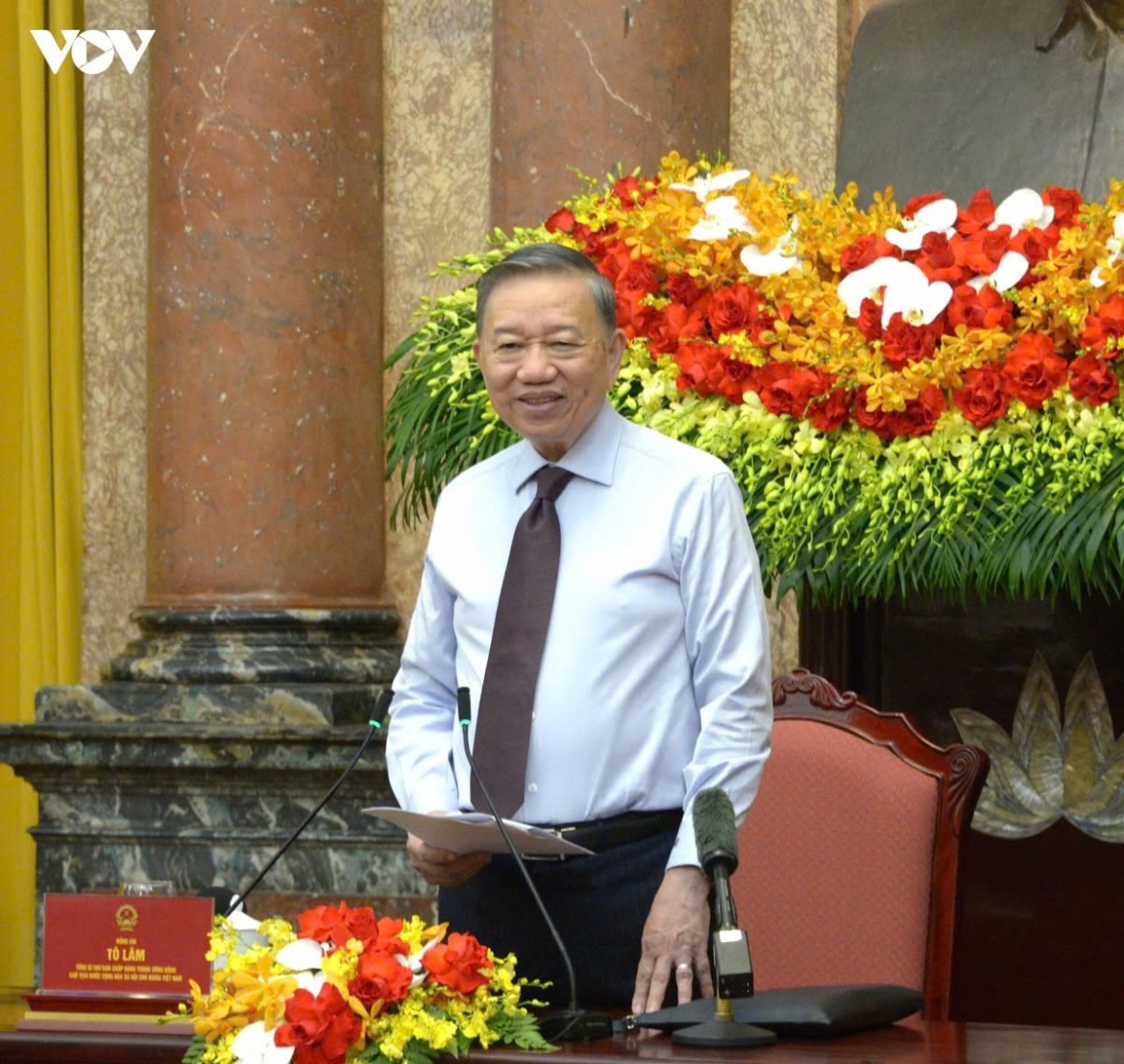
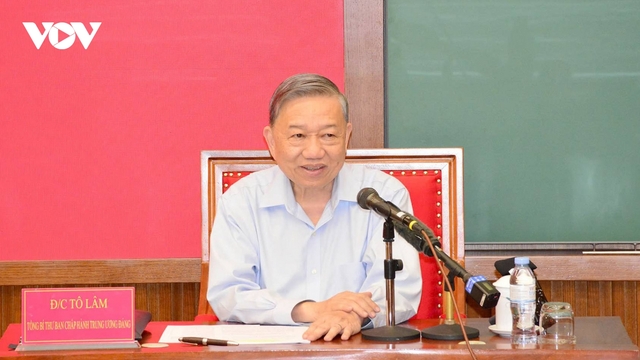
Party General Secretary and State President To Lam calls on the revolutionary press to strengthen public trust, safeguard the Party’s ideological foundation and adapt to the digital era while supporting national development, during his meeting with 101 outstanding journalists and veteran media professionals in Hanoi on June 16 to mark the 101st anniversary of Vietnam Revolutionary Press Day (June 21, 1925–2026)
According to the top leader, the rapid development of digital technologies, big data, artificial intelligence (AI), social media and cross-border communication platforms has fundamentally transformed the media landscape. The digital environment has become an essential part of daily life, where people increasingly learn, work, communicate, conduct business and engage in social issues online.
While digital platforms have enabled government policies, development achievements and positive stories to reach millions of people within a short period of time, they have also created new challenges, including misinformation, disinformation, deepfakes, copyright violations and cyberattacks.
Trusted information becomes more important in digital era
The top leader noted that the expansion of the internet and social media has significantly altered traditional communication models. By the end of 2025, Vietnam had approximately 85.6 million internet users, accounting for more than 84% of the population, along with around 79 million social media identities.
He cited statistics saying Vietnamese users operate roughly 110 million accounts on domestic social media platforms and around 203 million accounts on foreign platforms, reflecting the unprecedented scale of the digital information environment.
In such a context, he argued, the role of professional journalism becomes even more critical. As information grows in volume and becomes increasingly difficult to verify, society needs reliable news organisations capable of distinguishing facts from speculation, verifying claims and helping the public navigate complex issues.
According to him, journalism's responsibility is not simply to deliver information faster, but to provide information that is more accurate, more insightful and more useful, particularly on major issues such as digital transformation, green transition, administrative reform, social welfare and global economic developments.
Digital transformation requires comprehensive reform
The Vietnamese leader emphasised that digital transformation in journalism should not be viewed merely as creating online editions, opening social media accounts or investing in modern equipment. Instead, he described it as a comprehensive process involving leadership thinking, newsroom operations, content production, data management, content distribution, audience engagement, media economics and professional ethics.
“Digital journalism is not traditional journalism placed on a new platform. It is a fundamentally new model of organisation and operation in a new environment,” he said.
He highlighted the growing importance of data in modern journalism, describing it as both a foundation for verification and a tool for producing more persuasive and impactful reporting. He noted that many leading international media organisations have invested heavily in data infrastructure and specialised personnel to strengthen their ability to identify emerging issues and anticipate future trends.
At the same time, he cautioned that news organisations must maintain a presence across the platforms where audiences gather without becoming dependent on external algorithms. Excessive reliance on platform-driven traffic and recommendation systems, he warned, could weaken editorial independence, audience ownership and institutional identity.
Building a strong digital external communications system
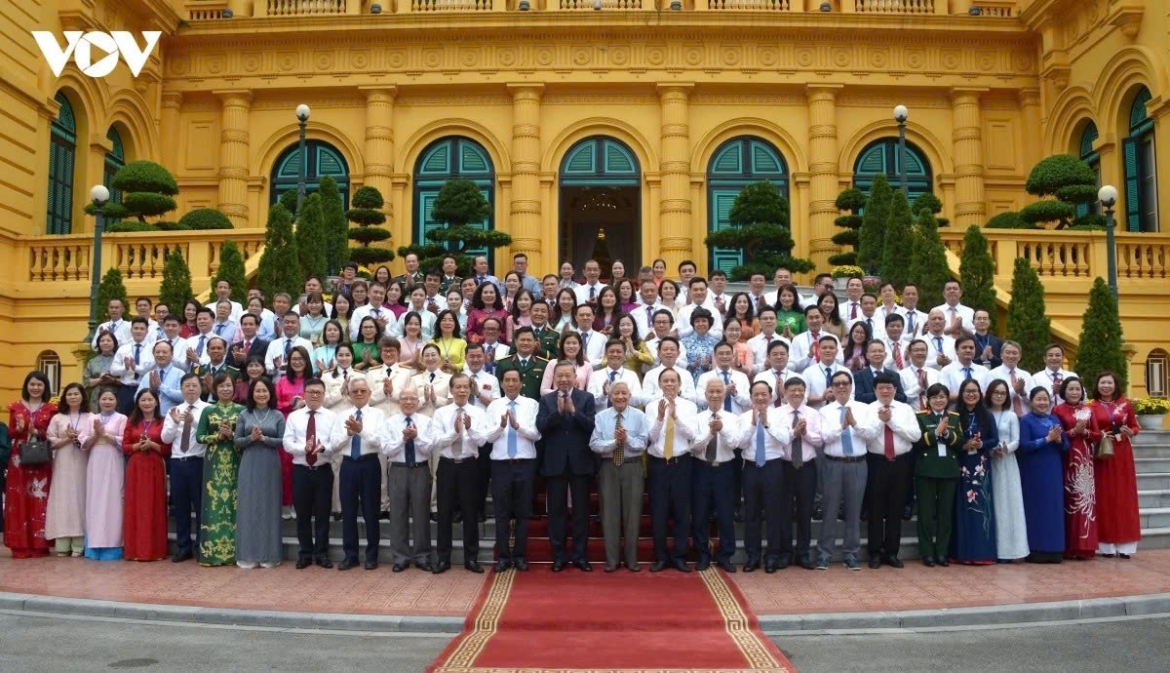
Party General Secretary and State President To Lam and 101 outstanding journalists and veteran media professionals pose for a group photo after a meeting in Hanoi on June 16 to mark the 101st anniversary of Vietnam Revolutionary Press Day (June 21, 1925–2026)
A key theme of the article is the need to strengthen awareness of national information sovereignty in the digital age.
According to Party General Secretary and State President To Lam, Vietnam’s revolutionary press must serve as a leading force in safeguarding information sovereignty while actively contributing to the country's image and voice in cyberspace.
However, he emphasised that protecting information sovereignty does not mean isolation. Rather, it requires proactive international engagement and effective communication with global audiences.
To achieve this goal, he suggested Vietnam should develop a modern digital external communications system that is multilingual, multimedia and capable of reaching diverse international audiences.
The country's development achievements, cultural values and foreign policy of independence, self-reliance, peace, friendship, cooperation and development should be communicated through compelling, data-driven journalistic products, he said.
The General Secretary and State President also underscored the importance of protecting journalistic copyright in both digital and AI-powered environments. He held that journalistic content is the result of professional reporting, verification, editing and investment of resources, and that unauthorised reproduction or exploitation undermines not only the rights of media organisations but also the quality of information available to society.
Journalists remain the decisive factor
Despite rapid technological advances, General Secretary and State President To Lam stressed that people are the most important factor behind the success of digital journalism.
In his view journalists in the digital era must be proficient in data analysis, digital tools, social media, open-source intelligence and information security practices. Yet technological skills alone are not enough.
According to him, the greater the technological capabilities available to journalists, the more important professional integrity becomes. Journalists should not allow social media trends to dictate their work, publish information before verification or sacrifice credibility in pursuit of online traffic.
“Before publishing any content, journalists should ask three essential questions: Is the information accurate? Is it necessary? And does it benefit society?,” he said.
The leader also noted that media leaders in the digital age must go beyond traditional editorial management. They should develop long-term strategies covering products, audiences, data, technology and human resources, while ensuring continuous training in digital verification, data security, multi-platform journalism, AI ethics and intellectual property compliance.
Concluding the article, the Party General Secretary and State President expressed confidence that Vietnam's revolutionary press would continue to build on its long-standing traditions while adapting to the demands of the digital era.
He said media organisations should strive to become modern digital newsrooms and trusted centres of information, knowledge and public service, contributing to national development and helping Vietnam navigate the opportunities and challenges of the digital age.
VOV.VN - Party General Secretary and State President To Lam has called on Vietnam’s revolutionary press to strengthen public trust, safeguard the Party’s ideological foundation and continue improving information quality as the country enters a new stage of development.
VOV.VN - A special exhibition titled "Steel Pen, Loyal Heart" highlighting the history and legacy of Vietnam’s revolutionary press opened at the Hoa Lo Prison Relic Site in Hanoi on June 16 to mark the 101st anniversary of Vietnam Revolutionary Press Day (June 21, 1925–2026).
VOV.VN - Vietnamese media organisations have been called on to embrace a major shift in mindset, moving beyond their traditional role as information providers to become information leaders that help shape public discourse, contribute to policymaking, and strengthen Vietnam’s presence in the digital information space.
VOV.VN - As Vietnam accelerates its digital transformation, media organisations should embrace innovation, master new technologies and strengthen the quality of journalism to be effective in a rapidly evolving information environment.









.JPG&w=640&q=100)







Bình luận
Bình luận của bạn sẽ được xét duyệt trước khi đăng